

Industries served
Industries We Serve Across Toronto, the GTA and Ontario
We maintain, test and upgrade electrical systems for five kinds of clients: manufacturers, property managers, warehouse operators, food and beverage processors, and healthcare and dental practices. Each sector brings its own risks, rules and schedules, and our work is planned around them.
- ESA/ECRA #7014042
- COR certified (IHSA)
- ISNetworld, Avetta, ComplyWorks
- Level II thermographers
Request a callback
A licensed electrical contractor calls you back, usually the same business day.
Industries we serve
Choose your industry
Each page explains the electrical risks, rules and services that matter most in that sector.
Manufacturing Plants
Motor, MCC and distribution work planned around production lines and shutdowns.
Learn moreProperty Managers and Commercial Real Estate
Portfolio maintenance, tenant work and consistent reports for every building.
Learn moreWarehouses and Distribution Centres
Lighting at height, conveyors, docks and charging areas kept running.
Learn moreFood and Beverage Processing
Electrical care for washdown, cold rooms and heavy process loads.
Learn moreHealthcare and Medical Office Buildings
Section 24 work for clinics, medical buildings and their tenants.
Learn moreDental Offices
Operatories, mechanical rooms and imaging rooms wired to each manufacturer's specification.
Learn moreUpdated Reviewed by KCS Group licensed electricians
Why Electrical Work Changes From One Industry to the Next
The electrical code is the same in every Ontario building, but what goes wrong, what a failure costs and when work can happen are different in each industry. A plant measures an outage in lost production, a landlord in tenant complaints, a food processor in product and sanitation time, and a clinic in cancelled patients.
That is why we start every new client conversation with how the site operates, not with a price list. The answers decide which services make sense, how often they are needed and how the work is scheduled. The five industries below make up most of our work, and each has its own page with the detail.
Manufacturing Plants: Motors, Uptime and Lockout
Manufacturers need an electrical contractor who understands that the line comes first. Their equipment is dominated by motors, drives and motor control centres, and most failures start as heat at a connection that nobody had time to check.
What plant managers usually ask us for:
- Fast, documented fault finding when a machine or line stops.
- Thermal surveys under load, then repairs during planned shutdowns.
- Motor and MCC testing on the equipment that feeds bottleneck processes.
- Machine hookups and relocations as lines change.
- Contractors who already work to O. Reg. 851 lockout requirements and the plant's own permits.
Read more on our manufacturing plants page, or go straight to industrial electrician services and factory maintenance programs.
Property Managers and Commercial Real Estate Owners
Property managers need one dependable contractor across many buildings, with paperwork that satisfies their vendor programs and work planned around tenants. Their electrical risk is spread thinly across switch rooms, tenant panels, parking garages and life safety lighting.
Typical requests from property teams include yearly infrared scans of each building, tenant improvement wiring with ESA notifications, emergency lighting repairs, corrected panel directories and a simple, consistent report for every property in the portfolio.
See our property management and commercial real estate page for portfolio work, and commercial electrician services for the building-level scope.
Warehouses and Distribution Centres
In a warehouse or distribution centre, electrical faults stop throughput: a failed conveyor drive, dark aisles or a dock door that will not open backs up every shipment behind it. Much of the equipment runs long hours in a tall, open building where access to overhead circuits needs a lift and planning.
Electrical work we see most in logistics buildings covers high bay and aisle lighting, dock doors and levellers, conveyor and sortation motors, charging areas for lift trucks, rooftop units, and conduit damaged by forklifts and racking changes.
The GTA's logistics land keeps growing. Milton's Derry Green Corporate Business Park is planned around logistics, advanced manufacturing and warehousing, and Vaughan's enterprise zone surrounds a major rail intermodal terminal. Our warehouse and distribution centre page covers that sector, and Milton and Vaughan are part of our regular area.
Food and Beverage Processing Plants
Food and beverage processors need electrical work that fits around production runs and sanitation, in rooms where water, heat, cold and cleaning chemicals are part of daily life. Enclosures, seals and connections wear faster there than anywhere else in a typical plant.
Processors usually ask us to:
- Inspect panels, disconnects and junction boxes in washdown areas for water entry and corrosion.
- Scan refrigeration compressors, ovens and process heaters, which carry heavy, steady loads.
- Plan offline work inside sanitation and changeover windows so product is never at risk.
- Track trends on critical motors and feeders so failures can be predicted rather than discovered.
Food processing is a named priority sector for Brampton's economic development office, and Mississauga and Hamilton count it among theirs too. More detail is on the food plant electrical maintenance page, and condition trending is explained under predictive electrical maintenance.
Healthcare Buildings, Medical Clinics and Dental Offices
Clinics and medical buildings fall under Section 24 of the electrical code, and that section reaches well beyond hospitals. ESA's bulletin on classifying patient care areas (24-2-7) gives dental offices, physicians' offices, physio and chiropractic practices and outpatient clinics as examples.
Three points shape clinic work before any wire is pulled:
- Classification belongs to the clinic. Whoever operates the facility decides which rooms are patient care areas and whether each is basic, intermediate or critical, then hands ESA that document, or a letter stating there are none, for the inspection.
- Isolated-ground receptacles stay out of patient care areas. Because each one depends on a single bonding point, CSA Z32 bars them there and the electrical code carries the same restriction.
- X-ray rooms run on two tracks. The clinic, which owns the unit, applies to XRIS for written approval before anything is installed. KCS helps with that HARP and XRIS paperwork and carries out the wiring once the plan is approved.
Start with healthcare and medical office buildings, or go to the service page that matches your project:
What the First Site Visit Looks Like in Any Sector
A first visit is a walk-through with the person who knows the site most closely, followed by a written proposal that explains which services apply and why. It is the same process for a plant, a warehouse, an office tower or a clinic.
- We tour the electrical rooms and the areas they feed, and list the main equipment.
- We read whatever records exist: single-line diagrams, panel directories, earlier scan or test reports and arc flash labels.
- We ask how the site runs: shutdown windows, tenant hours, sanitation schedules or patient days, and who must approve an outage.
- We note anything that needs attention right away and tell you on the spot rather than waiting for the report.
The proposal that follows sets out the scope, the schedule and what you will receive at the end of each visit, so you can compare it with your insurer's, auditor's or head office's requirements before anything is booked.
Compliance Drivers and Services, Sector by Sector
Every sector shares the same base rules, the OESC and ESA notification, but each adds its own drivers. This table shows the ones we see most and the services that usually answer them. Whatever the sector, our test methods come from ANSI/NETA MTS and ATS, applied together with CSA Z463 and NFPA 70B.
| Industry | Main drivers | Services that usually apply |
|---|---|---|
| Manufacturing | O. Reg. 851 lockout and signage, CSA Z462 energized work, insurer and corporate standards | Plant thermography, motor testing, MCC maintenance |
| Property management | Tenant leases and notices, vendor prequalification, insurer requests, Fire Code emergency lighting duties | Building thermography, panel inspection |
| Warehousing and logistics | Throughput, lift access to overhead circuits, added charging and automation loads | Troubleshooting, preventive maintenance |
| Food and beverage | Sanitation schedules, washdown and cold environments, product protection | Predictive maintenance, electrical thermography |
| Healthcare and dental | OESC Section 24, CSA Z32 classification, XRIS approval for X-ray rooms | Clinic electrical work, dental equipment power |
Larger sites in any sector also benefit from an arc flash study and from switchgear maintenance on the main distribution.
What Clients in Every Industry Can Expect From KCS
Whatever the sector, clients get the same licensed contractor, the same safety program and the same kind of written record.
- ESA/ECRA electrical contractor licence #7014042.
- COR from IHSA, plus ISNetworld, Avetta and ComplyWorks prequalification.
- Level II (or higher) certified thermographers for infrared electrical inspection.
- Commercial insurance and WSIB coverage, with certificates on request.
- Emergency response for maintenance-contract clients.
- Province-wide service, centred on Toronto and the GTA.
If your facility does not fit neatly into one of these industries, the services still apply wherever there is three-phase distribution, motors, tenants or patients. Request a callback and tell us how your site runs.
Clinic services
Medical and dental electrical services
Medical Clinic Electrical Contractor
Repairs, upgrades and maintenance for clinics in medical buildings.
Learn moreDental Equipment Installation
Circuits sized for each dental unit, from operatory chairs to sterilizers.
Learn moreQuestions
Questions about the industries we serve
Industries
Which industries does KCS provide electrical services for?
Our work is concentrated in manufacturing plants, property management and commercial real estate, warehouses and distribution centres, food and beverage processing, and healthcare buildings including medical clinics and dental offices. We also work in other facilities with three-phase distribution, motors or tenants, in Toronto, the GTA and anywhere else in the province.
Can one electrical contractor cover our plant, warehouse and office buildings?
Yes. Many companies own a mix of buildings, and using one licensed contractor gives them one safety program, one report format and one contact. We adjust the approach to each building: production and lockout in the plant, throughput and lift access in the warehouse, and tenant hours in the offices.
Is KCS approved on the contractor platforms large companies use?
Yes. Our COR was issued through IHSA, and ISNetworld, Avetta and ComplyWorks each list us as prequalified; between them they cover most corporate, industrial and property management vendor programs. We also complete company-specific questionnaires and supply WSIB clearance and insurance certificates.
Do you serve facilities outside Toronto and the GTA?
Yes. Our licence and crews cover the whole province, though the bulk of jobs are in Toronto and the surrounding regions. Remote sites are visited in regional groups, planned around your shutdowns or quiet periods so each facility stays on its schedule.
What if my industry is not listed on this page?
Tell us how your facility operates. Our services apply anywhere there is three-phase distribution, motor loads, tenants or patients, whatever the sector. After a short call we can tell you which inspections, tests or programs fit your site and how the work would be scheduled.
Sector questions
Do you work in plants that run three shifts?
Yes. In plants that rarely stop, online tasks (thermal scans, visual checks, load readings) happen while production runs, and offline testing and repairs fit into shift changes, weekends and planned shutdowns. Contract plants also have access to emergency response when a line goes down.
What do warehouses usually need from an electrical contractor?
Warehouses most often need lighting repairs at height, work on dock doors and levellers, conveyor and sortation motor circuits, power for lift truck charging, and capacity checks before adding automation. Yearly thermal scans of the main distribution and conveyor panels help find problems before they stop throughput.
Do food plants need different electrical maintenance from other factories?
Yes, mainly because of moisture, washdown, temperature swings and cleaning chemicals, which wear enclosures, seals and connections faster. Maintenance in food plants focuses more on enclosure condition and corrosion, and offline work has to fit sanitation and changeover windows. The underlying standards and Ontario rules are the same.
How do you plan electrical work in occupied commercial buildings?
We do inspections and thermal scans with equipment energized so tenants are not affected, and bundle shutdown work into the smallest number of outages. Dates are agreed with the property manager, tenants are notified in line with their leases, and outages are timed away from their busiest hours.
Healthcare and dental
Whose job is it to classify patient care areas in a clinic?
The clinic's own administrator. ESA states in Bulletin 24-2-7 that it does not classify these areas itself; the operator records which rooms are patient care areas and the class of each, or records that there are none, and gives ESA that document at inspection. Our wiring layout follows it.
Can a clinic use isolated-ground receptacles in its treatment rooms?
Not in rooms classified as patient care areas. An isolated-ground receptacle depends on one bonding connection, which makes it a single point of failure, and ESA has noted that the Z32 standard excludes them from those rooms for that reason, with the code saying the same. Front desks and offices outside those areas can still have them.
Can you help a dental office with HARP and X-ray registration paperwork?
Yes. KCS assists clinics in filling out the registration and installation forms that HARP and XRIS call for, and wires the X-ray room itself. The written XRIS approval comes before the unit goes in, and that application belongs to the clinic as owner, so we time the electrical rough-in to follow the approval rather than run ahead of it.
Related services
Related services

Industrial Electrical Services
Industrial electricians for GTA plants: repairs, machine hookups, troubleshooting and shutdown work under a COR certified safety program.
View service
Commercial Electrical Maintenance
Commercial electricians for property managers: building maintenance, tenant work, infrared scans and records for GTA properties.
View service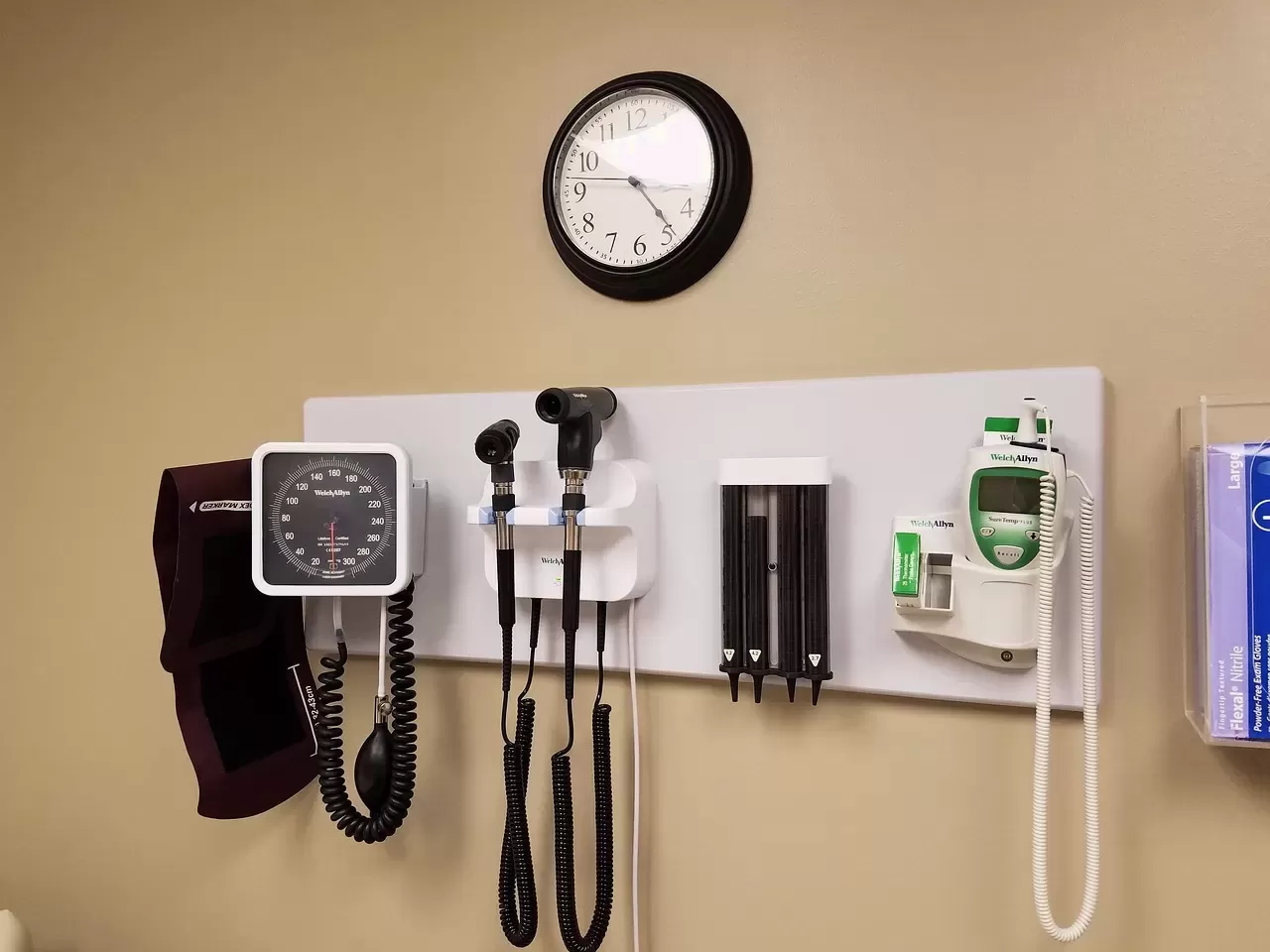
Medical Clinic Electrical Contractor
Licensed contractor that builds, services and inspects clinic electrical systems and medical building power to OESC Section 24.
View service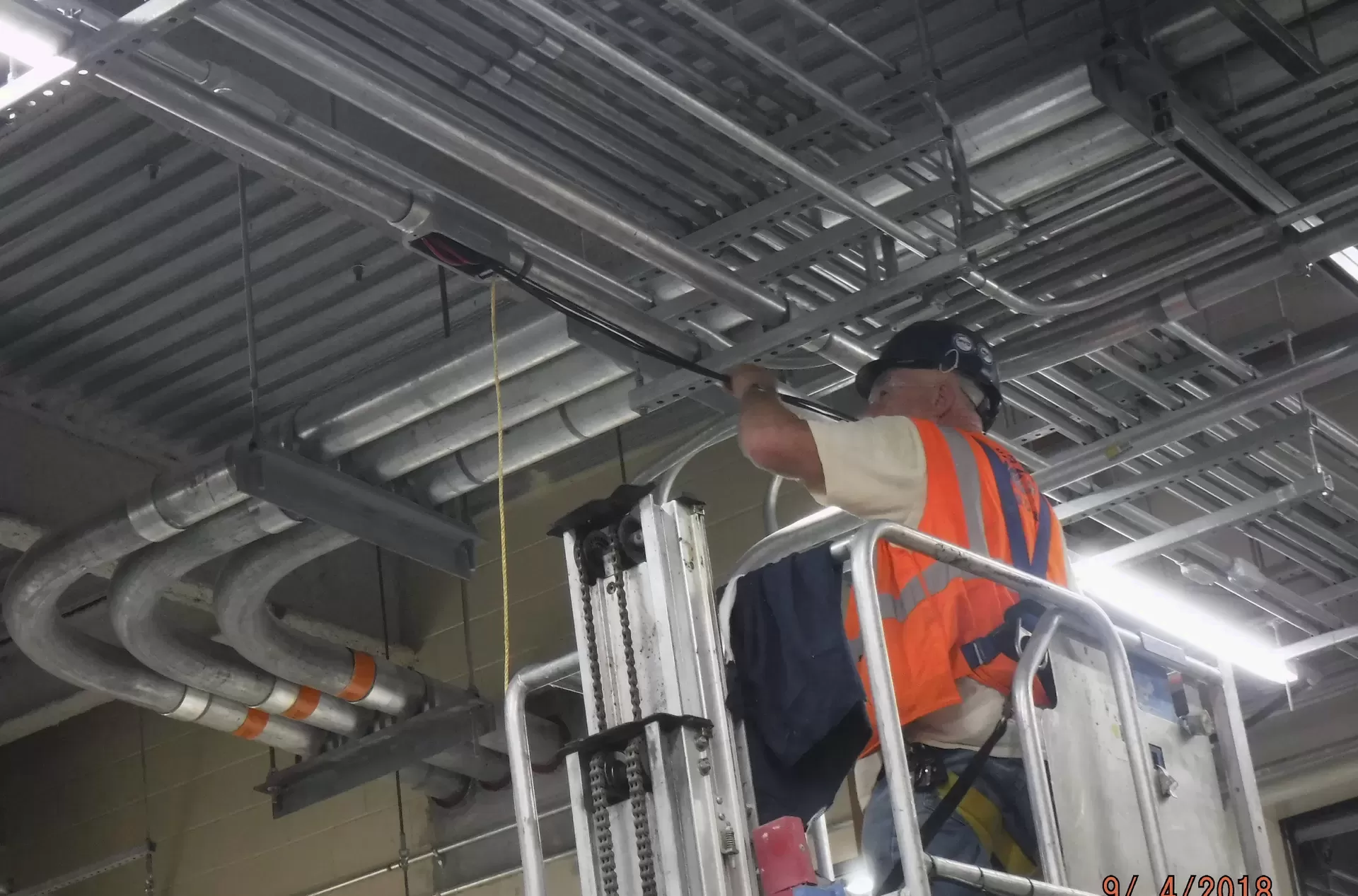
Request a callback
Plan your next electrical maintenance program with KCS
Tell us about the site and the equipment. A licensed electrician reviews it and calls you back.
- ESA/ECRA licence #7014042
- COR certified, ISNetworld, Avetta and ComplyWorks
- Work planned around shutdowns and tenant hours
- Emergency response for maintenance-contract clients
Send your request
We reply during business hours: Open daily, 9 a.m. to 9 p.m.