
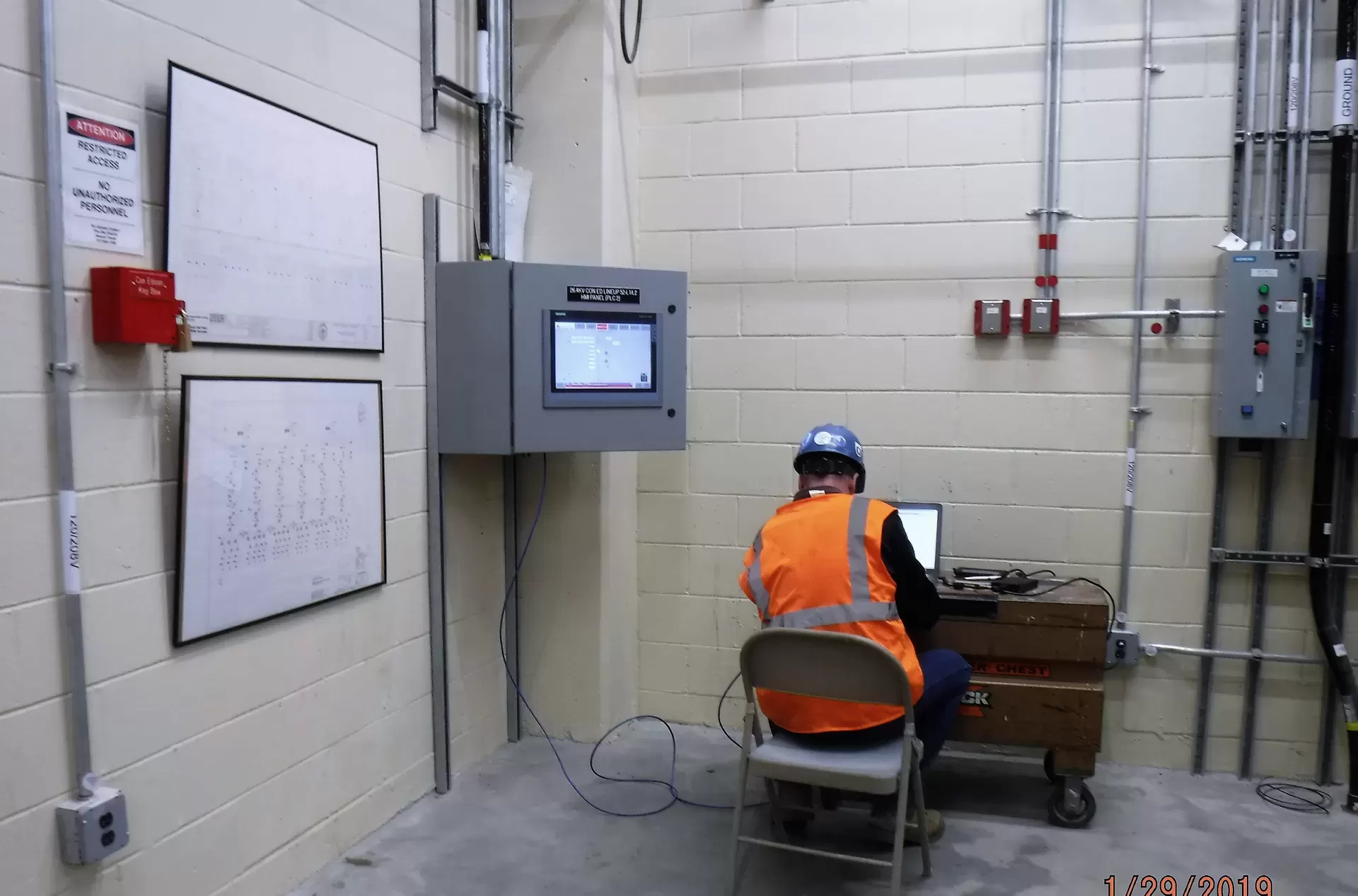
Service to last panel
Electrical Distribution System Inspection for Plants and Buildings
Electrical distribution system inspection for industrial sites, campuses and commercial buildings in Toronto and the GTA. We follow the power from the utility handover through your main switchboard, transformers, feeders and distribution panels, and report on the whole path, not one box at a time.
- ESA/ECRA licence #7014042
- COR certified (IHSA)
- Level II thermographers
- 15 years in business
Request a callback
A licensed electrical contractor calls you back, usually the same business day.
Updated Reviewed by KCS Group licensed electricians
What Is an Electrical Distribution System Inspection?
An electrical distribution system inspection is a site-wide review of every piece of customer-owned equipment that carries power from the utility's point of supply to your final panels: incoming switches, transformers, switchgear, switchboards, feeders, busway and grounding. It answers one question that equipment-by-equipment maintenance often misses: does the system as a whole still match what is installed, what is loaded on it, and what the drawings say?
Over fifteen or thirty years, a facility's power system drifts away from its design. Production lines are added, rooftop units replaced, tenants split and merged, and temporary feeders become permanent. Each change is usually small and properly done, but together they can leave a transformer overloaded in summer, a feeder protected by a breaker sized for a load that left years ago, or a single-line diagram that no longer shows how the site is fed. Nobody notices until a fault trips the wrong breaker and takes out half the building.
We look at the distribution system the way a fault would travel through it. That means walking every feeder from source to load, checking each device it passes through, scanning the energized equipment, measuring load where it matters, and comparing what we find with your single-line diagram. The result is a single report on the health and layout of your whole power path.
Individual equipment classes still have their own service pages: switchgear maintenance, transformer testing and panel inspection. A distribution inspection ties those together and covers the cables, busway and connections in between.
Where Your Distribution System Starts: The Utility Handover Point
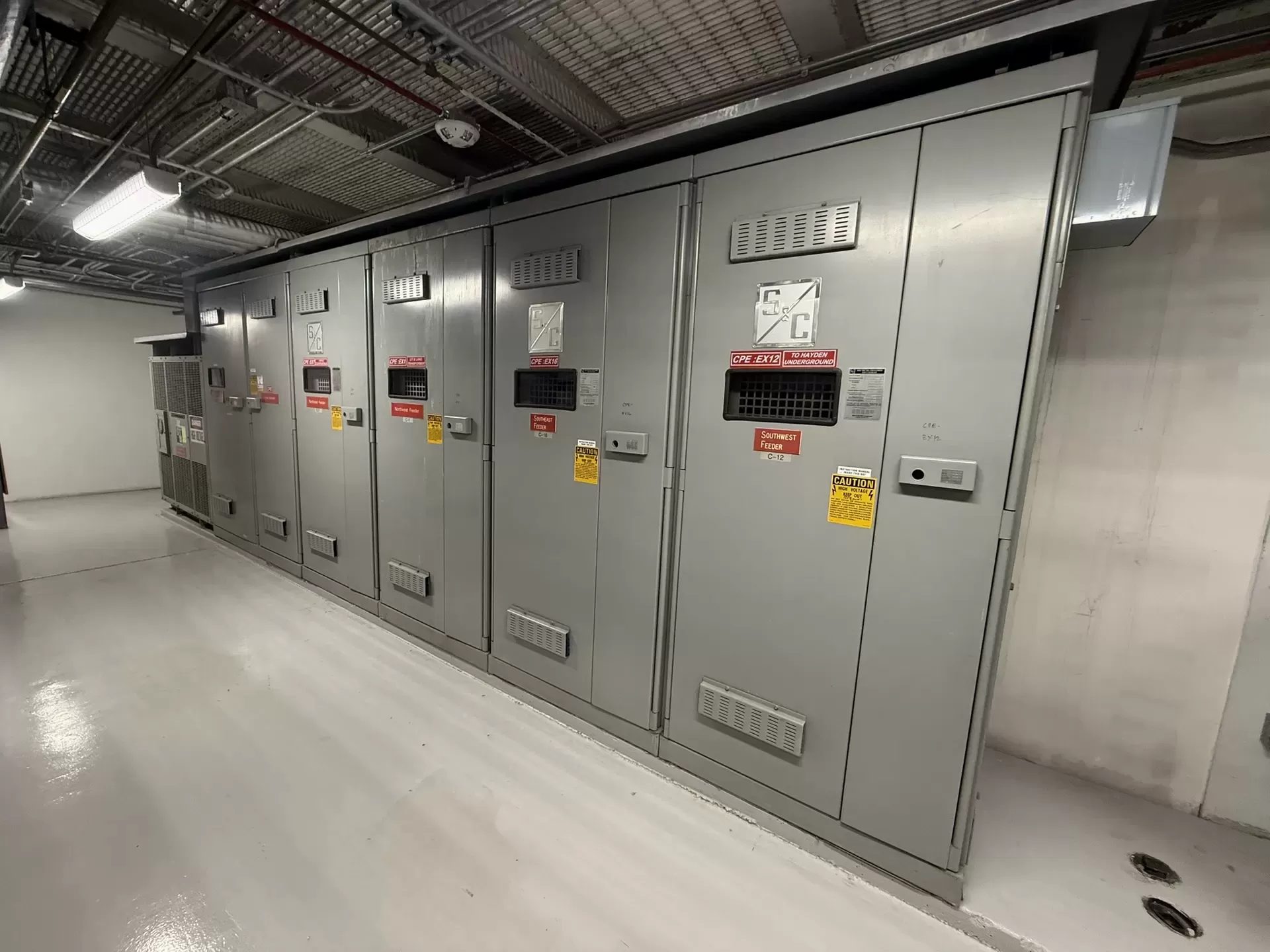
Your responsibility usually starts at the point where the local distribution company's equipment ends and yours begins. Everything on your side of that point, such as the service entrance equipment, the main switchboard or switchgear, and any dry-type transformers that step power down inside the building, is yours to maintain, and that is where our inspection begins.
Across the GTA, the utility on the other side of that boundary depends on where you are: Toronto Hydro in Toronto; Alectra Utilities across much of Peel and York Region, including Mississauga, Brampton, Vaughan, Markham and Aurora; Elexicon Energy in parts of Durham; and Hydro One on many rural edges. The handover point varies from site to site. It may be the main service disconnect, the low-voltage terminals of a utility transformer, or a metering cabinet, and your supply agreement with the utility defines which one applies.
The boundary matters for two reasons. First, CSA Z463, the Canadian electrical maintenance standard, excludes utility-owned equipment, so your maintenance program should cover exactly what you own and nothing the utility maintains. Second, isolating the incoming supply at the boundary has to be arranged with the utility, so any shutdown of the main service needs lead time and a confirmed date. We identify the boundary on the drawings at the start of every inspection and confirm it on site.
From there, one licensed contractor inspects the service equipment and every distribution level below it, so findings at the main switchboard and at the last panel are judged on the same scale.
Electrical Feeder Inspection: Cables, Busway and Terminations
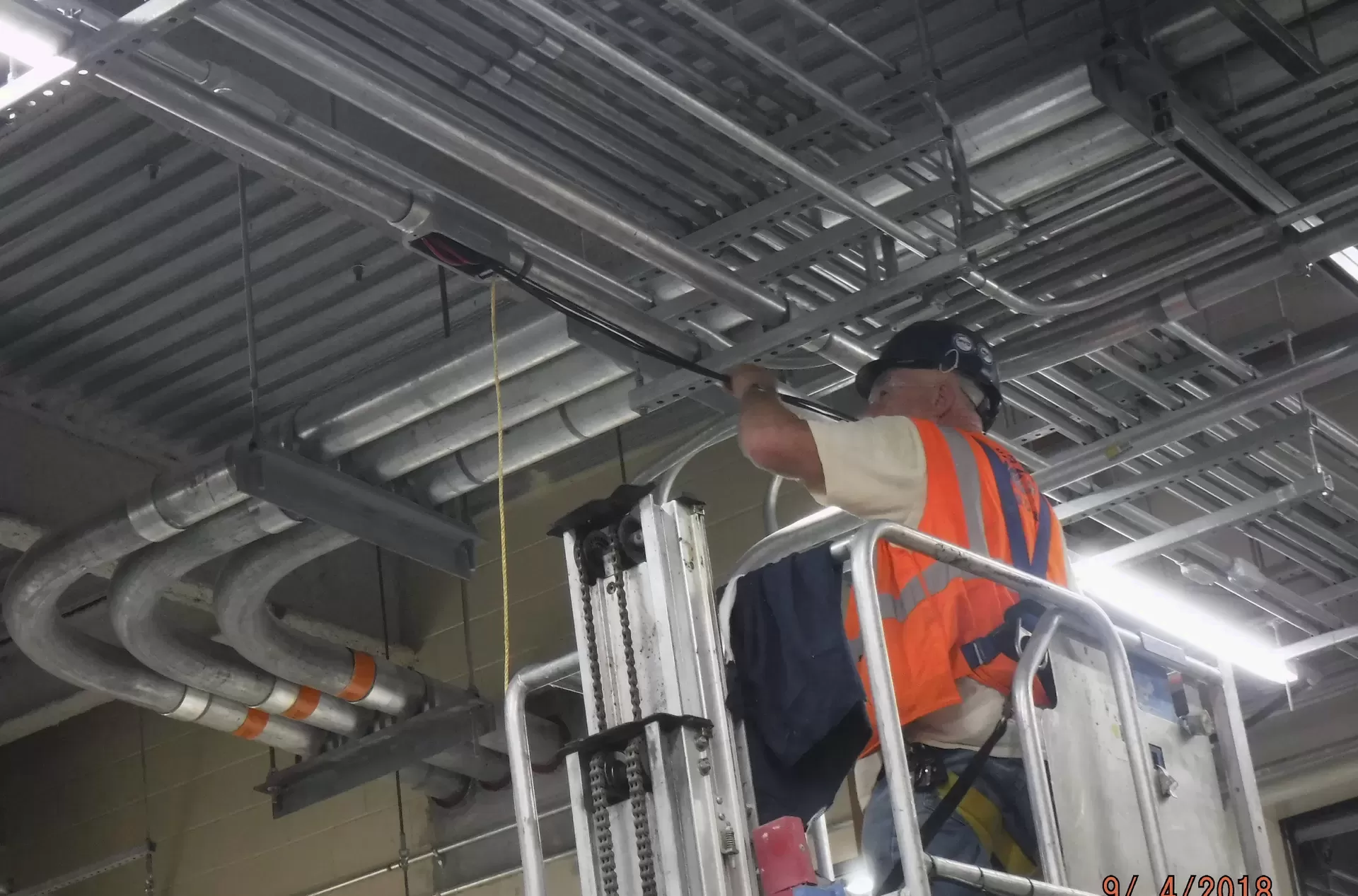
Electrical feeder inspection checks the conductors that carry power between distribution points: cables in tray, conduit or duct bank, busway runs, and the terminations at both ends. Feeders rarely get attention until one fails, yet a feeder failure can drop an entire production area or floor.
Cable feeders
- Terminations and lugs at both ends for heat damage, corrosion and torque.
- Cable jackets for cracking, crushing, rodent damage, oil or chemical exposure, and sharp bends at entries.
- Cable tray for overfill, missing covers where required, damaged supports and lost bonding.
- Splices and taps in pull boxes and gutters for heat damage, insulation condition and secure connections.
- Insulation resistance on de-energized feeders, trended against earlier results where they exist.
Busway
- Joint connections, which are a common source of heating on long runs.
- Plug-in units for secure mounting, correct fuse or breaker sizing and heat damage.
- Housing for water entry, physical damage and missing hardware.
- Supports, hangers and expansion fittings on long vertical or horizontal runs.
Protection and capacity
For each feeder we check that the protective device rating suits the conductor and the connected load, and we measure current on feeders that look heavily loaded, hot on the thermal scan, or carry added equipment. Where protective settings need a deeper look, we recommend a coordination review as part of an arc flash study.
Inspecting Switchboards, Transformers and Panels Along the Power Path
Along each feeder path, we inspect the equipment the power passes through, from the service entrance down to distribution panels, using the same condition criteria at every step so findings can be compared across the site.
- Service entrance and main disconnect: main fused switches and service breakers, checked for heating, contamination, operating mechanism condition, interlocks and correct labelling.
- Transformers: dry-type units checked for ventilation, dust build-up, enclosure condition, temperature, noise and connection heating. Detailed tests sit with transformer testing.
- Main switchboards and switchgear: main and feeder breakers, metering, protective relays and ground-fault protection.
- Distribution panels and splitters: the points where feeders branch out to equipment and floors.
- Automatic transfer switches and generator connections: condition and labelling of the transfer point; generator testing itself is a separate service.
- Grounding and bonding: the system ground, bonding jumpers at transformers and service equipment, and ground-fault protection devices.
Inspection and test tasks for every equipment class follow ANSI/NETA MTS (2023 edition), so a reading at the main switchboard and one at a far panel are judged by the same rules. Energized equipment is scanned by our Level II thermographers under normal load, and covers are opened only under a CSA Z462 risk assessment with the right PPE. Offline checks happen during agreed shutdowns with lockout under Reg. 851 s.42. At rooms and enclosures with exposed live parts, we also confirm the conspicuous sign barring unauthorized entry that s.41 of that regulation requires.
How Often Should a Distribution System Be Inspected?
Walk the whole system once a year and thermally scan everything live during that visit; that rhythm suits most industrial and commercial sites. Deeper offline maintenance of each equipment class then follows its own cycle, anywhere from yearly to every fifth year.
NFPA 70B (2023) sets those cycles from a condition assessment: how the equipment looks, how much depends on it, and what its surroundings do to it; the poorest score sets the cycle. The table converts its published intervals for distribution equipment into years.
| Distribution equipment | Condition 1 (sound) | Condition 2 (some wear) | Condition 3 (degraded or critical) |
|---|---|---|---|
| Thermal survey of all energized equipment | 1 year | 1 year | 6 months |
| Transformer visual checks | 1 year | 1 year | 6 months |
| Transformer cleaning and electrical tests | 5 years | 3 years | 1 year |
| Power cables (feeders) | 5 years | 3 years | 1 year |
| Busway | 5 years | 3 to 5 years | 1 year |
| Electromechanical protective relays | 3 years | 2 years | 1 year |
| Microprocessor protective relays | 5 years | 3 years | 1 year |
Years converted from the interval table in NFPA 70B (2023), as reproduced by one of its committee members. Manufacturer instructions, your insurer and your own experience can shorten these. NFPA 70B also calls for system studies, including short-circuit, coordination and incident energy, to be reviewed at intervals of no more than five years, which lines up well with a distribution inspection. Ontario law itself sits in the OESC and Reg. 851; CSA Z463 is the Canadian benchmark for how maintenance is organized, and ANSI/NETA MTS sets the test methods we use inside it.
Single-Line Diagram Verification and Load Review
Part of every distribution inspection is checking your single-line diagram against what is actually installed, then measuring load on the parts of the system that look stretched. An accurate single-line is what your electricians, your arc flash labels and any future expansion depend on.
We trace each feeder from source to load, confirm device ratings and identification, and mark up the drawing where it differs from the field. Common differences include feeders that were re-routed during renovations, panels that were moved or renamed, spare breakers that are now in use, and transformers that were replaced with a different rating. If you do not have a current single-line, the inspection gives a drafter or engineer the field information to produce one.
For load, we take readings on main and feeder circuits that run warm on the thermal scan, that serve added equipment, or that you suspect are near capacity. Where a short spot reading is not enough, load can be recorded over a longer period to capture shift changes and peak demand. The findings tell you whether there is room for the next production line, chiller or tenant, or whether capacity work belongs in your capital plan.
The verified single-line and load data also feed into other work: an arc flash study needs an accurate model of the system, and an electrical asset management plan needs a correct register of what you own.
Planning Distribution Shutdowns Across a Plant or Campus
Most of a distribution inspection is done with the system energized. Offline work on main switchgear, transformers and feeders needs planned outages, and on a site-wide system those outages need careful sequencing so the right loads stay on.
We start from your single-line and production calendar and build an outage plan: which feeders can be isolated together, which loads move to standby power or temporary feeds, which work needs the utility involved, and how long each window must be. For plants that only stop at long weekends or annual shutdowns, we group as much offline work as possible into those windows. For commercial buildings, we plan around tenants and life safety systems, typically in the evening or on weekends.
Every isolation follows written lockout and tagging under Reg. 851 s.42, with absence of voltage verified at each point of work. Switching of main and feeder breakers follows a written sequence agreed with your site lead. Repairs that come out of the inspection are notified to ESA and, where the window allows, completed in that same outage.
We work across Ontario, with most distribution work in Toronto, Brampton, Mississauga and York Region from our Aurora office. Sites on a maintenance contract with us can call on emergency response if part of the system fails between planned visits.
What the Distribution Inspection Report Gives You, and Who It Suits
The report describes your distribution system as it really is, rates the condition of each part, and lists corrective actions in priority order, so you can plan repairs, budget capital work and show insurers and auditors a maintained system.
- A marked-up single-line diagram, or field notes for a new one.
- An equipment register for the whole power path, with ratings and condition.
- Thermal findings with images, temperature rise and the load at the time.
- Feeder and busway findings, insulation readings where taken, and load measurements.
- Protection items: devices that do not suit their conductor or load, missing ground-fault protection, settings that need review.
- Safety and access items under Reg. 851 and the OESC.
- A prioritized action list, from immediate to next planned outage to capital plan.
This inspection suits manufacturing plants, distribution centres, multi-building campuses, and commercial properties with several electrical rooms. It is especially useful after an acquisition, before an expansion, after a significant fault, or when drawings are known to be out of date. A single-tenant building with one service and a handful of panels usually does not need it; a panel inspection with a thermal scan covers that. If the site is new and was acceptance tested to ANSI/NETA ATS (2025 edition), or commissioned as a whole system under ANSI/NETA ECS (2024 edition), those records already give you the baseline, and the first distribution inspection can wait for the first maintenance cycle. For broader programs, see electrical inspection services and electrical preventive maintenance.
How the inspection runs
Following the power from handover to final panel
Drawings and boundary
We review your single-line, confirm the utility handover point, and agree scope and outage windows.
Energized walk-through
We trace each feeder, inspect equipment along it and scan everything carrying load.
Planned outages
Offline checks and tests on switchgear, transformers, feeders and busway, sequenced to keep key loads on.
System report
A marked-up single-line, condition ratings for the whole path, and a ranked action list.
One contractor
One licensed contractor from the main switchboard to the last panel
Many sites end up with one firm for the main switchboard, another for the panels and a third for thermal scanning. KCS holds ESA/ECRA licence #7014042, so the same crew can inspect, scan and maintain your service equipment, transformers, feeders and the panels they serve.
Related services
Equipment services inside a distribution inspection
Transformer Testing
Insulation, ratio and condition tests on dry-type transformers inside your building.
Learn more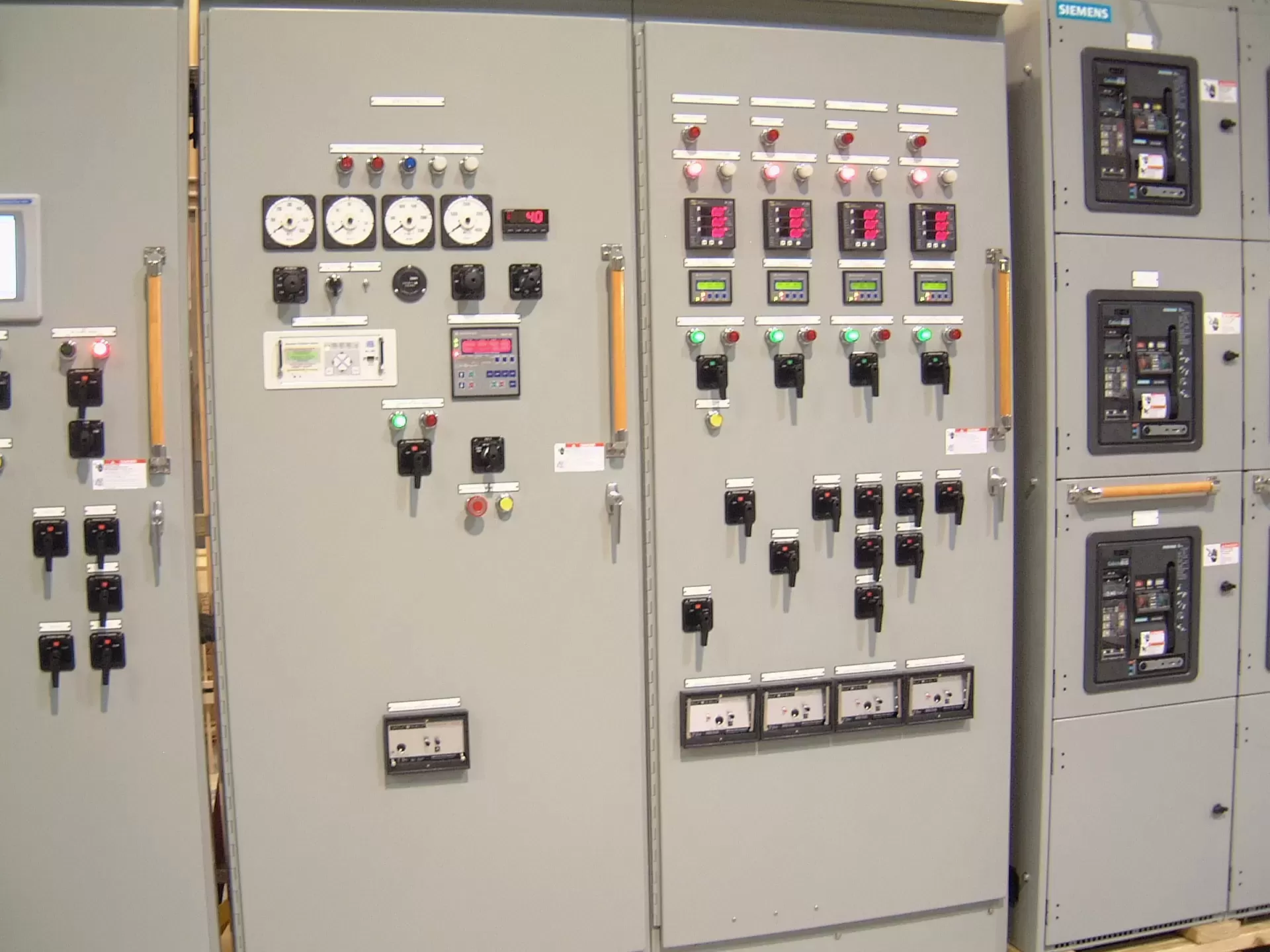
Questions
Distribution system and feeder inspection questions
Scope
Which equipment does a distribution system inspection cover on an industrial site?
All customer-owned equipment between the utility handover point and your final panels: service entrance equipment, main switchgear or switchboards, transformers, feeders, busway, distribution panels, transfer switches and the grounding system. We trace each feeder, inspect equipment along it, scan energized gear and compare what we find with your single-line diagram. Branch circuits beyond the last panel are outside the usual scope.
Who owns the electrical equipment between the utility and my building?
It depends on your supply arrangement. Often the utility owns the supply transformer and the service conductors up to a defined point, and everything from the main service disconnect onward is yours, including any transformers and switchboards inside the building. Your supply agreement with the local utility, such as Toronto Hydro or Alectra, sets the exact boundary. We confirm it from drawings and on site before the inspection begins.
Do you inspect outdoor disconnects and exterior distribution equipment?
Yes, on customer-owned equipment such as outdoor disconnect switches, exterior panels, feeders to rooftop units and yard lighting distribution. Outdoor gear faces water entry, corrosion and sun damage to cable jackets, so we check enclosure ratings, gaskets, drainage, conduit seals and connection heating. Findings are rated on the same scale as indoor equipment in the report.
What is the difference between a feeder and a branch circuit?
A feeder carries power from a distribution point, such as a switchboard or transformer, to another distribution point, such as a panel. A branch circuit runs from the final overcurrent device to the load it serves. Feeders carry more current and serve more equipment, so a feeder failure usually affects far more of the building than a branch circuit fault.
Feeders and busway
What problems does an electrical feeder inspection usually find?
Typical findings are overheated or loose terminations, damaged cable jackets at entries and tray, overfilled or unbonded cable tray, busway joints running hot, plug-in units with wrong fuse sizes, and feeders protected by devices that no longer suit the load. Splices in pull boxes and gutters can show heat damage or loose taps. The report sorts these by how soon they need action.
Can feeder cables be tested without disconnecting them from service?
Thermal scanning and load measurement are done with feeders in service. Insulation resistance testing needs the feeder de-energized and isolated at both ends, so it is scheduled into a planned outage. On critical feeders we discuss trending load and temperature readings as part of a predictive maintenance plan.
Why do busway joints need regular thermal scanning?
Busway is assembled from sections joined by bolted connections, and each joint is a place where heating cycles, vibration or poor installation can loosen contact. A loose joint heats up under load and can damage the bus or fail. Thermal scanning under normal load finds warm joints early, so they can be serviced during a planned outage rather than after a failure.
Drawings and load
Why does our single-line diagram need to be verified?
Electricians use it to plan isolation, arc flash labels rely on it, and engineers use it to plan expansions. If it shows a feeder or device that has changed, people may isolate the wrong source or work to the wrong label. Over years of renovations and equipment changes, most single-lines drift from reality, so we check them in the field.
Can you tell us if we have capacity for new equipment?
The inspection gives a strong starting point. We measure load on main and feeder circuits, compare it with equipment and conductor ratings, and can record demand over time to capture peaks. That shows where spare capacity exists and where it does not. A large addition may still need an engineer's design and a utility service review.
Do you produce a new single-line drawing after the inspection?
We mark up your existing single-line with every difference found in the field and record ratings and identification for each device. That gives a drafter or your engineer what they need to issue a revised drawing. If you have no single-line at all, our field notes from the feeder trace are the starting information for creating one.
Timing and rules
How often should an industrial distribution system be inspected?
A yearly walk-through with a thermal scan suits most industrial sites, and offline maintenance of each equipment type on a cycle of one to five years, set by condition, criticality and environment as NFPA 70B (2023) describes. Sites with harsh environments or critical processes inspect more often. Unscheduled inspections follow major faults, floods, fires and significant load additions.
Is a distribution system inspection required by law in Ontario?
We are not aware of any Ontario regulation that fixes an inspection interval for privately owned distribution systems. Reg. 851 requires equipment to be suitable for its use and work to be done safely, and the OESC governs repairs and changes. Insurers, lenders and client contracts often ask for documented maintenance, and the two maintenance standards, CSA Z463 and NFPA 70B, set out a framework for it, with ANSI/NETA MTS covering how each test is done.
Does the inspection need a full site shutdown?
No. Most of the inspection, including the feeder trace, visual checks and thermal scans, is done with everything running. Offline maintenance on main switchgear, transformers and feeders needs planned outages, which we sequence so key loads stay on through standby power or by isolating sections one at a time. Plants often fold this into annual shutdowns.
Who can legally work on a plant's distribution equipment in Ontario?
A licensed electrical contractor, with only limited exemptions; anyone hiring can confirm the licence through ESA's online look-up. Also ask whether the contractor's electricians routinely work on switchboards, busway and feeders of your size, and whether the firm holds COR and the safety prequalifications your site requires. Our ESA/ECRA licence number is 7014042.
After the inspection
What happens when the inspection finds a serious problem?
Items graded for immediate action are reported to your site contact on the day, not held for the written report. Where it is safe, we make the equipment safe or reduce load until a repair can be done. Because repairs are notifiable to ESA, we file that paperwork and can do the work ourselves, often in the next outage.
How does a distribution inspection relate to an arc flash study?
An arc flash study calculates incident energy from a model of your system, so it needs an accurate single-line, correct device ratings and current protective settings. The distribution inspection collects and verifies exactly that information. Many clients run them together, or use the inspection to bring drawings up to date before the study, which NFPA 70B expects to be reviewed at least every five years.
Related services
Related services
Switchgear Maintenance
Switchgear maintenance and inspection for low voltage lineups and switchboards, planned around shutdown windows and documented section by section.
View service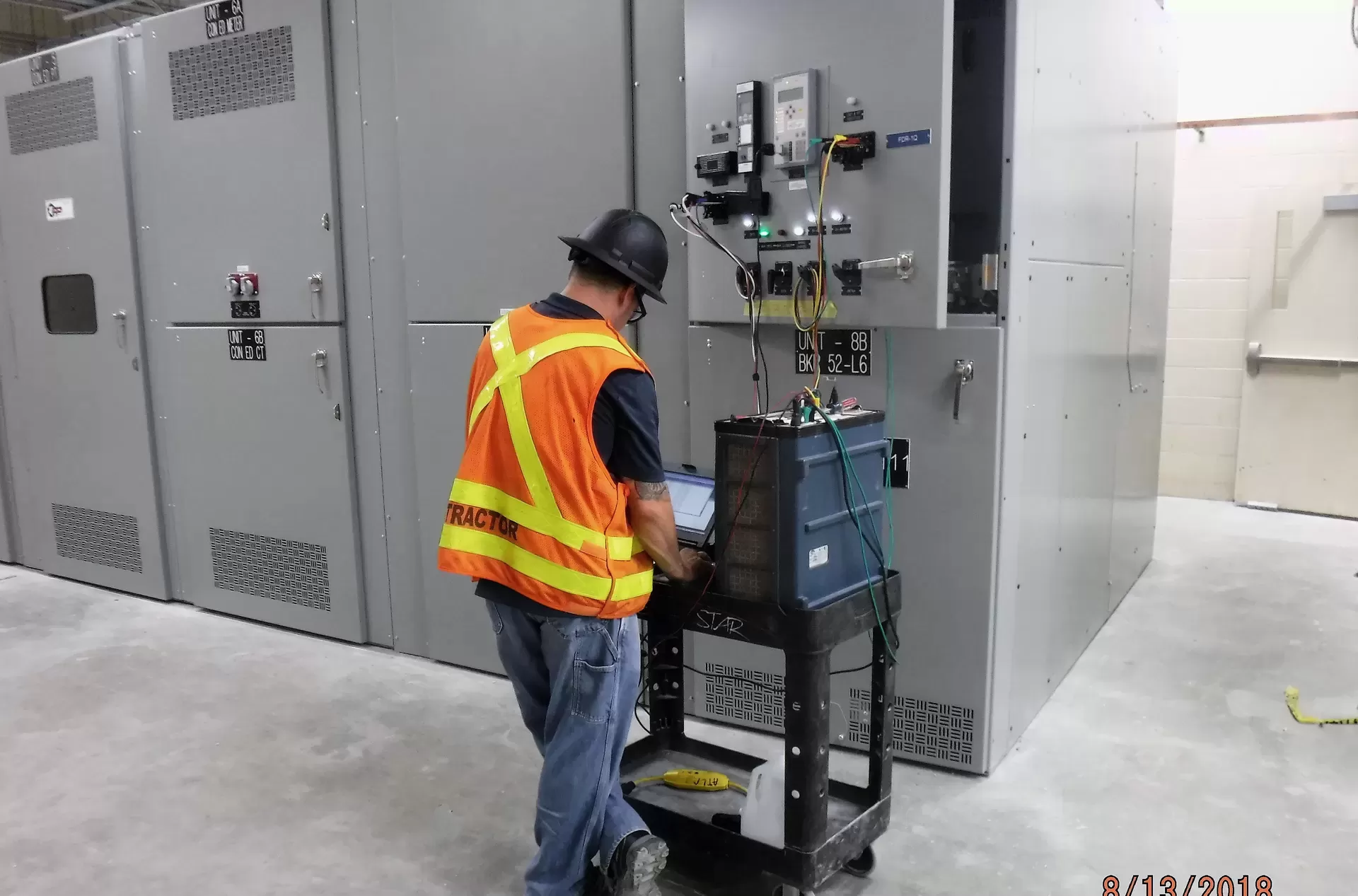
Transformer Testing
Ratio, winding, insulation and thermal checks on customer-owned dry-type transformers, with results trended visit to visit.
View service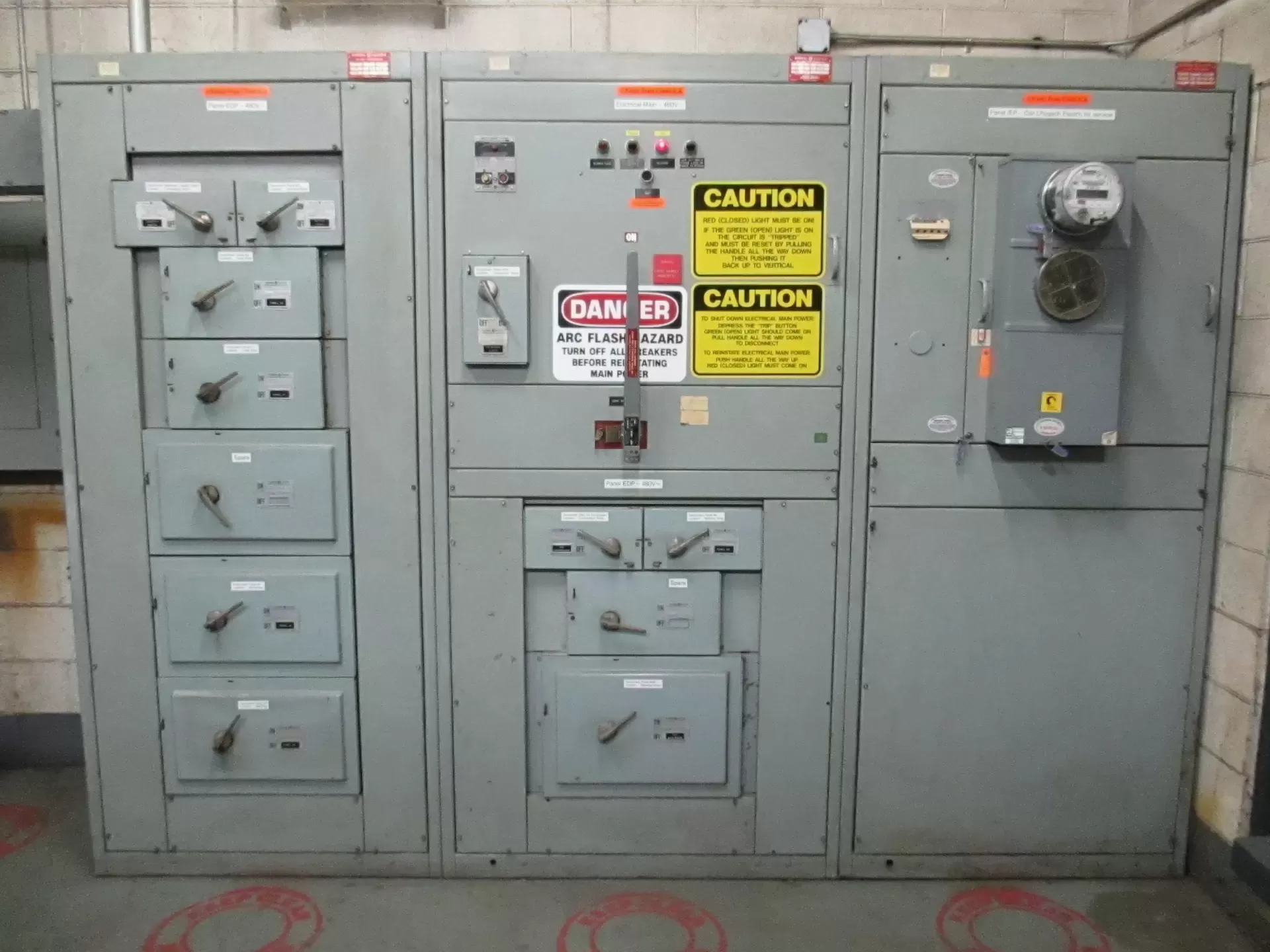
Electrical Panel Inspection
Panelboard, switchboard and disconnect switch inspection with thermal scans, torque checks and a written condition report.
View serviceArc Flash Study
Arc flash assessment, incident energy results and CSA Z462 arc flash labels so your electricians know the hazard at every piece of gear.
View serviceElectrical Preventive Maintenance
A written program of scans, cleaning, tightening and tests for switchgear, panels and transformers, aligned with CSA Z463 and NFPA 70B.
View serviceElectrical Asset Management
An electrical asset register, condition scores and a ranked repair and replacement plan for plants and building portfolios.
View serviceRequest a callback
Plan your next electrical maintenance program with KCS
Tell us about the site and the equipment. A licensed electrician reviews it and calls you back.
- ESA/ECRA licence #7014042
- COR certified, ISNetworld, Avetta and ComplyWorks
- Work planned around shutdowns and tenant hours
- Emergency response for maintenance-contract clients
Send your request
We reply during business hours: Open daily, 9 a.m. to 9 p.m.