
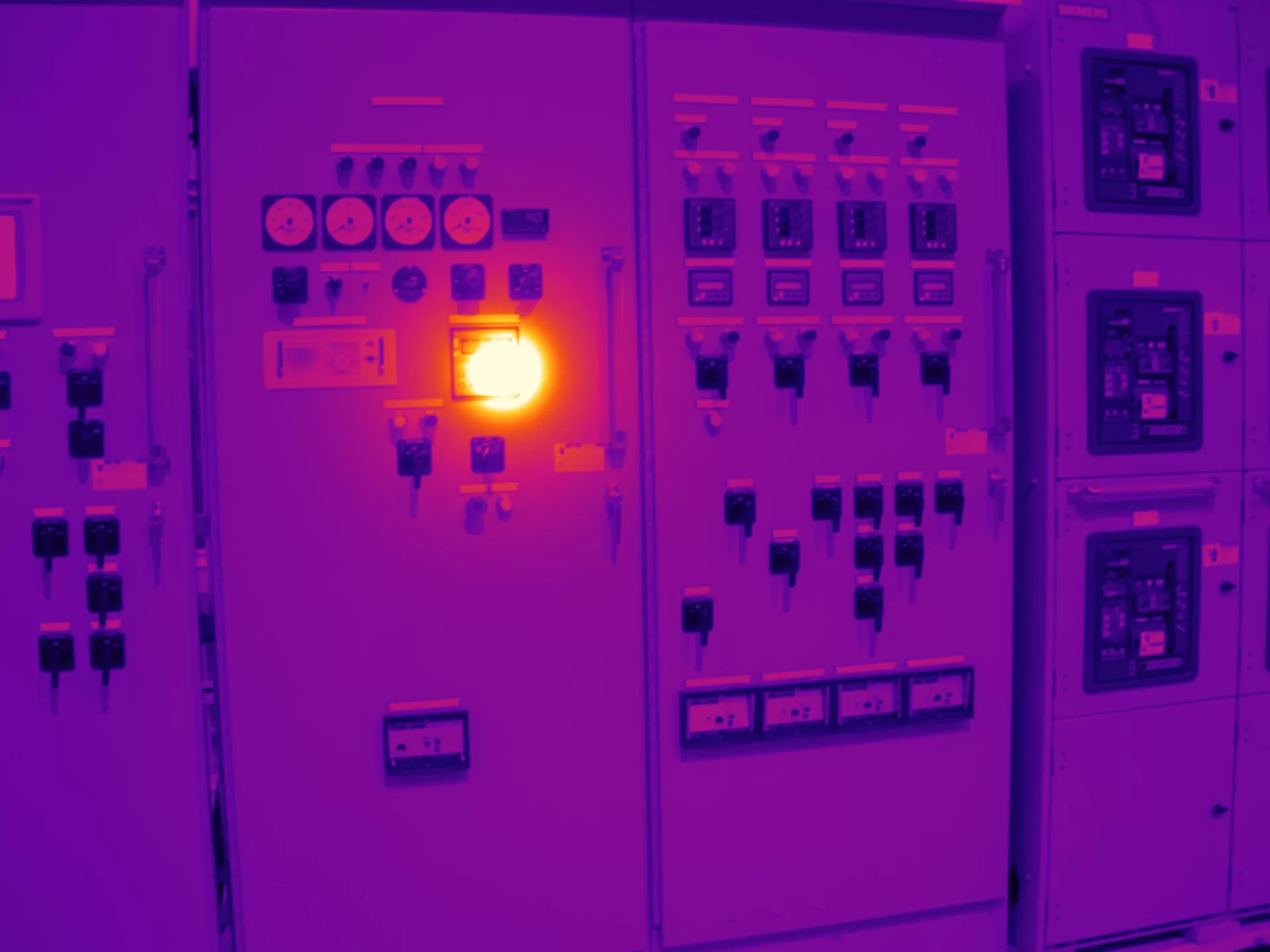
Insurance infrared scans
Insurance Infrared Scan Reports for Ontario Properties
If an insurance infrared scan is now on your renewal checklist, we scan your electrical equipment under normal load and deliver a report built for underwriters. If the scan finds problems, our licensed electricians can repair them and re-scan for proof. New to the method? Start with how electrical thermography works.
- Level II certified thermographers
- ESA/ECRA #7014042
- COR certified (IHSA)
- Commercially insured
Request a callback
A licensed electrical contractor calls you back, usually the same business day.
Updated Reviewed by KCS Group licensed electricians
Why Insurers Ask for an Infrared Scan Report
Insurers ask for an infrared scan report because overheating electrical equipment can start property fires and equipment loss, and a recent scan shows the underwriter whether your distribution equipment has hidden heat problems. The report gives them evidence of condition that a walk-through cannot.
Commercial property underwriters and loss-control consultants have long promoted thermal imaging of electrical systems. Their guidance commonly points to the same findings a thermographer looks for: loose connections, unbalanced loads, overloaded circuits and deteriorating insulation. Some carriers send their own risk consultants to scan insured sites; others write a recommendation into the survey or renewal letter and leave the owner to hire a qualified firm. That second case is where we come in.
There is no single Ontario rule that makes an insurance infrared scan mandatory for every building, and requirements vary by insurer, policy and property type. What tends to trigger a request is a renewal survey, a change of ownership, a loss history, a building with older distribution equipment, or a manufacturing or warehouse risk with high electrical load. Your broker will know which applies to you.
This page covers the scan done for an insurer. The method itself, how a thermographer finds and measures heat, is explained on our infrared electrical thermography page.
What to Ask Your Broker Before Booking the Scan
Before you book, get the insurer's request in writing and confirm the scope, the deadline, and what proof they want that recommendations were fixed. Five minutes with your broker saves a second visit later.
- Scope. Does the insurer want the main service and switchboard only, or every distribution panel, motor control centre and transformer on site? Does it cover one building or every location on the schedule?
- Deadline. When is the report due, and is there an extension process if repairs are needed first?
- Thermographer qualification. Some insurers name a minimum certification level. Ours are Level II certified, so check the letter against that before booking.
- Report format. Does the insurer have its own form, or will a full thermographic report be accepted?
- Proof of correction. Will a contractor's letter do, or do they want a re-scan with new images showing the repaired points?
- Distribution. Who receives the report: you, the broker, the insurer's loss-control contact, or all three?
If you send us the request letter, we will read it with you and price the scope it actually asks for, nothing more.
What an Infrared Scan Report for Insurance Includes
An infrared scan report for insurance includes a summary the underwriter can read in a minute, a detailed page for every finding, a list of what was scanned without problems, and the credentials of the people who did the work. We do not publish sample reports, but the contents are set out below.
| Report section | What it shows | Why the insurer cares |
|---|---|---|
| Cover and summary | Site, date, scope, count of findings by priority | Quick view of overall electrical risk |
| Credentials | Contractor licence ESA/ECRA #7014042, thermographer certification level | Confirms a qualified firm did the scan |
| Finding pages | Thermogram, visible photo, location, equipment ID, temperatures, load | Evidence of each defect and its severity |
| Priority and action | Rating by temperature rise and the recommended repair | Shows what must be fixed and how soon |
| Equipment scanned clear | Every enclosure imaged with no anomaly | Proves the scope was covered, not sampled |
| Not scanned | Equipment we could not access, with the reason | Flags gaps instead of hiding them |
Reports are delivered as a PDF that you can forward to your broker. Images are kept on file so the next annual scan can compare the same equipment from the same angle.
How Scan Findings Are Ranked for an Underwriter
Each finding is ranked by how far it runs above a matching component under similar load and above room air, using the temperature bands in the thermographic table of ANSI/NETA MTS (the maintenance testing specification for electrical power equipment), so the underwriter sees a clear order of urgency. The ranking separates "fix immediately" from "plan it into the next shutdown".
In practice an underwriter reads the summary first. A report with no high-priority items usually closes the request. A report with one or two serious hot spots will normally lead to a recommendation that they be corrected and confirmed. Being open about a serious finding is better than a thin report that leaves the insurer guessing; it also protects you, because the hot spot was real whether or not anyone wrote it down.
Where a finding is severe enough to put people or property at risk, your site contact hears about it from the thermographer in person, well ahead of any paperwork, so you can decide whether to reduce load, isolate the circuit or book an immediate repair.
Closing Out Insurer Recommendations: Repair and Proof
To close an insurer recommendation you need the defect repaired by a licensed electrical contractor and evidence that it worked, usually a re-scan of the repaired points. KCS can do both, which keeps the paper trail in one place.
- Repair. Our licensed electricians correct the defect: re-terminate or replace the lug, replace a damaged breaker or fuse holder, rebalance loads, or upgrade an overloaded feeder. In Ontario, work on an electrical installation needs a notification of work filed with the Electrical Safety Authority (ESA), and we handle that.
- Re-scan. Once the circuit is back under normal load we image the repaired point again and record the new temperature rise.
- Close-out letter. You receive a short letter or report addendum listing each recommendation, the work done, the date, and before-and-after images, ready for your broker.
If you prefer to use your own electrician for repairs, that is your choice; we can still re-scan their work so the insurer gets the same evidence. For defects that need deeper diagnosis, our electrical troubleshooting team takes over, and for panels with repeated findings an electrical panel inspection may be the better next step.
Properties That Commonly Get Insurance IR Scan Requests
Insurance infrared scan requests most often reach owners of buildings with large electrical loads, older distribution equipment, or a lot of property value under one roof. The pattern is about risk, not building type alone.
- Manufacturing plants and process facilities, where a failed bus or MCC can stop production and start a fire. Plant-wide survey work is covered on our industrial thermography page.
- Warehouses and distribution centres with high-bay lighting, conveyor controls, battery charging and racking full of stock.
- Multi-tenant office, retail and industrial buildings, where the owner insures the base building and tenants share the service. Property managers with several sites should see commercial building thermography.
- Medical office buildings and clinics, where electrical problems can interrupt patient services.
- Condominium and residential towers with large common electrical rooms, when the corporation's insurer asks.
Recent purchases are another trigger: a buyer's insurer may want a scan soon after closing to establish the condition of the electrical system they now cover.
Timing an Insurance Thermal Scan Before Renewal
Book the scan several weeks before the insurer's deadline so there is time to repair any serious finding and re-scan it before the report is due. A scan done the week of renewal leaves no room for correction.
The scan itself must happen when the equipment is carrying normal load. For an office or retail building that means business hours on a working day; for a plant it means a full production shift, not a shutdown weekend. If occupied hours are a problem for tenants, we can scan early in the day while loads are still representative. We answer calls daily from 9 in the morning until 9 at night to set dates.
For multi-building schedules we sequence sites so that one report format covers them all. Annual scans also line up well with the twelve-month interval NFPA 70B (2023 edition) sets for thermography on equipment in good condition, and the scan is performed to ANSI/NETA MTS just as it would be in a maintenance program, so the insurance scan can double as part of your preventive maintenance record.
What an Insurance Electrical Scan Does Not Tell the Insurer
An insurance electrical scan tells the insurer whether energized equipment was running hot on the day of the visit; it does not certify the installation, test protective devices, or look at the roof and walls. Knowing the edges of the report helps you answer follow-up questions from the underwriter.
- It is not a code approval. Only the Electrical Safety Authority inspects work against the Ontario Electrical Safety Code. Our report describes condition, not compliance.
- It does not prove breakers will trip. A breaker can run cool and still fail to open on a fault. If your insurer or lender wants protective devices verified, that is circuit breaker testing, a separate scope.
- It is not an arc flash assessment. Some underwriters also ask whether equipment carries arc flash labels. That comes from an arc flash study, not a thermal survey.
- It does not cover the building envelope. Insurers sometimes request infrared roof or moisture surveys. We scan electrical systems only, and we will say so plainly rather than stretch the report.
- It reflects one day. Loads change, connections loosen over time, and a clean report this year is not a promise about next year, which is why many owners repeat the scan annually.
If the insurer letter mixes several of these requests, we will separate them into clear scopes so you can see what each one involves before you approve anything.
Contractor Credentials Your Insurer and Lender Will Check
Insurers, lenders and property managers want to see that the firm doing the scan is licensed, insured, safety certified and covered by workplace insurance. KCS can show each of those on request.
- Licence: our company appears on the ESA contractor look-up as KCS Group Ltd., licence #7014042.
- Thermographers: every scan is led by someone certified at Level II or above.
- Safety program: IHSA has awarded us COR, and owners who screen contractors online will find us on ISNetworld, Avetta and ComplyWorks.
- WSIB: we are covered and can supply a clearance certificate. WSIB places the duty to get that certificate on the owner or principal who hires a contractor directly, and each certificate lasts a maximum of 90 calendar days, so ask for a fresh one on longer jobs.
- Insurance: commercially insured; certificates of insurance are issued on request.
Fifteen years of electrical contracting sit behind those credentials. Our crews travel Ontario-wide from Aurora, and our scanning work takes us to Toronto, Markham and Brampton and across the GTA.
How it works
From insurer letter to closed recommendation
Share the request
Send us the insurer or broker letter so the scope, deadline and report format match what they asked for.
Scan under normal load
Our thermographer images every item in scope while equipment runs; urgent heat is reported before we leave.
Fix and confirm
Licensed electricians repair the findings, file the ESA notification and image each repaired point again.
For brokers and owners
A report written for the person who reads it
Underwriters read the summary first, so ours lists findings by priority on page one. Every finding page pairs the thermal image with a regular photo and the readings, and a separate list proves which equipment was scanned clear.
Property managers with several buildings can receive one consistent format across the portfolio.

Questions
Insurance infrared scan questions
Insurer requirements
Will insurance cover the cost of an electrical thermography scan?
That depends on your policy and insurer, so ask your broker. Some insurers provide scans through their own loss-control consultants at no direct charge, while others write a recommendation and expect the owner to hire and pay a qualified firm. When the cost falls to you, we quote the exact scope your insurer asked for.
Does my insurance company require a yearly infrared scan?
Some insurers ask for one at every renewal, some only after a survey or claim, and many never ask. There is no general Ontario rule that applies to all commercial buildings. Check your policy conditions and any recommendation letters, or ask your broker, and we can scan to whatever interval they set.
Who is qualified to perform an infrared scan for insurance?
Insurers generally want a certified thermographer working with a licensed electrical contractor, so the person reading the images is trained and the people opening energized equipment are qualified. Our thermographers hold Level II certification, our electricians work under contractor licence #7014042, and IHSA has certified our safety program under COR.
What thermographer certification level do insurers usually request?
Requests vary, and some insurers state no level at all. Level I training covers how to capture a usable thermal image; Level II adds quantitative measurement, interpretation and reporting skills. At KCS, insurance scans are always led by a thermographer certified to Level II at minimum.
Will my insurer accept a report from an electrical contractor?
In most cases yes, provided the report is complete and the thermographer is certified. Insurers care about the qualification of the people, the scope covered and the quality of the evidence, not whether the firm calls itself an electrician or a thermography company. Confirm any required form with your broker first.
During the scan
Does an insurance infrared scan require turning the power off?
No. The scan has to be done with power on and equipment under normal load, otherwise defects will not show. Licensed KCS electricians take the covers off, following a CSA Z462 assessment of the arc flash and shock risk, and the thermographer captures the images. Power is only shut off later, if a repair is needed, at a time agreed with you.
Can the insurance scan cover only the main switchboard?
Yes, if that is what the insurer requested. Many letters ask only for the main service and distribution equipment, while others want every panel, motor control centre and transformer. Send us the request and we will match the scope exactly, and tell you if we think a critical item has been left out.
Do tenants need to be present during an insurance thermal scan?
Tenants do not need to be present, but we need access to every electrical room and suite panel in scope. Property managers usually send a notice in advance and arrange keys or escorts. Scans are quiet and do not interrupt power, so most tenants never notice we were there.
Can one visit cover every building on our insurance schedule?
One booking can cover several buildings, scanned on consecutive days with one report format and a summary page per site. Each building still needs to be scanned under its own normal load, so the visit is planned around each site's business or production hours.
Reports and repairs
How soon will I receive the infrared report for my insurer?
We agree the delivery date when you book, based on the number of sites and findings and your insurer's deadline. Serious findings are reported on site the same day, before the written report, so you can act immediately rather than wait for the PDF.
What happens if the insurance scan finds a serious problem?
We tell you on site and recommend immediate steps, such as reducing load or isolating the circuit. The finding goes into the report with its priority. We can then repair it under an ESA notification and re-scan it, and the close-out letter shows the insurer that the recommendation was corrected.
Do I need a re-scan after repairs to satisfy the insurer?
Many insurers want evidence that a repair worked, and a re-scan with new thermal images is the clearest proof. Some will accept a contractor's letter. Ask your broker which they need; if a re-scan is required, we image the repaired points under normal load and add them to the report.
Is an insurance infrared scan the same as an ESA inspection?
No. An ESA inspection checks that electrical work filed under a notification meets the Ontario Electrical Safety Code. An insurance infrared scan is a condition survey of energized equipment for your insurer. Repairs that come out of the scan may need an ESA notification, which we file as the licensed contractor.
What should I send my broker along with the IR report?
Send the full PDF report, the close-out letter if repairs were made, and our certificate of insurance or licence details if the broker asks. Keep the original images on file too, because next year's scan will compare the same equipment and show whether any problem has returned.
What if the insurer deadline is only days away?
Call us at (647) 979-0549 with the deadline and scope. We will offer the earliest scan date we can and report urgent findings on site. If repairs cannot be finished before the deadline, a copy of the report and a scheduled repair date often helps your broker request an extension.
Related services
Related services
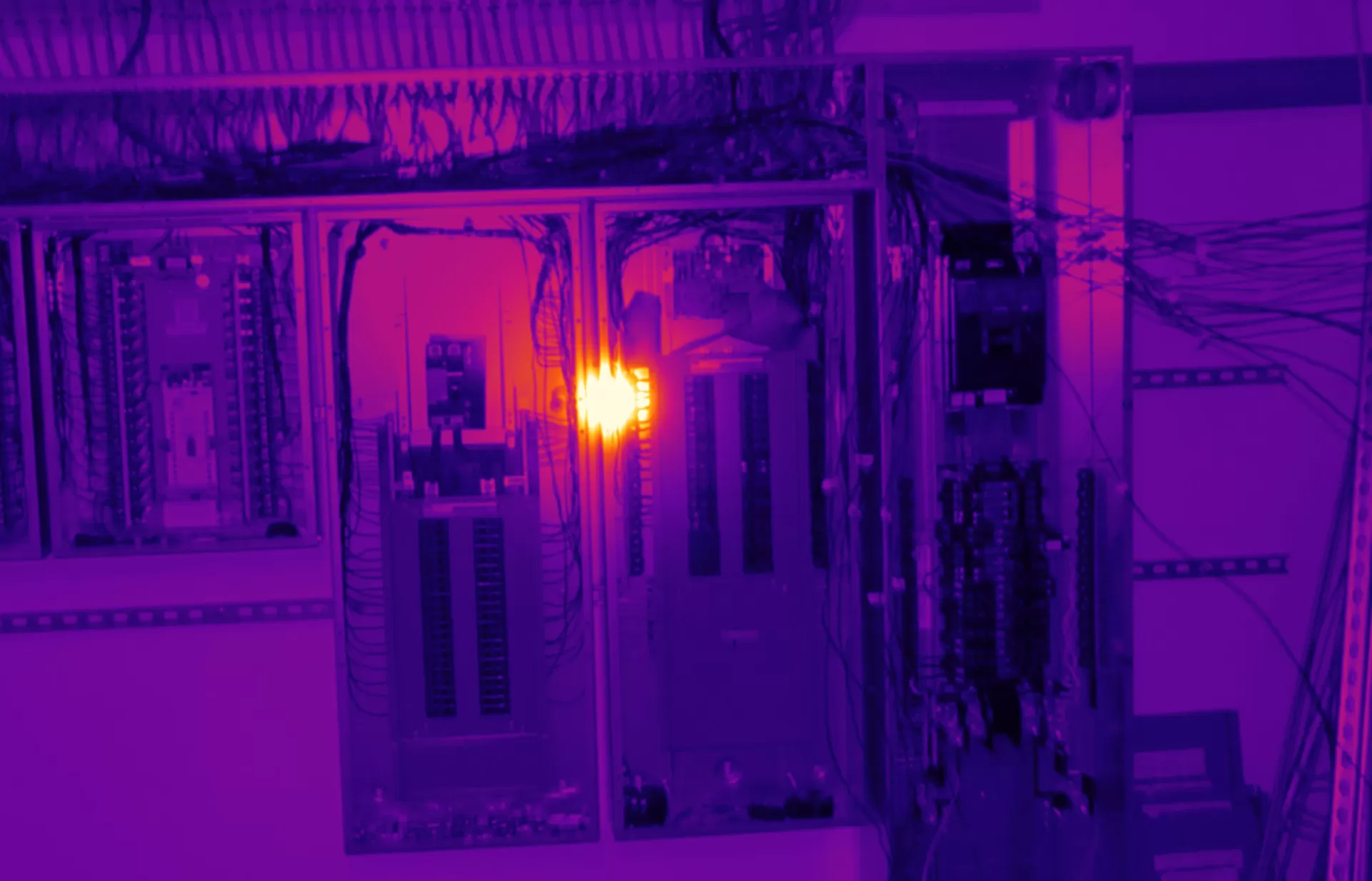
Infrared Electrical Thermography
Thermal scans of energized switchgear, panels and motor controls by Level II thermographers, with rated findings and repairs by licensed electricians.
View service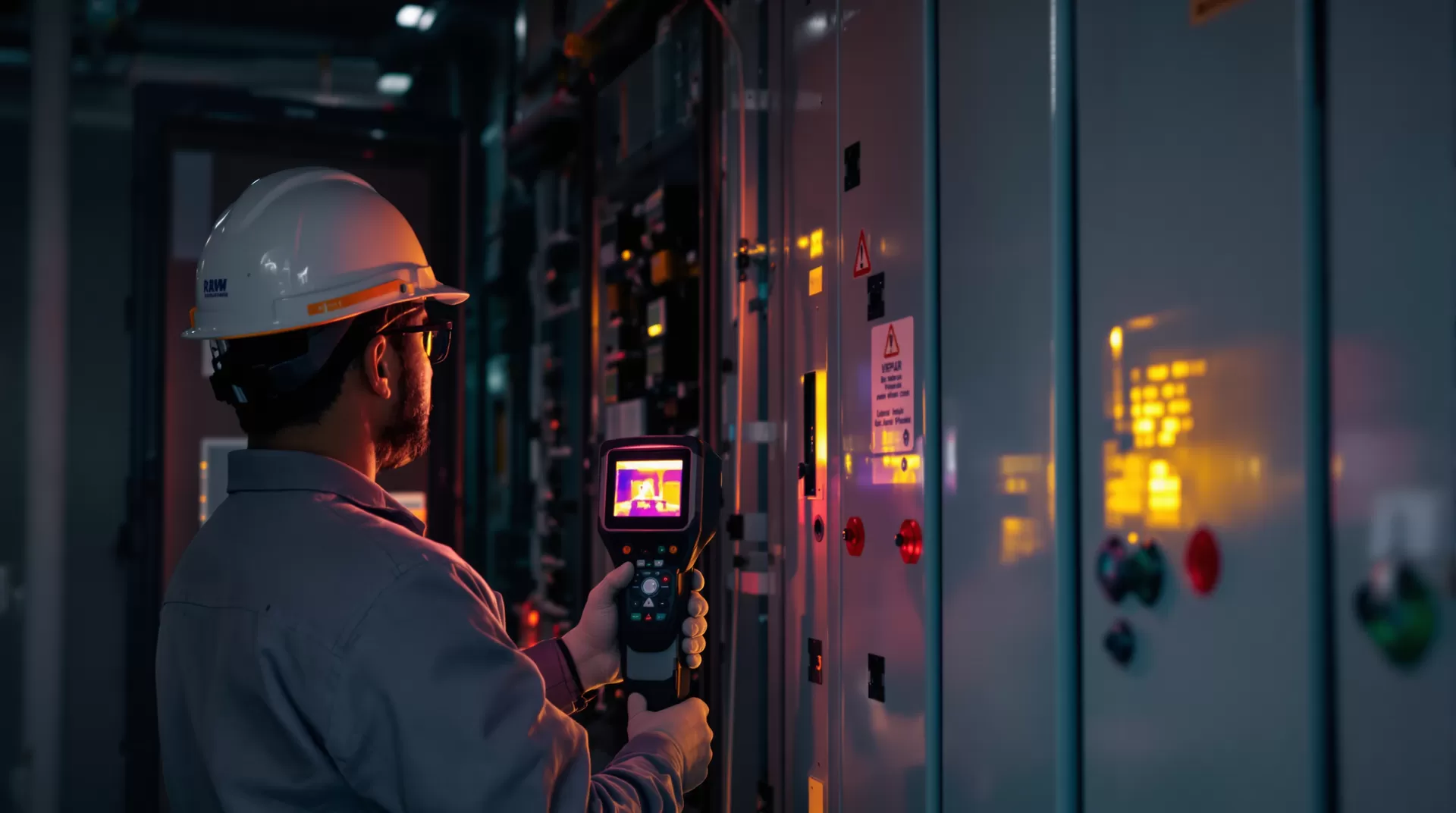
Commercial Building Thermography
Electrical infrared scans for office, retail and industrial buildings, with one report format across a property manager's whole portfolio.
View service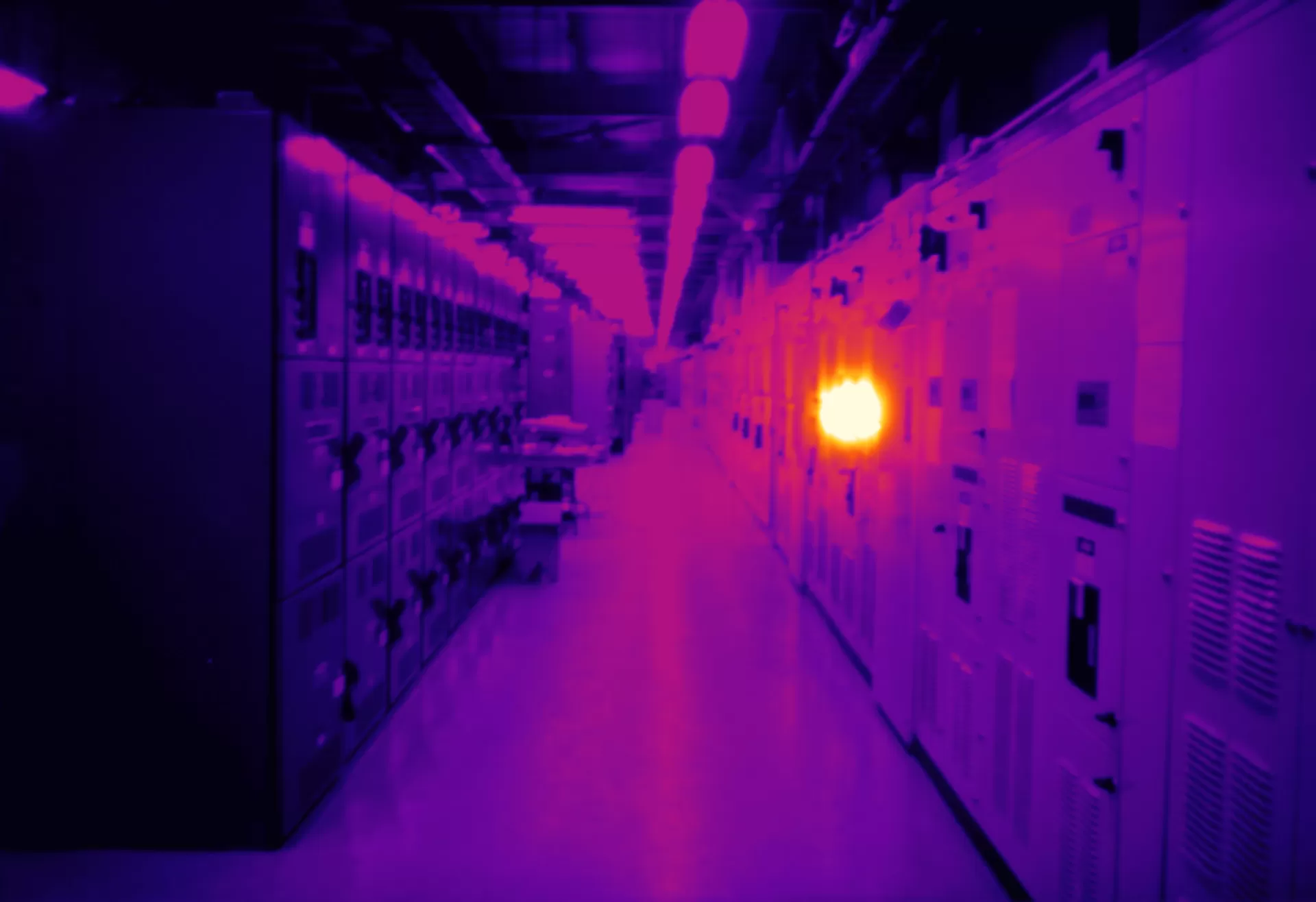
Industrial Plant Thermography
Thermographic surveys of manufacturing plants under production load, with trended findings, shutdown-ready work lists and licensed repairs.
View service
Request a callback
Plan your next electrical maintenance program with KCS
Tell us about the site and the equipment. A licensed electrician reviews it and calls you back.
- ESA/ECRA licence #7014042
- COR certified, ISNetworld, Avetta and ComplyWorks
- Work planned around shutdowns and tenant hours
- Emergency response for maintenance-contract clients
Send your request
We reply during business hours: Open daily, 9 a.m. to 9 p.m.