
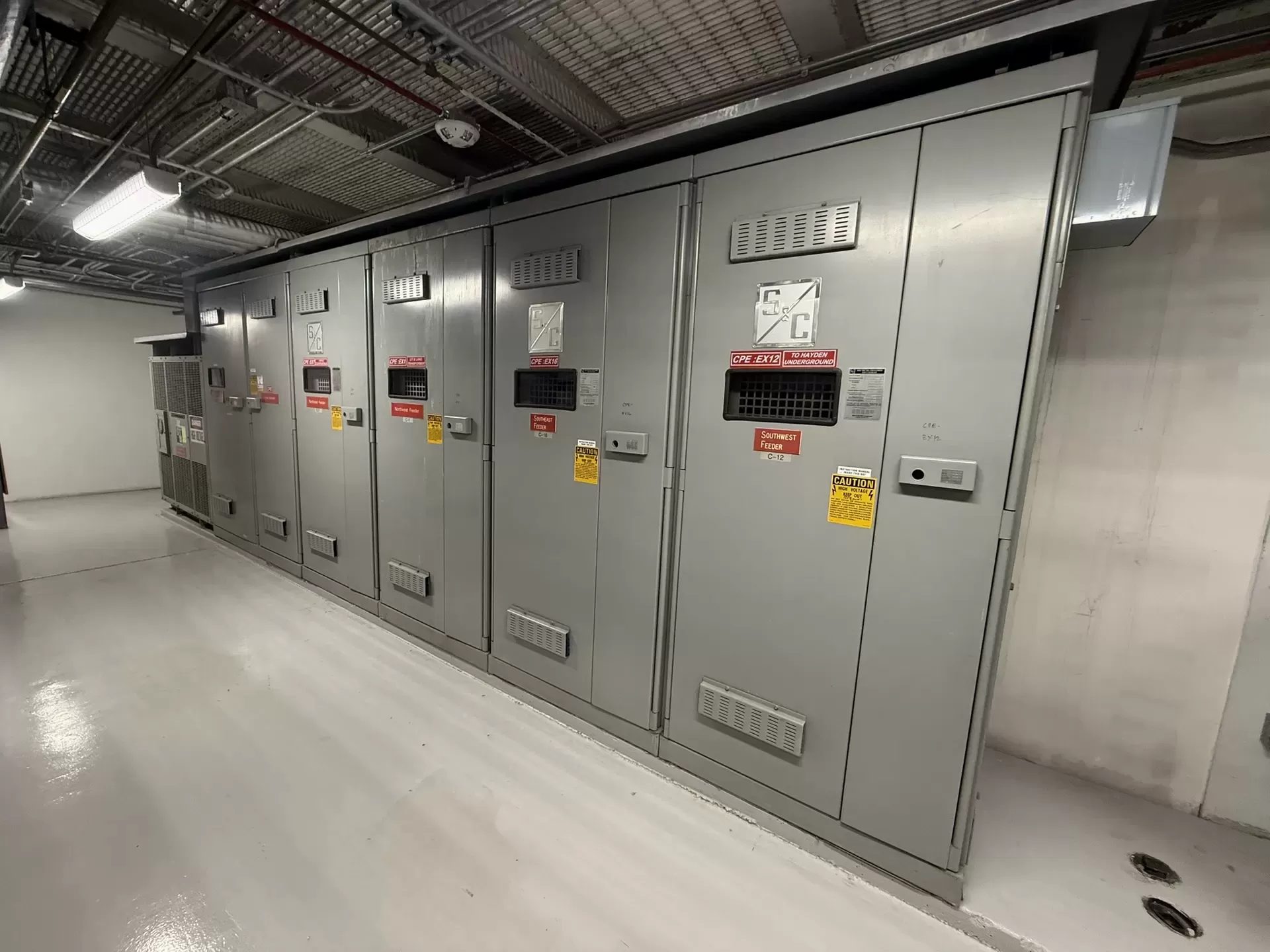
Know what you own and what it needs
Electrical Asset Management and Condition Assessment in the GTA
Electrical asset management gives you a complete record of your distribution equipment, an electrical condition assessment for each item, and a plan that ties maintenance and capital spending to real risk. KCS builds these programs for plants, property managers and multi-site owners in Toronto, throughout the GTA and elsewhere in Ontario.
- ESA/ECRA #7014042
- COR certified (IHSA)
- Level II thermographers
- 15 years in business
Request a callback
A licensed electrical contractor calls you back, usually the same business day.
Updated Reviewed by KCS Group licensed electricians
What Is Electrical Asset Management?
Electrical asset management is the practice of knowing every piece of electrical distribution equipment you own, what condition it is in, how critical it is, and what it will need over the next several years. It answers three questions that facility and finance teams ask: what do we have, what state is it in, and where should the next dollar go.
Many sites cannot answer the first question. Switchboards are added during expansions, tenant panels change hands, and the single-line diagram on the wall no longer matches the building. Maintenance then runs on habit: the same rooms get attention every year, while a feeder in a mezzanine or a transformer behind racking is forgotten.
An asset management program fixes that by building a register, scoring each asset, and linking the score to a maintenance interval and a repair or replacement decision. It sits above the hands-on work. The inspections, tests and scans that feed it are described on our preventive maintenance, testing and predictive electrical maintenance pages.
How an Electrical Condition Assessment Works
An electrical condition assessment scores every asset for wear and damage, for the consequence of losing it, and for the conditions around it. NFPA 70B uses this approach to set maintenance frequency, and whichever of those scores is poorest decides the interval.
| Factor | What we look at | Examples of a poor rating |
|---|---|---|
| Physical condition | Age, visible damage, signs of heat, corrosion, test results, maintenance history | Discoloured insulation, missing barriers, no record of service in many years |
| Criticality | What stops if this asset fails, and whether a backup exists | Single main switchboard for a production line, no tie or alternate feed |
| Operating environment | Dust, moisture, temperature, vibration, chemical exposure, loading | Food plant washdown areas, unheated buildings, heavy conductive dust |
Each asset ends up with a condition rating of 1, 2 or 3, where 1 is equipment in good shape in a clean, non-critical setting and 3 is equipment that is degraded, critical or working in a harsh environment. The rating is not a judgement of the original installer. It is a planning tool, and it is reviewed every time new data comes in.
Physical condition is judged from evidence, not appearance alone. We use a visual inspection of each enclosure, electrical thermography under load, and the latest test results where they exist. Equipment with no history at all is usually rated conservatively until a baseline is taken.
Where the Condition Data Comes From
Ratings are only as reliable as the evidence behind them, so each one notes its source: a dated thermal image, a test sheet, a visual record or a documented absence of history. That traceability is what lets an auditor or insurer follow a rating back to the field.
On a first assessment, most evidence comes from the walk-through and an energized thermal survey. Each enclosure is checked for heat damage, tracking, corrosion, missing hardware, water staining and blocked working space. Nameplates are photographed so ratings can be checked against the connected load and the available fault current later on.
Over the following visits, offline results are added: insulation resistance on feeders and transformers, contact resistance and trip timing on breakers, and protective relay checks where fitted, each performed to ANSI/NETA MTS (2023 edition) so that one visit can be compared directly with the next. On sites with continuous monitoring or power quality meters, those readings feed the register too. Old reports from previous contractors are included when they record the method and conditions, and flagged as unverified when they do not.
Equipment that cannot be opened safely, or that has no nameplate, is listed with the reason, so the gap is visible rather than hidden.
Building the Electrical Asset Register
The register is a single list of every distribution asset, with enough detail that someone new to the site could find it, isolate it and understand its role. It is the foundation for everything else, so we build it in the field rather than from old drawings.
For each asset we record:
- Location, equipment type and a unique tag that matches the label we apply.
- Nameplate data: voltage, current rating, interrupting rating, manufacturer and approximate age.
- Upstream and downstream connections, so the asset can be placed on the single-line diagram.
- Criticality: what loads it serves and what happens if it fails.
- Environment notes and access constraints.
- Maintenance and test history, with dates and results where available.
- Arc flash label status and any missing warning signs.
Where the single-line diagram is missing or out of date, the register shows the gaps. An accurate single-line is also the starting point for an arc flash study, so the two pieces of work are often scheduled together.
Turning Condition Ratings Into Maintenance Intervals
Once each asset has a rating, the maintenance interval follows from it. A rating 3 asset is serviced and tested far more often than a rating 1 asset of the same type, so effort is concentrated where risk is highest.
The 2023 edition of NFPA 70B gives a reference table. Selected values, in months, are shown below.
| Equipment and task | Rating 1 | Rating 2 | Rating 3 |
|---|---|---|---|
| Thermography, all equipment | 12 | 12 | 6 |
| Switchgear, visual inspection | 12 | 12 | 6 |
| Switchgear, cleaning, mechanical and electrical testing | 60 | 36 | 12 |
| Panelboards and switchboards, all tasks | 60 | 36 | 12 |
| Power and distribution transformers, visual | 12 | 12 | 6 |
| Electromechanical protective relays | 36 | 24 | 12 |
| UPS, visual inspection | 6 | 3 | 1 |
These intervals do not override the manufacturer's instructions, and they are a starting point rather than a rule. Committee reporting on the standard indicates that a newly set interval should normally stay in place for a couple of full cycles, barring surprise failures, so the data has time to confirm or revise the rating.
NFPA 70B is a US standard. Ontario sites follow it where a policy, lease or purchase order names it. CSA Z463, the OESC and O. Reg. 851 frame our work in every case, and our test methods follow ANSI/NETA MTS.
What a Documented Electrical Maintenance Program Includes
A documented program shows who is responsible, what equipment is covered, how it is maintained and how the results are kept. NFPA 70B lists the elements an electrical maintenance program is expected to contain, and CSA Z463 covers the same ground for Canadian sites.
- A written electrical safety program, with the people accountable for it identified by role.
- An equipment survey, with each item analysed for maintenance needs.
- Written procedures for how inspection, servicing and testing are carried out.
- A schedule that states what is done to each asset and how often.
- Rules on how long records are kept and where.
- A way to log deficiencies and track them until they are closed.
- Maintainability considered whenever equipment is added or modified.
- Regular review of whether the program itself is working.
We write the equipment-facing parts of that program: the survey, the register, the inspection and test plan, and the corrective-action tracking. Your organisation keeps ownership of policy and named roles. After maintenance, NFPA 70B also expects a visible indication of equipment condition, and we apply condition labels that match the register.
Repair, Refurbish or Replace: Planning the Next Five Years
Asset management lets you decide in advance whether an item should be maintained, refurbished or replaced, instead of making that decision on the day it fails. The plan groups assets into those three paths with the reasons attached.
Factors we weigh for each asset:
- Condition trend across several visits, not one reading.
- Availability of parts and support from the original manufacturer.
- Criticality and whether a temporary feed is possible during a replacement.
- Upcoming changes on site, such as new production lines, EV charging or tenant fit-outs.
- Lead times for replacement gear, which can be long for switchgear and transformers.
When a replacement goes ahead, we run the ANSI/NETA ATS (2025 edition) acceptance checks on the new gear ahead of its first day under load, and those readings become its first entry in the register.
The output is a ranked list that your finance or capital team can work from, with near-term repairs separated from items to budget in later years. We do not attach dollar figures in the assessment itself; quotes for specific work are provided separately when you are ready.
Who Needs an Asset Program, and Who Does Not
Asset management is most useful for organisations with many electrical rooms, several buildings, or equipment whose failure would stop operations. Property managers with a portfolio, manufacturers with multiple lines, and healthcare or institutional owners are typical clients.
It is likely worth it if:
- Nobody can produce a current list of your switchboards, MCCs and transformers.
- Maintenance records are spread across several former contractors.
- An insurer, auditor or lender has asked for evidence of an electrical maintenance program.
- You are planning capital work and need to know which gear is near end of life.
It is probably more than you need if you operate a single small building with a few panels and a clear service history. In that case a regular electrical inspection and a yearly scan cover the risk, and we will say so.
What You Receive From an Electrical Asset Assessment
You receive a register, a condition rating for each asset, a maintenance plan and a ranked action list, all in formats your team can keep updating. We describe the contents here rather than publish a sample, since each one is built from your own equipment.
- The full asset register in spreadsheet form, with tags matching field labels.
- A condition rating and short reason for every asset.
- Thermal and visual images of any deficiency found during the survey.
- A maintenance and test schedule by asset, aligned to your shutdown calendar.
- A ranked action list: immediate repairs, next shutdown, and capital planning items.
- Notes on gaps in drawings, labels or records that should be closed.
As a licensed electrical contractor, we can also carry out the work the plan calls for, from switchgear maintenance to transformer testing, and update the register as each task closes.
Asset Programs for GTA Plants and Building Portfolios
We build asset programs for single plants and for portfolios spread across the GTA, from manufacturing sites in Brampton and Mississauga to office and retail properties in Markham and downtown Toronto. One register format across every site makes it simple to compare buildings and plan spending.
KCS is an ESA licensed electrical contractor (#7014042) based in Aurora. Our safety management is recognised through IHSA's Certificate of Recognition, and we are already set up as a vendor in ISNetworld, Avetta and ComplyWorks, which shortens onboarding for portfolio owners. Field surveys are scheduled around your operating hours and tenant access rules, and contract clients have access to emergency response when an asset fails between visits.
How we build it
From a walk-through to a working asset plan
Field survey
Every electrical room is walked, every asset tagged, and nameplate data, environment and access are recorded on site.
Condition rating
Physical condition, criticality and environment are scored for each asset, using scans and test results where available.
Plan and schedule
Ratings become intervals, and the work is laid out against your shutdowns, budget cycle and tenant calendar.
Keep it current
Each maintenance visit updates the register, so the plan reflects the latest data rather than last year's guess.
For property managers
One register across every building you manage
Portfolio owners often inherit a different maintenance record from every building. We bring them into one format with consistent tags, ratings and action lists, so you can compare properties and explain capital requests to owners with evidence.
The register then drives the visit schedule under our commercial electrical maintenance service.

Questions
Frequently asked questions
Asset management basics
What is electrical asset management for a commercial or industrial site?
It is a structured way to track every piece of electrical distribution equipment, rate its condition and criticality, and plan maintenance and replacement around that rating. The result is a register and an action plan, so spending and shutdown time go to the assets that carry the most risk instead of being spread evenly across the site.
How is asset management different from a preventive maintenance contract?
A preventive maintenance contract describes the hands-on work done at each visit. Asset management is the planning layer above it: the register, the condition ratings, the intervals and the capital plan. Many clients start with asset management to decide what the maintenance contract should cover, then let each visit update the register.
What equipment is included in an electrical asset register?
A typical register covers service entrance gear, switchgear, switchboards, panelboards, motor control centres, transformers, transfer switches, generators, UPS units, busway and large disconnects. Motors and drives can be added on industrial sites. Each item gets a tag, location, nameplate data, criticality and maintenance history.
Condition assessment
What does an electrical condition assessment look at?
Each asset is scored on three counts: physical state, criticality and surroundings. Physical state comes from visual inspection, thermography and test history. Criticality reflects what stops if the asset fails. Environment covers dust, moisture, heat and vibration. Following the NFPA 70B method, the weakest score sets how often that asset is serviced.
How long does an electrical condition assessment take on site?
Time on site depends on the number of electrical rooms, the amount of equipment and access rules, so we quote it after reviewing your drawings or doing a short walk-through. Most of the survey can be done with equipment energized. Any items that need covers removed or a shutdown are listed and scheduled separately.
Do you need to shut down power for a condition assessment?
Usually not. The visual survey, nameplate capture and thermographic scan are done with equipment in service. Shutdowns are only needed for offline testing such as insulation resistance or breaker timing, and those are planned into your normal outage windows once the assessment has shown which assets need them.
Can a condition rating change after the first assessment?
Yes, and it should. Ratings are updated whenever new evidence arrives: a test result, a thermal finding, a repair, or a change in how critical the equipment has become. Improved ratings can lengthen intervals, and declining ones shorten them. Committee guidance on NFPA 70B favours leaving a new interval alone for a couple of cycles unless something unexpected happens.
Planning and budgets
Can an asset assessment help us plan switchgear or transformer replacement?
Yes. The plan separates items to maintain, refurbish or replace, based on condition trend, parts availability, criticality and planned changes on site. That gives your capital team a ranked list well before an item fails, which matters for equipment like switchgear and transformers where lead times can be long.
Does the assessment report include repair cost estimates?
The assessment ranks work by urgency and explains the reasons, but it does not attach dollar figures. When you are ready to proceed with specific repairs or replacements, we provide a separate quote for that scope. This keeps the assessment focused on condition and risk rather than on pricing.
How do we keep the asset register up to date after it is built?
The register is updated at every maintenance visit, test or repair, so it stays current without a separate exercise. If your team adds equipment or makes changes between visits, a short note to us with the details is enough. We recommend a full review of ratings and priorities at least once a year.
Standards and compliance
Is an electrical maintenance program required by law in Ontario?
Ontario law sets duties rather than a single program format. O. Reg. 851 requires suitable equipment, lockout procedures and prompt correction of hazardous ground faults in industrial establishments, and the OESC governs installations. CSA Z463 and NFPA 70B describe how to organise maintenance, and insurers or owners often require one of them by contract. ANSI/NETA MTS adds how each maintenance test is performed and judged.
What does NFPA 70B say an electrical maintenance program must include?
The standard expects a written safety program with accountable people identified, an equipment survey, written procedures, an inspection and test schedule, rules for keeping records, deficiency tracking through to closure, attention to maintainability in new work, and regular review of the whole program. We prepare the equipment-related parts and leave policy and roles with your organisation.
Will an asset program satisfy our insurer's request for maintenance records?
An asset program gives you organised evidence: a register, condition ratings, dated inspection and test results, and a corrective action log. That is the type of record insurers and auditors usually ask to see. Requirements differ between insurers, so share their request with us and we will set up the records to match it.
Working with KCS
Can you manage asset registers for several buildings under one contract?
Yes. Multi-site owners and property managers get one register format, one rating method and one action list layout across every building, which makes comparisons simple. Surveys are scheduled building by building to suit tenant access and operating hours, and contract clients have access to emergency response between visits.
Who carries out the work identified in the asset plan?
Our licensed electricians can complete the maintenance, testing and repairs in the plan, and update the register as each item closes. You can also use the plan with your in-house team or another contractor; it is written clearly enough for any qualified electrician to follow. Call (647) 979-0549 to discuss your sites.
Related services
Related services
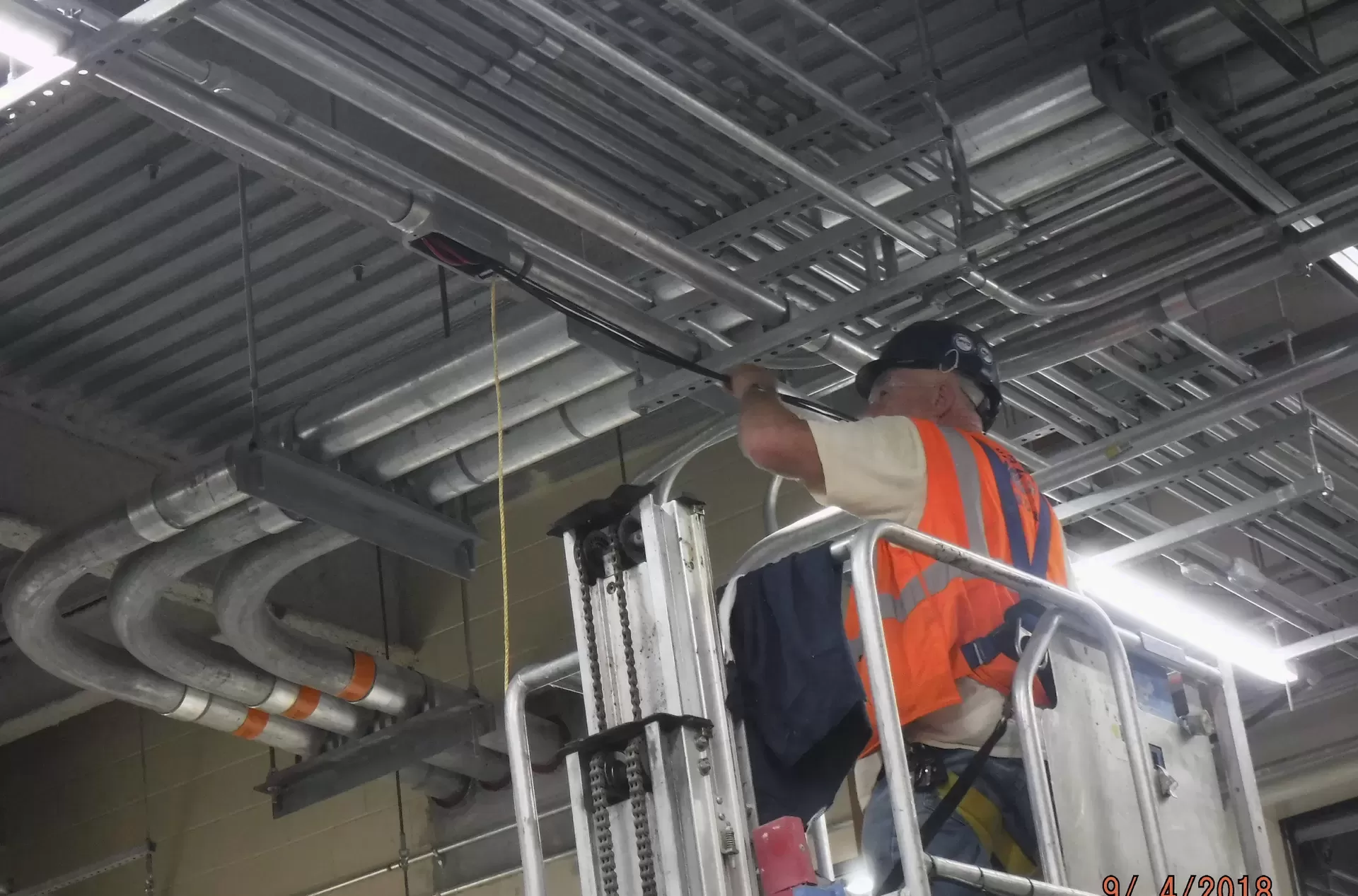
Predictive Electrical Maintenance
Condition monitoring and trended test data that show which electrical equipment is degrading, so repairs happen before a failure.
View service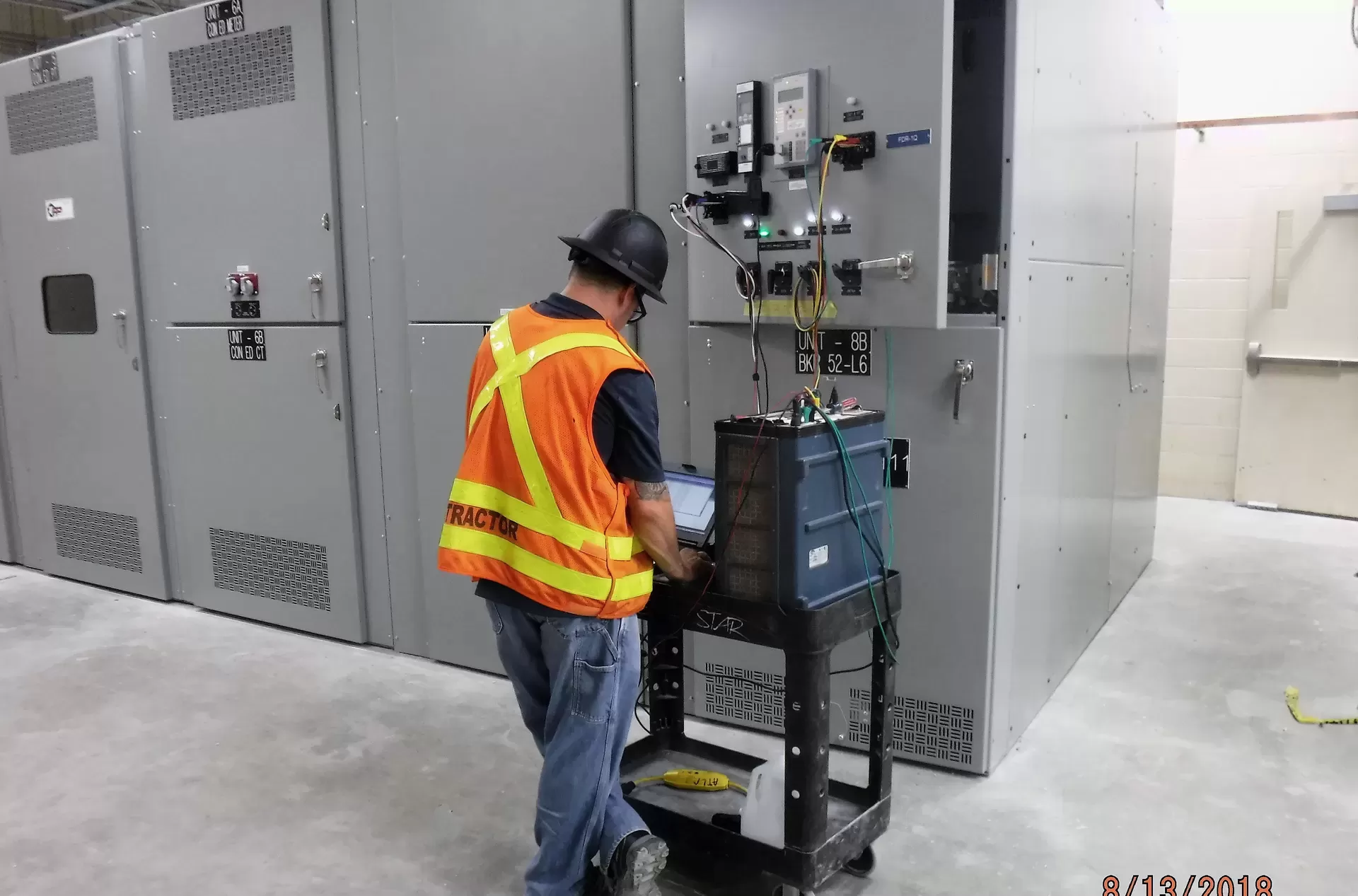
Electrical Preventive Maintenance
A written program of scans, cleaning, tightening and tests for switchgear, panels and transformers, aligned with CSA Z463 and NFPA 70B.
View service
Arc Flash Study
Arc flash assessment, incident energy results and CSA Z462 arc flash labels so your electricians know the hazard at every piece of gear.
View service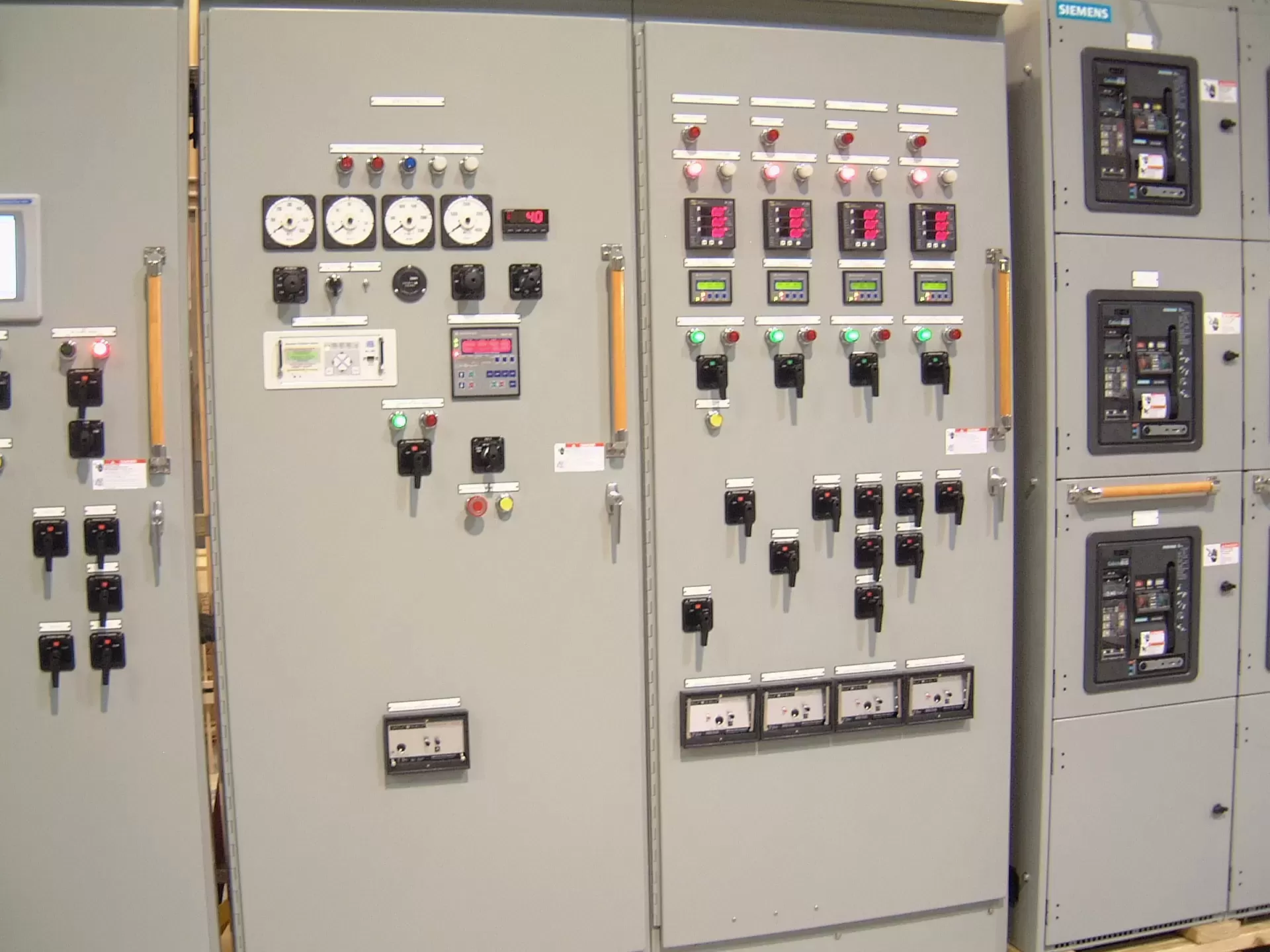
Switchgear Maintenance
Switchgear maintenance and inspection for low voltage lineups and switchboards, planned around shutdown windows and documented section by section.
View service
Commercial Electrical Maintenance
Commercial electricians for property managers: building maintenance, tenant work, infrared scans and records for GTA properties.
View service
Distribution System Inspection
A walk of your whole power path, from the utility handover to the last panel, with feeders, transformers and grounding checked.
View serviceRequest a callback
Plan your next electrical maintenance program with KCS
Tell us about the site and the equipment. A licensed electrician reviews it and calls you back.
- ESA/ECRA licence #7014042
- COR certified, ISNetworld, Avetta and ComplyWorks
- Work planned around shutdowns and tenant hours
- Emergency response for maintenance-contract clients
Send your request
We reply during business hours: Open daily, 9 a.m. to 9 p.m.