
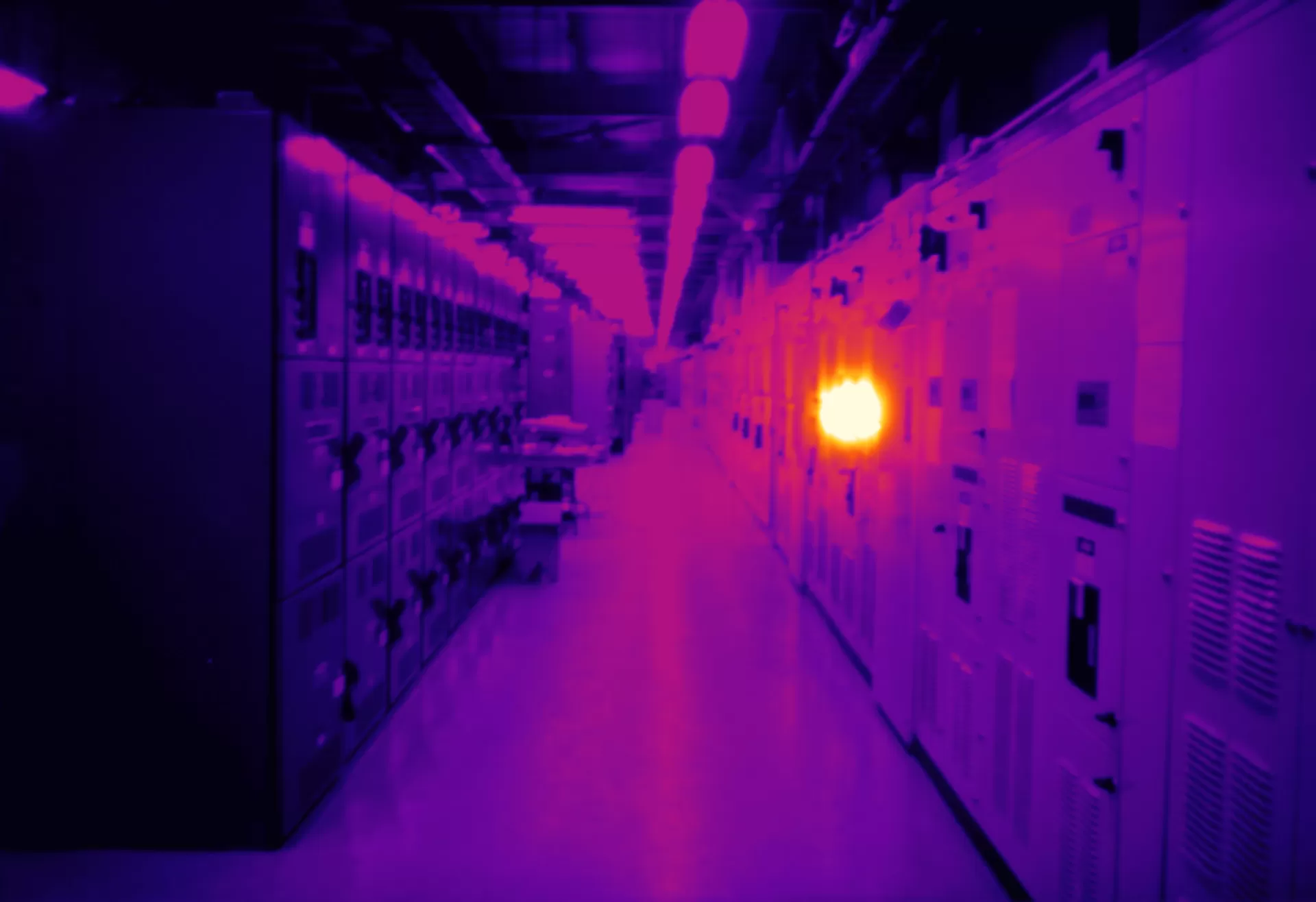
Plant thermography
Industrial Thermography for Manufacturing Plants in the GTA
Industrial thermography only works when your plant is running at real load. We survey switchgear, bus, MCCs and drives during production, then turn every hot spot into a planned repair your team can schedule.
- Level II certified thermographers
- COR certified (IHSA)
- ISNetworld, Avetta, ComplyWorks
- ESA/ECRA #7014042
Request a callback
A licensed electrical contractor calls you back, usually the same business day.
Updated Reviewed by KCS Group licensed electricians
Why Industrial Thermography Is Done During Production
Industrial thermography is done while the plant is running because heat at a faulty joint depends on current, and a production line at full output is when your distribution equipment carries its real working load. Scan the same plant on a quiet weekend and many defects simply will not show.
Electrical heating at a bad joint scales with current squared. Double the amps through a corroded lug and the heat it makes roughly quadruples. That is why a bus plug feeding a stopped extruder can look normal on Saturday and run dangerously hot on Tuesday morning. Our thermographers plan the route around your production schedule, record the measured current at each finding, and note what the line was doing at the time, so that next year's survey compares like with like.
Standards guidance for electrical thermography asks that circuit loading during the scan be documented, and where normal load cannot be reached, that the reduced load be recorded with the results. In practice we would rather come back during a full shift than hand you a report built on idle equipment.
If you are new to the method itself, our infrared electrical thermography page explains how heat is measured and rated. This page covers how we run a survey inside a working plant.
What a Thermographic Survey of a Manufacturing Plant Covers
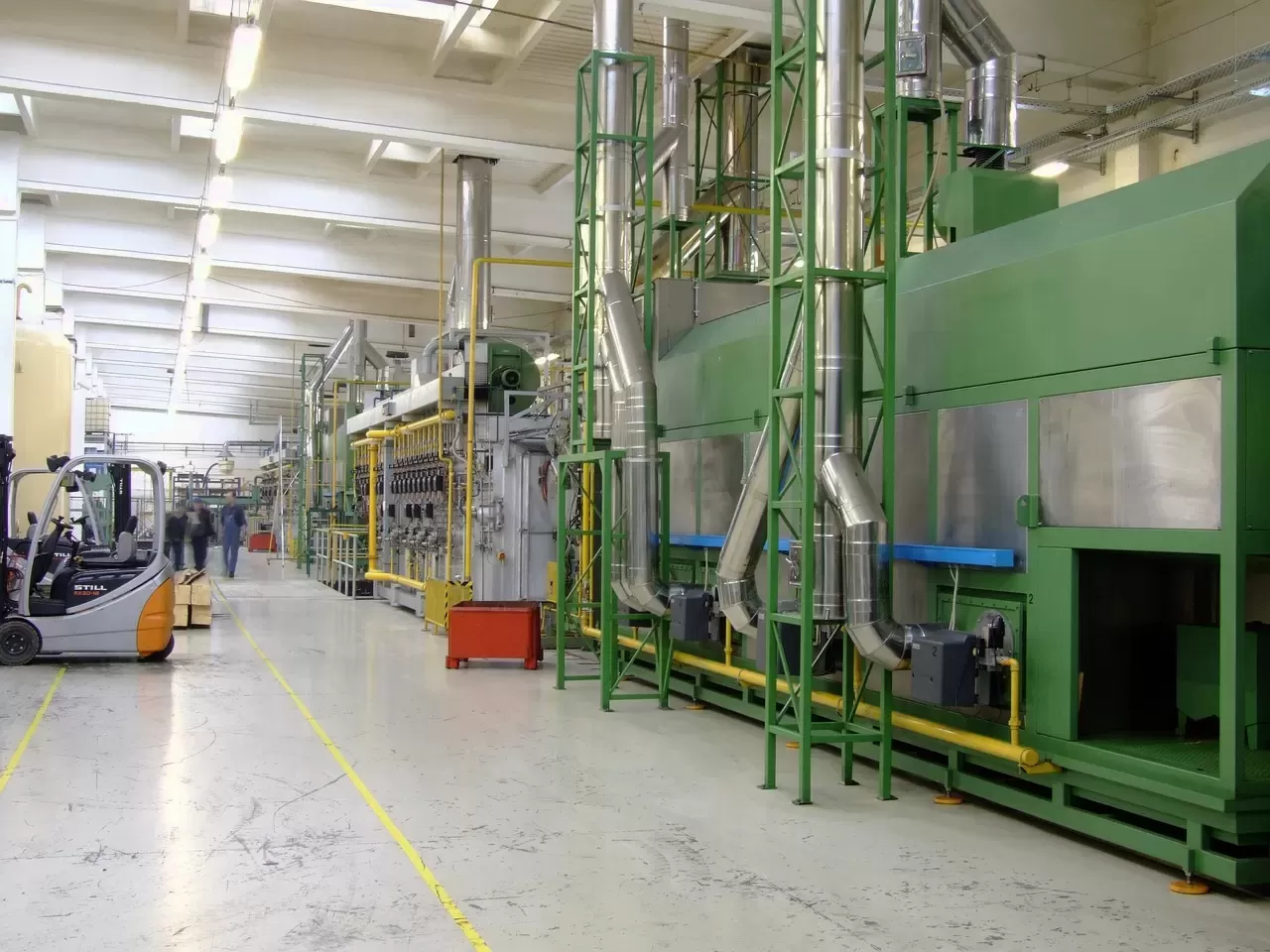
A thermographic survey of a manufacturing plant follows power from the utility service down to the machines: incoming switchgear, transformers, distribution, motor control and the larger process loads. The route is agreed with your maintenance lead before the visit so nothing critical is skipped.
| Plant equipment | What the scan looks at | Common heat sources |
|---|---|---|
| Incoming service switchgear and switchboards | Cable terminations, breaker line and load connections, bus joints where visible | Loose terminations, overloaded feeders |
| Dry-type distribution transformers | Terminal compartments, bushings, cooling surfaces | Hot bushing connections, blocked cooling |
| Bus duct and plug-in units | Splice plates, plug-in stabs, tap boxes | Loose splices, worn plug-in contacts |
| Motor control centres | Bucket line and load terminals, starters, overloads, control transformers | Pitted contactors, loose overload connections |
| Variable frequency drives | Input and output terminals, heat sinks, cooling fans | Clogged filters, failing fans, harmonic heating |
| Process panels and machine controls | Fused disconnects, terminal strips, contactors | Hot fuse clips, vibration-loosened terminals |
| Large motor terminal boxes (where open access is safe) | Lead connections, junction lugs | Loose or corroded lead connections |
Welders, induction heaters, compressors, chillers, dust collectors and battery charging rooms are added when they are part of your critical path. We also note anything we find that is not electrical heat but still affects the gear, such as a blocked ventilation louvre or a panel used as a shelf.
Planning a Plant Survey Around Shifts and Lockouts
We plan a plant survey with your maintenance and production leads so the scan happens under load, without unplanned stops, and inside your site safety rules. No shutdown is needed for the scan; outages come later, for repairs, on your timeline.
- Site orientation and permits. Our crew completes your orientation and works under your permit system. Opening energized enclosures is assessed under CSA Z462, and where a live part cannot practically be isolated, Regulation 851 obliges the use of rubber gloves, mats, shields and safe procedures.
- Escort and access. A plant contact who knows which buckets feed which machines makes the survey faster and the report more useful.
- Hygiene and clean areas. In food and pharmaceutical plants we follow your gowning, glass and sanitation rules, and schedule around washdowns. See food and beverage processing for that sector.
- Restricted enclosures. Some gear cannot be opened while energized at an acceptable risk level. Those items are listed in the report with the reason, and we can recommend infrared windows for future scans.
- Shift coverage. Multi-shift plants can be scanned during a day shift or split across shifts so every department is seen at representative load.
We share a short findings summary with your contact before leaving the site each day, so production can react to anything urgent the same shift.
Setting Scan Frequency for Dusty, Hot or Critical Plant Areas
Plant areas with heavy dust, heat, moisture, vibration or corrosive air, or equipment whose failure stops production, usually justify a six-month scan; cleaner and less critical areas can stay on twelve months. That split follows the equipment condition assessment in NFPA 70B, whose 2023 edition sets thermography at 12 months for Condition 1 and 2 equipment and 6 months for Condition 3.
| Example plant area | Factor that usually drives the rating | Scan cycle we typically propose |
|---|---|---|
| Main electrical room, clean and ventilated | Criticality (feeds the whole plant) | 6 to 12 months, set by condition |
| MCC lineup on a dusty production floor | Environment | 6 months |
| Washdown or wet processing area | Environment (moisture, chemicals) | 6 months |
| Office and warehouse lighting panels | Low criticality, clean space | 12 months |
| Older gear with repeat findings | Physical condition | 6 months until findings clear |
These are starting proposals, not fixed rules. The final cycle depends on your gear, manufacturer guidance and your own downtime costs. NFPA 70B is a US document adopted in Ontario by contract or insurer request; the Canadian maintenance standard, CSA Z463, frames how we write the overall program, and ANSI/NETA MTS (2023 edition), whose maintenance tests include infrared inspection, governs how each survey is performed and reported. For the full maintenance side, see factory electrical maintenance.
Trending Thermal Results From One Survey to the Next
A single survey shows today's hot spots; repeated surveys show which equipment is getting worse. Trending is where industrial thermography pays back, because a connection rising a few degrees each cycle can be fixed in a planned outage long before it fails.
To make trending possible we tie every image to a fixed equipment ID, shoot from a consistent position, and record load and ambient each time. The report carries forward last survey's readings next to this survey's, so your planner can see at a glance whether a repaired point stayed cool and whether a watch-list item is creeping up.
Trend data also feeds bigger decisions: which MCC lineup to replace first, whether a transformer is being run too close to its rating, and which areas need a shorter scan cycle. That work belongs to predictive electrical maintenance and electrical asset management, and thermography is one of the strongest inputs to both.
Turning Plant Hot Spots Into Planned Shutdown Work
Each hot spot in the report becomes a work item with a priority, an estimated outage need and the parts likely required, so your planner can group repairs into the next scheduled shutdown instead of reacting to failures. Urgent items are handled sooner.
- Group by outage. Findings on the same bus, MCC or feeder are grouped so one isolation fixes several.
- Prepare parts. We list likely parts, such as lugs, contactors, fuse holders or overload blocks, so the shutdown is not spent waiting for deliveries.
- Repair under licence. As licensed electrical contractor ESA/ECRA #7014042, we carry out the work and file the ESA notification it needs.
- Re-image under load. After restart, the repaired points are scanned again to confirm the temperature rise has gone.
Some findings point to deeper problems. A contactor that keeps overheating may need motor electrical testing on the load it serves; recurring heat in a lineup is a reason for full MCC maintenance; and hot breaker connections in the main gear often lead to switchgear maintenance with torque checks and cleaning.
Sector Notes for Food, Warehouse and Heavy Process Plants
Each kind of plant puts different stress on its electrical gear, so the survey route and the findings we watch for shift with the sector. A bakery, a cold storage warehouse and a metal stamping plant can share the same breaker brand and still fail in very different ways.
- Food and beverage. Washdown, steam and cleaning chemicals attack terminations and enclosure seals. We pay close attention to panels near wet zones, refrigeration compressor starters, and conveyor drives that cycle all day.
- Warehousing and distribution. Large lighting loads, conveyor and sortation controls, dock equipment and lift-truck battery chargers can push older distribution panels past what they were designed for as the building fills up. Scans during peak season catch the real load. Our warehouse and distribution page covers the wider maintenance picture.
- Metal, plastics and heavy process. Presses, extruders, injection moulding machines, induction heating and welding create heavy, fluctuating current and a lot of vibration. Terminal strips and lugs on these circuits work loose faster, and conductive dust adds tracking risk.
- Automotive and assembly suppliers. Just-in-time schedules mean any unplanned stop is expensive, which makes six-month surveys on the main feeders and MCCs easy to justify.
Tell us what you make and how the plant runs, and we will build the route around the equipment most likely to cause you trouble.
Plant Prequalification: COR, ISNetworld, Avetta and ComplyWorks
Many plants will only let a contractor on site once its safety program and insurance have been prequalified. KCS is COR certified through IHSA and is registered on ISNetworld, Avetta and ComplyWorks, so in most cases your contractor management team can approve us without a new paper file.
In Ontario, COR is granted by IHSA, and plenty of owners make it a condition for contractors coming on site. Alongside it we provide a WSIB clearance certificate, proof of commercial insurance, and our ESA/ECRA contractor licence number for your vendor records. Our thermographers are certified at Level II or higher, which your reliability engineer may also want on file.
If your plant uses a different prequalification platform or its own questionnaire, send it over and we will complete it before the first visit.
Plant Thermography Across GTA Industrial Areas
We survey manufacturing, processing and distribution plants across the GTA and Ontario from our base in Aurora, York Region. That puts the dense plant districts west and north of Toronto within easy reach.
That includes plants in Brampton, Mississauga, Vaughan and Hamilton, as well as facilities further out across Ontario. For plants with several buildings or sites, we keep one equipment numbering scheme and one report format across every location so corporate engineering can compare sites directly.
Thermography also fits into broader plant support. Our manufacturing clients often combine annual or semi-annual surveys with electrical testing, breaker work and arc flash labelling, so one contractor carries the full electrical reliability picture.
Survey plan
How a plant survey runs
Route from your single-line
We map the route from service entrance to process panels and rank it by criticality with your maintenance lead.
Scan during production
Images are taken on a running shift, with current and ambient recorded for every finding.
Daily on-site summary
Urgent findings go to your contact before we leave each day so production can react on the same shift.
Shutdown-ready work list
Findings are grouped by isolation point with likely parts, ready for your next planned outage.
Plant floor
Built for plants that cannot stop to be inspected
Your lines stay running while we survey. Covers are handled by licensed electricians under your permit system and CSA Z462, and anything that cannot be opened safely is listed with a reason rather than skipped quietly.
Repeat surveys put this year's readings beside last year's, so trends are visible without digging through old files.
Questions
Industrial thermography questions
Plant surveys
How long does an industrial thermographic survey take to complete?
It depends on how many enclosures are on the route, how many covers must be opened, and how freely we can move between areas during production. We estimate the time when we review your equipment list, and large plants are often surveyed over consecutive days so each department is seen at normal load.
Does a plant thermal survey need a production shutdown?
No. The survey is done while the plant runs because equipment must carry load for defects to show. Covers are opened energized by licensed electricians under a CSA Z462 risk assessment. Shutdowns are only needed later for repairs, and we help you plan those into existing maintenance windows.
Which plant equipment should be included in an infrared survey?
Start with incoming switchgear, transformers, bus duct, motor control centres and the panels feeding critical process lines. Add drives, large motor connections, welders, compressors and battery charging areas if they matter to production. We review your single-line diagram and suggest a route based on criticality.
Can you scan motor control centres while the line is running?
Yes, in most cases. MCC bucket doors are opened energized after a risk assessment, with arc-rated PPE and approach boundaries respected. If an MCC carries a high arc flash rating or doors cannot be opened safely, we list it as not scanned and recommend infrared windows or an outage-based inspection instead.
What does a manufacturing plant thermography report contain?
You receive a prioritized findings list, a page per anomaly with the thermal and visible images, equipment ID, temperatures, load and recommended action, a list of equipment scanned clear, and anything we could not access. Repeat surveys also show the previous reading beside the new one so you can see trends.
Frequency and planning
How often should a manufacturing plant be thermally scanned?
Annually suits clean, less critical areas. Dusty, wet, hot or high-vibration areas and equipment whose failure stops production are usually scanned every six months. NFPA 70B, 2023 edition, uses those two intervals, alongside the infrared inspection tasks in ANSI/NETA MTS, based on an equipment condition assessment, and many plants run a mixed schedule across departments.
Should we scan before or after our annual plant shutdown?
Scan a few weeks before it. That way hot spots found under production load can be repaired during the shutdown, when equipment is already de-energized. A short follow-up scan after restart then confirms the repairs. Scanning only after the shutdown leaves new findings waiting a full year.
Can thermography help us decide which equipment to replace first?
Yes. Trend data from several surveys shows which lineups and transformers keep producing findings or run close to their limits. Combined with age, parts availability and criticality, that gives a defensible basis for capital planning instead of replacing equipment simply because it is old.
Do you work under our plant permit and lockout system?
Yes. Our crew completes your site orientation and follows your permit, lockout and hot work rules alongside our own written procedures. Ontario Regulation 851 requires employers to have written lockout procedures, and we coordinate ours with yours before any repair outage.
Contractor and results
Are your thermographers certified for industrial plant work?
Yes. Each industrial survey we run has a Level II (or higher) certified thermographer in charge, supported by licensed electricians who handle access to energized equipment. Certification covers measurement, interpretation and reporting, which matters when the results drive outage planning and capital spending.
Can your thermographers also fix the problems they find?
Yes. KCS holds an ESA/ECRA contractor licence, so our electricians can repair findings, file the ESA notification and re-scan the repaired points under load. Plants with their own electricians often keep repairs in-house, and our findings pages give them everything needed to do so.
Is KCS registered on ISNetworld, Avetta or ComplyWorks?
Yes. KCS is prequalified on ISNetworld, Avetta and ComplyWorks and is COR certified through IHSA. We can also complete your own contractor questionnaire and provide our WSIB clearance certificate and certificate of insurance before the first visit.
Do you offer emergency plant scans when equipment is overheating?
Plants holding a KCS maintenance contract can call on our emergency response. Other plants should phone (647) 979-0549, and the first open slot on our schedule is theirs. If equipment is smoking or arcing, isolate it only if safe to do so and call emergency services.
What plants in Ontario do you provide industrial thermography for?
Our industrial thermography route list covers factories, food plants, distribution centres and similar sites across the GTA and Ontario, including Brampton, Mississauga, Vaughan and Hamilton. Multi-site companies can have every location surveyed with one format.
Does a clean thermal survey mean our plant electrical system is safe?
A clean survey means no abnormal heat was found on the equipment scanned, under the load present that day. It does not test breaker trip performance, insulation strength or grounding, and conditions change. Use it as one part of a full maintenance program, not as a safety certificate.
Related services
Related services
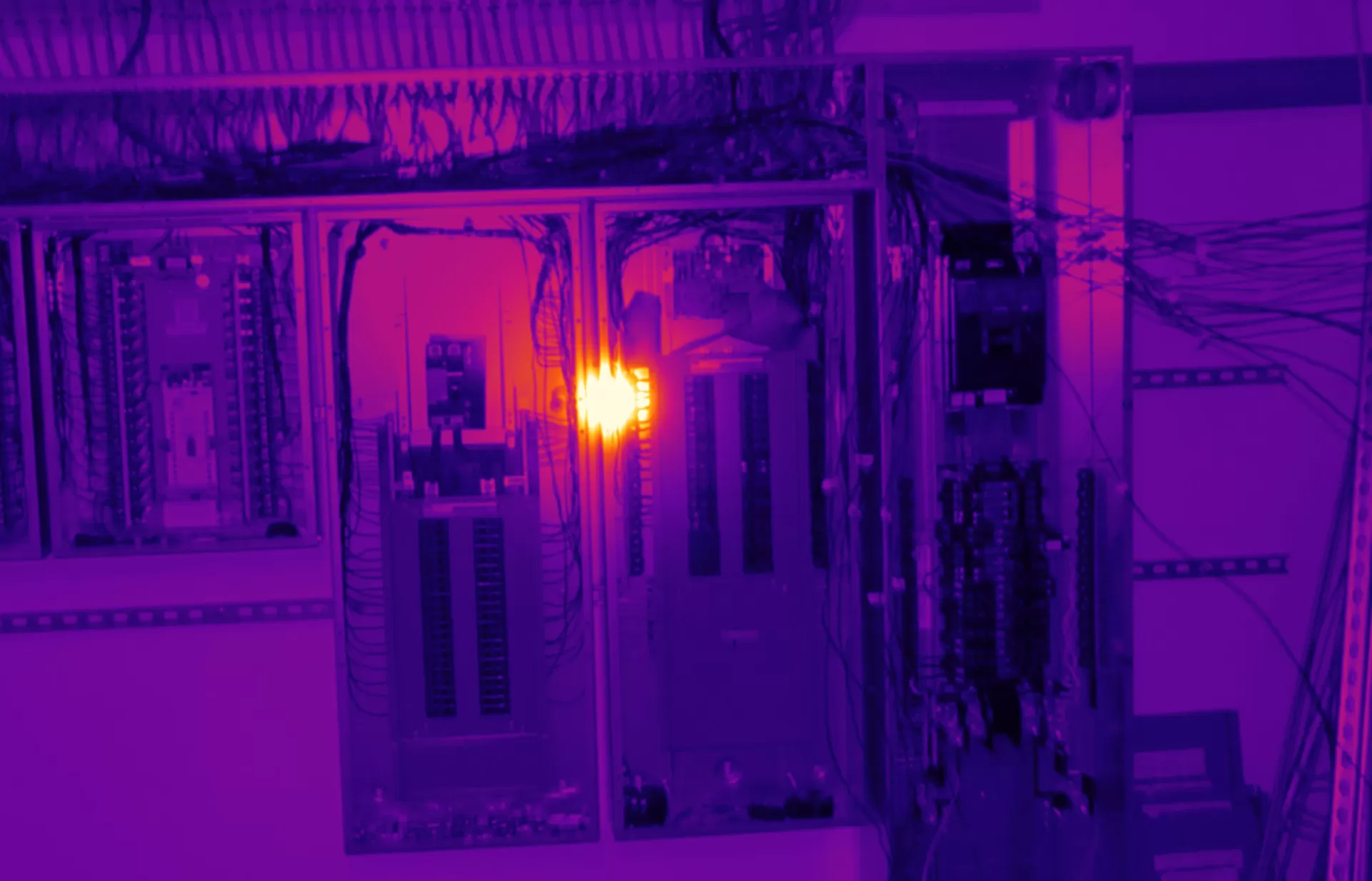
Infrared Electrical Thermography
Thermal scans of energized switchgear, panels and motor controls by Level II thermographers, with rated findings and repairs by licensed electricians.
View serviceFactory Electrical Maintenance
Factory electrical maintenance programs and shutdown work for GTA plants, built on CSA Z463 with condition-based intervals.
View service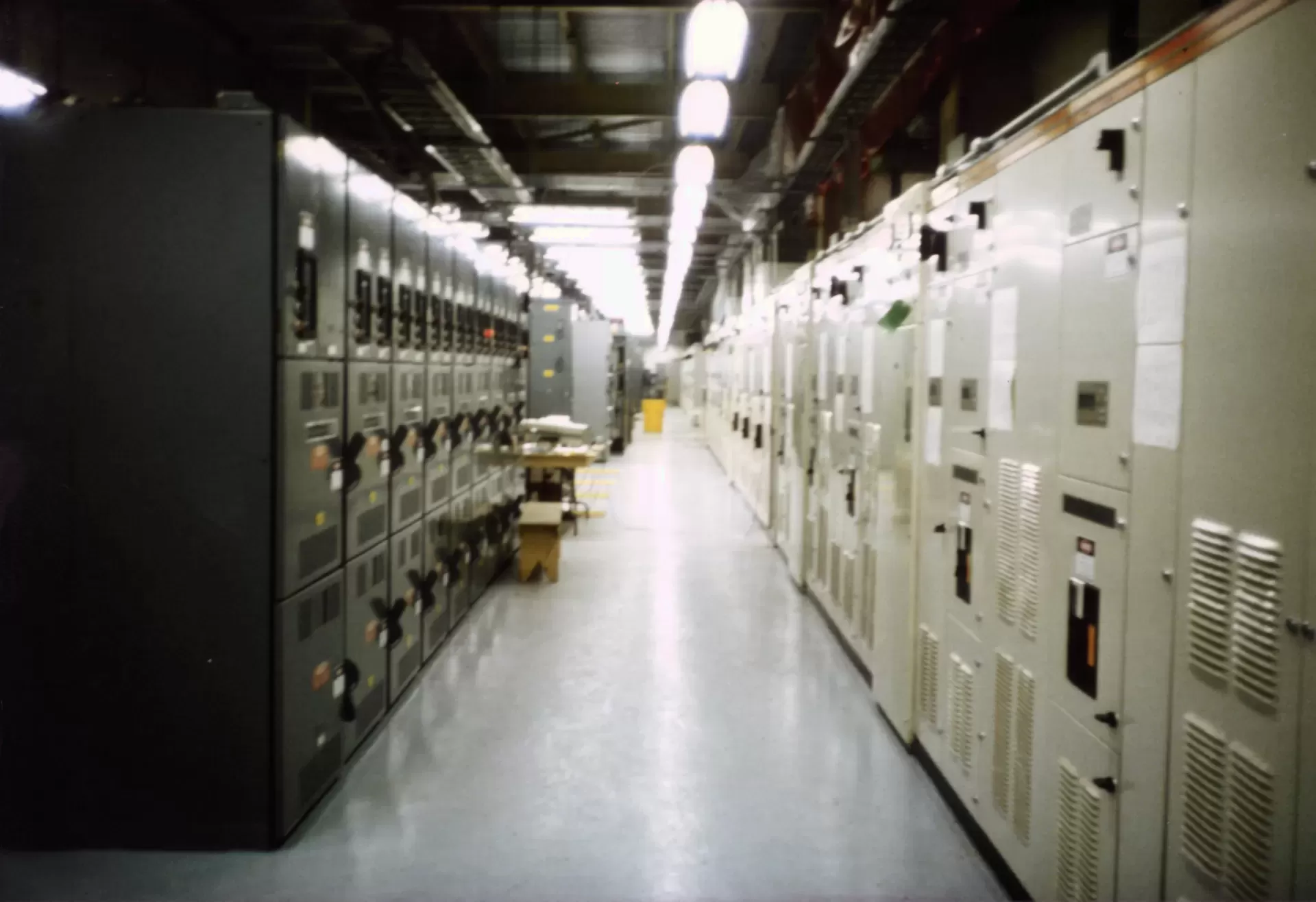
MCC Maintenance
Motor control centre maintenance covering buckets, stabs, bus, starters and overloads, scheduled section by section so production keeps running.
View service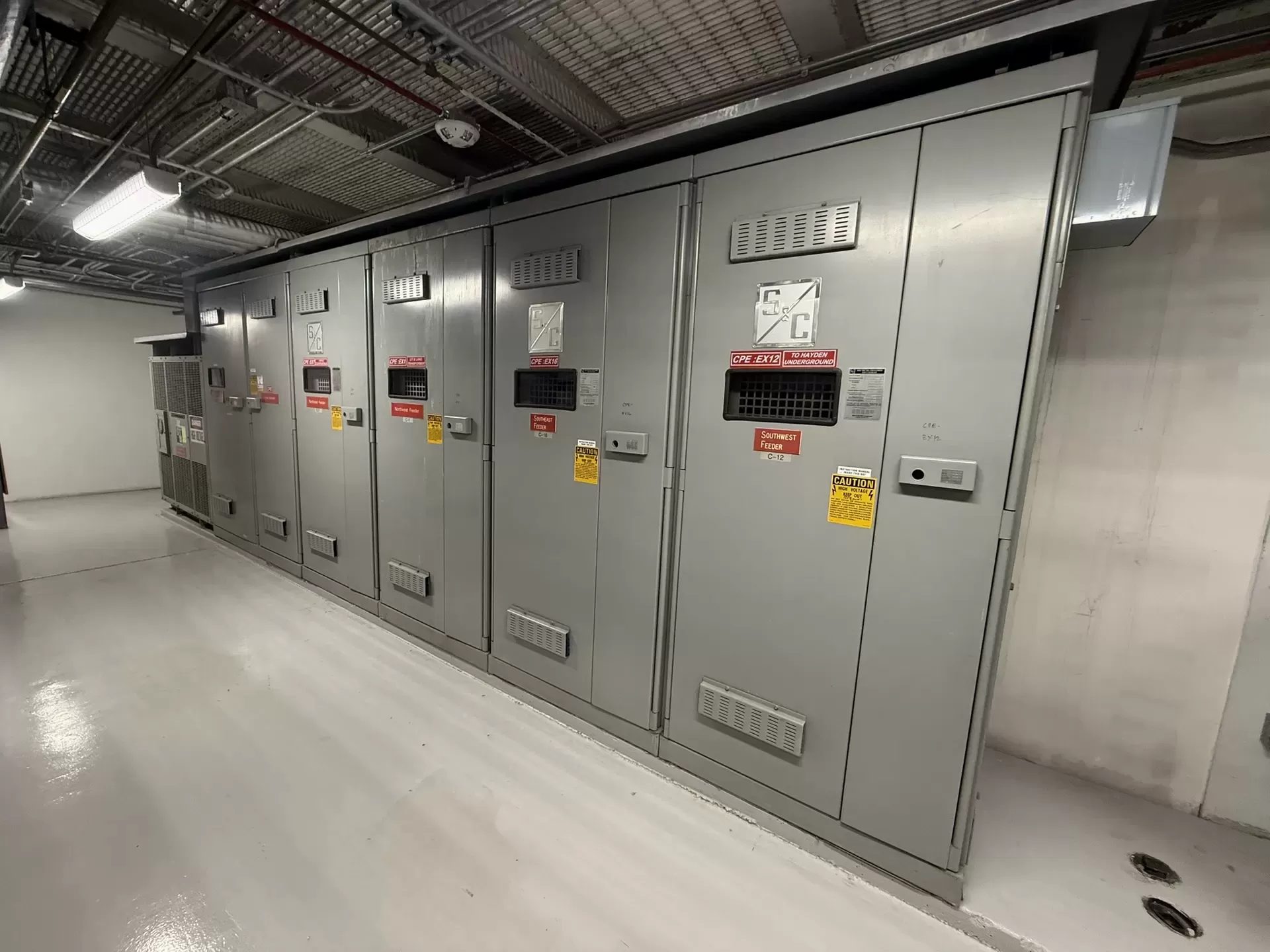
Infrared Window Installation
Planning and installation of IR viewing windows so switchgear, transformers and bus can be thermally scanned with covers closed.
View service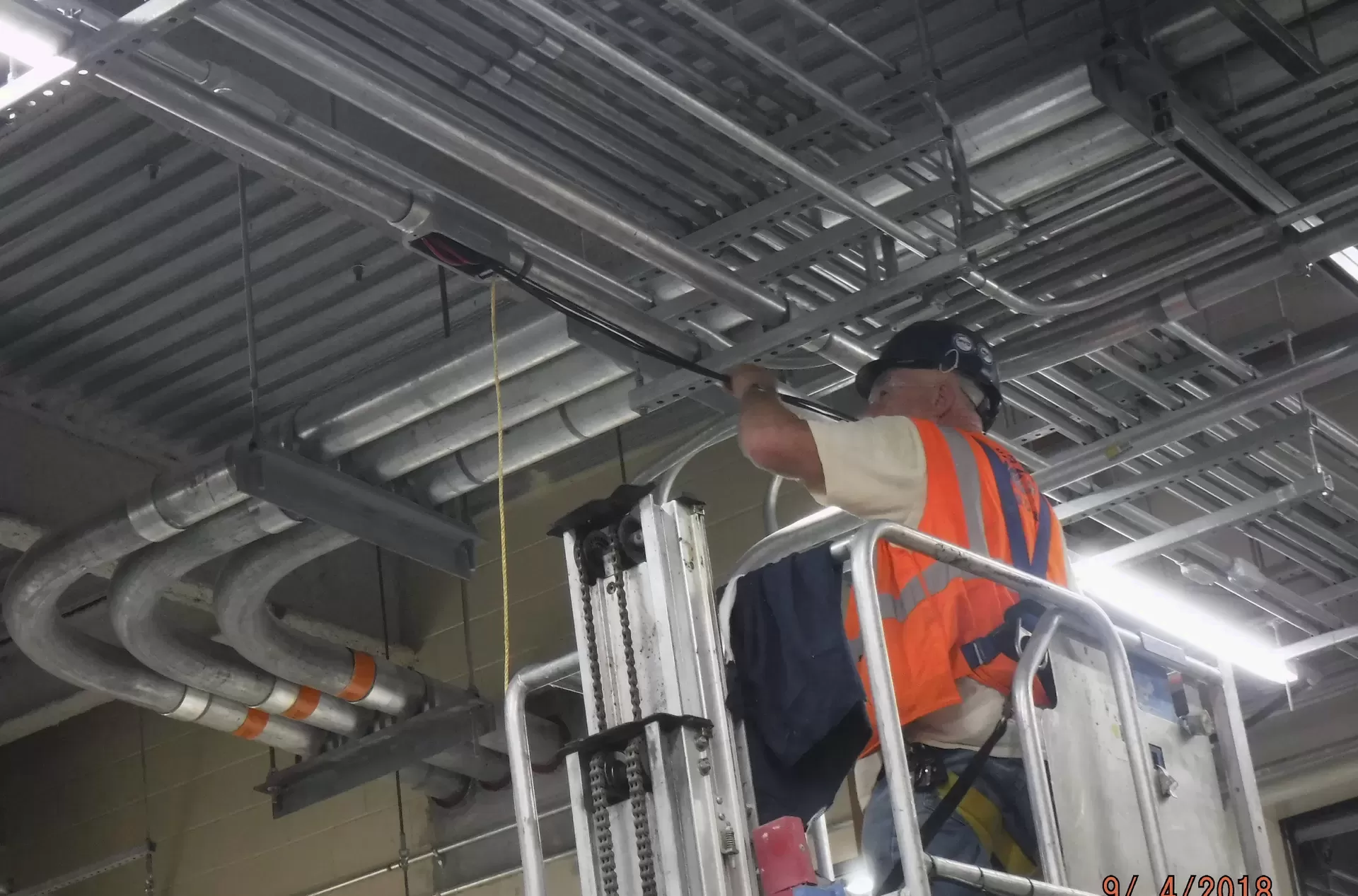
Predictive Electrical Maintenance
Condition monitoring and trended test data that show which electrical equipment is degrading, so repairs happen before a failure.
View service
Manufacturing Plants
Plant electrical maintenance, testing and thermography planned around your production schedule and shutdown windows.
View serviceRequest a callback
Plan your next electrical maintenance program with KCS
Tell us about the site and the equipment. A licensed electrician reviews it and calls you back.
- ESA/ECRA licence #7014042
- COR certified, ISNetworld, Avetta and ComplyWorks
- Work planned around shutdowns and tenant hours
- Emergency response for maintenance-contract clients
Send your request
We reply during business hours: Open daily, 9 a.m. to 9 p.m.