
Dry-type transformers up to 600 V
Transformer Testing and Inspection for Toronto and GTA Facilities
KCS handles transformer testing, transformer inspection and transformer maintenance for the customer-owned dry-type units that feed panels, motors and equipment in plants, towers and campuses across Toronto and the GTA. We test each unit, compare every result with the nameplate and the last visit, and tell you plainly which units need work.
- ESA/ECRA #7014042
- Level II thermographers
- COR certified (IHSA)
- WSIB covered, insured
Request a callback
A licensed electrical contractor calls you back, usually the same business day.
Updated Reviewed by KCS Group licensed electricians
Why Transformer Testing Matters for Your Facility
Transformer testing measures the health of a transformer's windings, insulation, core and connections, so you can find deterioration years before it turns into a failure. Transformer inspection covers the visual and thermal checks between those tests.
A dry-type transformer rarely gives much warning. It hums along at a steady temperature until insulation weakened by heat, moisture or a past fault finally breaks down, and the outage that follows usually lasts as long as it takes to find, ship and install a replacement. Testing turns that surprise into a planning decision. A slow drift in insulation readings, a winding that no longer matches its sister phases, or a termination that runs hotter on every scan all show up long before the unit trips.
Facility owners ask us to test transformers for four main reasons:
- to set or confirm an interval in a maintenance program built on CSA Z463 or NFPA 70B, with the tests themselves run to ANSI/NETA MTS;
- because an insurer, lender or new tenant wants evidence the electrical service is sound;
- after an event such as a through-fault, a flood in the electrical room or an unexplained trip;
- before adding load, so the decision to upgrade is based on real condition and not on age alone.
Transformer Tests We Perform and What Each One Shows
No single test describes a transformer, so we combine several, each aimed at a different failure mode. The mix depends on the transformer type, its size and what your program or insurer asks for.
| Test | What it looks at | Unit state |
|---|---|---|
| Visual and mechanical inspection | Enclosure, vents, coils, insulators, temperature indicators, grounding, connections | Live for exterior, dead for internal |
| Thermal scan | Hot terminations, blocked cooling, unbalanced phases | Live, under load |
| Insulation resistance | Winding to winding and winding to ground insulation | De-energized |
| Turns ratio (TTR) | Shorted turns, wrong tap position, winding damage, on every tap | De-energized |
| Winding resistance | Loose internal joints, tap changer contacts, broken strands | De-energized |
| Power factor or dissipation factor | Overall insulation quality and moisture, trended over time | De-energized |
| Excitation current | Core and winding problems, compared phase to phase | De-energized |
| Temperature monitor and fan check | Winding temperature alarms, fan control, trip contacts | Live or de-energized, by design |
The test list and its pass values follow the dry-type transformer tasks in ANSI/NETA MTS (2023 edition). Turns ratio results are compared with the nameplate ratio and with the tolerance in the applicable IEEE standard. Insulation and winding results mean most when they are compared phase to phase, with sister units and with earlier visits, which is why we keep your history on file. The wider family of tests we run on cables, motors and switchgear is on our electrical testing services page.
Ventilated, Cast-Resin and Small Dry-Type Units Need Different Care
The transformer's construction decides most of the scope. Ventilated units need cleaning and airflow, cast-resin units need surface and crack checks, and small units need attention to mounting, heat and the space around them.
- Ventilated dry-type transformers sit in electrical rooms and on plant floors, stepping 600 V down to 120/208 V for panels, lighting and receptacles, or isolating sensitive loads. Dust on the windings blocks cooling, so cleaning and checking fans, filters and room ventilation is as important as the electrical tests.
- Cast-resin transformers seal the windings in epoxy and are chosen where moisture, dust or fire risk is a concern. Beyond the core tests we look for cracks, surface tracking and discolouration on the resin, and check the temperature monitor and any cooling fans.
- Small encapsulated and wall-mounted units on mezzanines, in ceilings and beside machines feed lighting, controls and single pieces of equipment. They are easy to forget, so we confirm mounting, clearances, ventilation and terminations, and scan each one under load.
We work on transformers your organization owns inside the building. Service equipment owned by your utility (Toronto Hydro downtown, Alectra across much of York and Peel) stays its responsibility, and we coordinate with the utility when a main service outage is needed for our work.
How Often Do Transformers Need Testing and Servicing?
Plan on a visual and thermal check of every transformer each year, more often for units in poor condition or feeding critical loads, and de-energized testing and cleaning on a one to five year cycle. Units in dusty rooms often need cleaning more often than they need electrical tests.
Under NFPA 70B (2023 edition, Table 9.2.2), the interval depends on an equipment condition assessment. A unit is rated on physical condition, how critical its load is and how harsh its environment is, and the highest of the three ratings sets the schedule.
| Power and distribution transformer task | Good shape, low risk | Middle rating | Poor shape or critical |
|---|---|---|---|
| Visual walk-around | Every 12 months | Every 12 months | Every 6 months |
| Cleaning, mechanical work and electrical tests | Every 60 months | Every 36 months | Every 12 months |
| Thermal imaging of terminations | Every 12 months | Every 12 months | Every 6 months |
Manufacturer instructions take priority where they are stricter, and the schedule should be held for at least two cycles before it is stretched. Cleaning frequency is set by the room: a unit near a production line or loading dock collects dust far faster than one in a sealed electrical room, and blocked vents move it to closer visits until the source is dealt with. Our electrical preventive maintenance programs put transformers on the same calendar as the switchgear and panels they feed, so one outage covers several tasks.
Transformer Maintenance Tasks Between Test Cycles
Transformer maintenance is the hands-on work that keeps a unit inside its design limits between full test cycles: keeping it clean, cool, tight, dry and properly grounded. Most of it is simple, and most failures we see trace back to one of these items being skipped.
- Vacuuming dust from dry-type windings and vents, and confirming the room ventilation actually moves air across the unit.
- Checking and retorquing primary and secondary terminations and the ground connection during an outage.
- Reading and recording winding temperature indicators, and resetting maximum-temperature markers.
- Inspecting coils, insulators and resin surfaces for cracks, tracking and discolouration, and checking enclosure filters.
- Confirming the tap position matches the drawings and the measured secondary voltage.
- Testing cooling fans, temperature alarms and trip contacts so the protection actually reaches the breaker.
- Clearing storage, debris and vegetation from around indoor units and their vents.
Overheating at the terminations is often found first by an infrared electrical inspection, which our Level II certified thermographers carry out with the transformer under load.
Reading Transformer Test Results: Trends Over Single Numbers
A single transformer reading rarely tells the whole story. We judge results against the nameplate, against the other phases, against sister units and against your previous visits, and we flag a change in direction even when the value is still inside a limit.
Thermal results are the clearest example. A termination that runs a few degrees warmer than its neighbours on each yearly scan is a trend worth acting on, even if no single scan crossed an action level, and a unit whose enclosure temperature climbs while its load stays flat points to blocked cooling or an internal problem. Load and room temperature change the picture, so we record both on the day. When a trend appears, we recommend a sooner follow-up and plan the outage needed to investigate.
Winding resistance and ratio are read the same way. On a healthy three-phase unit the three phases track each other closely, so one phase that drifts away from its partners, even inside the tolerance, earns a second test and a look at the tap changer or internal joints. Excitation current is compared phase to phase in the same spirit, since the expected pattern depends on the core design.
Insulation readings behave the same way. Temperature and humidity on the day of the test change the result, so we record both, correct where the method calls for it, and compare like with like. A unit that has lost a large share of its insulation resistance since the last visit gets a closer look even if it would still pass a fixed minimum.
Warning Signs That a Transformer Needs Attention
A transformer that is louder, hotter or smellier than usual, that leaks, or that trips its protection needs a test before it is trusted again. These signs do not tell you what is wrong, only that something has changed.
- A change in the normal hum, such as buzzing, crackling or rattling.
- Enclosures that are hotter than usual to the touch or a winding temperature reading that keeps climbing.
- Burnt or acrid smells in the electrical room.
- Dust packed into vents and coils, or cooling fans that no longer run.
- Tracking, cracks or discolouration on insulators, resin and terminations.
- Secondary voltage drifting out of range, or upstream protection operating without a clear cause.
If you see any of these, reduce load where you safely can and call us. Maintenance-contract clients receive emergency response; other sites can arrange a diagnostic visit through our electrical troubleshooting service.
Planning a Transformer Outage Under Ontario Rules
De-energized transformer tests need a planned outage, a written isolation plan and, where the unit is fed from the main switchboard, coordination with the rest of the service outage. We plan the window around your production or tenants and finish with a full restoration check.
Transformer outages tend to be short on time and long on switching, so preparation decides how much testing fits. Before the outage we confirm the single-line, the upstream and downstream isolation points, any backfeed from generators or tie breakers, and how critical loads will be carried. On the day, Regulation 851 governs the isolation: section 42 calls for isolation, a lock and a tag on every supply point, with each worker confirming it. Because a transformer can be backfed from its secondary, we isolate and prove dead both sides before any lead comes off.
Repairing or replacing a transformer counts as electrical work under the 29th edition of the provincial Electrical Safety Code, and our ESA/ECRA licence #7014042 covers filing the notification that job requires. A replacement unit gets ANSI/NETA ATS (2025 edition) acceptance tests ahead of carrying load, which also gives your program its first baseline. The ESA contractor look-up lets your procurement team confirm our licence before the job. Transformer results also feed straight into an arc flash study, because impedance and tap data change the available fault current.
Across the GTA we test transformers for plants in Brampton and Vaughan, commercial and condominium sites in Markham, and owners throughout Ontario.
What you receive
A transformer report your engineer can use
Each unit gets its own page: nameplate data and location, the condition rating used to set its next date, every test value with the conditions on the day, a comparison with the last visit and with sister units, thermal findings, photographs, and ranked recommendations from monitor to repair now.
Results can be loaded into your electrical asset management plan so replacement budgets follow measured condition.
Connected services
Work we often pair with transformer testing
Switchgear Maintenance
Service the main and feeder sections downstream while the transformer is already out.
Learn more
Distribution System Inspection
Follow the feeders from the transformer secondary to every panel and load centre.
Learn more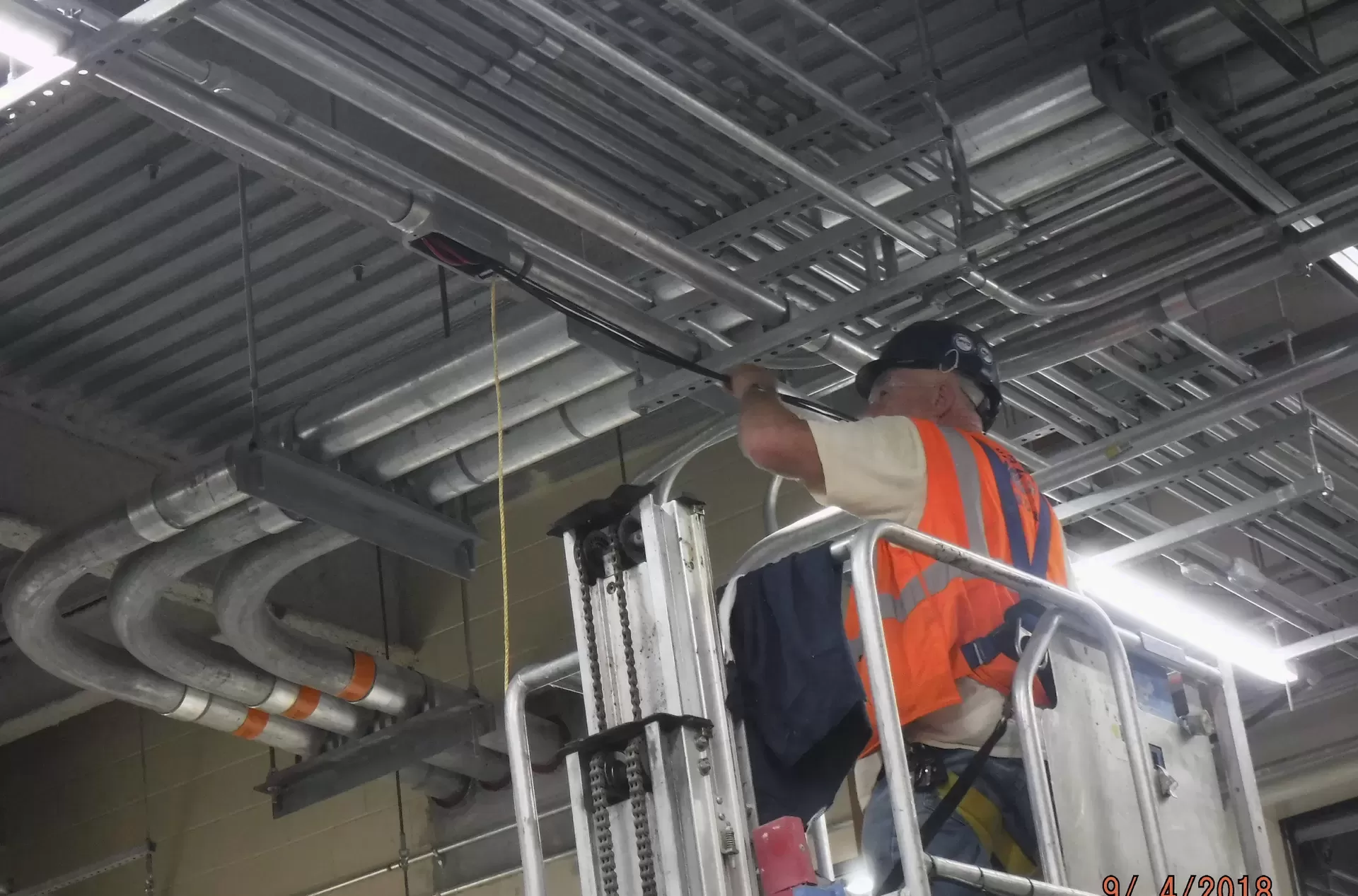
Predictive Maintenance
Use thermal trends, test history and condition data to time work before a fault forces it.
Learn moreQuestions
Transformer testing questions
Testing basics
How many types of transformer tests are there?
There is no fixed count, but field programs for an existing unit usually draw on about seven: visual and mechanical inspection, thermal scanning, insulation resistance, turns ratio, winding resistance, power factor and excitation current. Factory and acceptance testing add more. We choose the set that fits the unit type, size and your program.
How do you test a transformer in an existing building?
We start live, with an exterior inspection, load and voltage readings and a thermal scan. Then, during a planned outage, the unit is isolated, locked out and proven dead, its leads are disconnected where needed, and we run insulation, ratio, winding resistance and other tests. Results are recorded with temperature and humidity and compared with earlier data.
Why is transformer testing required if the unit seems fine?
Because most transformer problems are invisible until late. Insulation ageing, moisture, loose internal joints and dust-blocked cooling show up in test data long before noise, heat or a trip. Insurers, owners and CSA Z463-based programs ask for testing, and ANSI/NETA MTS defines which tests to run, so decisions about load, repair or replacement rest on measured condition.
What is a TTR test on a transformer?
TTR stands for transformer turns ratio. The test applies a low voltage to one winding and measures the voltage on the other to calculate the ratio, on every tap position. The result is compared with the nameplate and with the tolerance in the applicable IEEE standard. A ratio out of tolerance points to shorted turns, an open winding or a tap changer problem.
How do you clean a dry-type transformer without damaging the windings?
The unit is first isolated on both sides, locked out and tested dead. We take off the enclosure panels, vacuum dust from the coils, cooling ducts and vents, and wipe insulators and resin surfaces with cleaners the manufacturer allows. We avoid blowing compressed air into the windings, since it packs debris deeper. Heavy dirt or moisture marks go in the report, because they point to a room or ventilation problem.
Condition and lifespan
How can I tell if a transformer is going bad?
Outward signs include a louder or changed hum, unusual heat, burnt smells, blocked vents, cracked or tracked insulators, fans that stop and unexplained trips. Test signs come earlier: falling insulation resistance, ratio or winding resistance that no longer matches the other phases, rising power factor and terminations that run hotter on each scan. Any of these deserves a closer look.
What is the average lifespan of an industrial transformer?
It varies widely with loading, temperature, moisture and maintenance, so we do not quote a single figure. The life of a transformer is mostly the life of its insulation, and heat is what consumes it. Units kept cool, dry, clean and within their rating often outlast the equipment around them, while overloaded or neglected units can fail early.
Can regular transformer maintenance reduce energy use and failures?
It can help with both. Clean windings and working fans let a unit run cooler, and correct tap settings keep secondary voltage where your equipment expects it. On the failure side, tight terminations, clear vents and early detection of insulation problems remove the most common causes of unplanned outages. We describe findings and leave savings estimates to measured data.
What does the 80 percent rule mean for transformer loading?
It is an informal rule of thumb, not a code clause: many designers keep a transformer's continuous load at or below about 80 percent of its rating to leave headroom for heat and future growth. The actual limits come from the nameplate, the electrical code and the manufacturer. We compare measured load against those limits during testing.
Scheduling and outages
How often should transformers be serviced in a commercial building?
Most commercial buildings need a yearly visual and thermal check on every transformer, with cleaning and de-energized testing every three to five years when the units are in good shape and in a clean room. Units in poor condition, dusty rooms or on critical loads move to yearly testing under NFPA 70B's condition-based approach.
How long does a transformer test outage usually take?
Outage length for transformer work comes down to the number of units, their size and location, the tests in scope and how much switching is needed upstream. We set out a time estimate for each transformer during scoping, group units that share an outage, and size the crew to the window, whether that is an overnight shutdown or a weekend.
How long does it usually take to repair a transformer?
Small repairs such as retorquing terminations, replacing a gauge, fixing a fan or cleaning windings can often be done within a planned outage. Internal winding repairs or a replacement depend on parts and equipment lead times, which vary by size and design. Testing ahead of time is what lets you order before the failure.
Do you test utility-owned transformers that serve our building?
No. Transformers owned by your utility, for example Toronto Hydro or Alectra, are its responsibility to maintain. We test and maintain customer-owned units, such as the dry-type transformers inside your building that feed panels, lighting and equipment, and we coordinate with the utility when its equipment must be isolated for our work.
Reports and rules
What should a transformer maintenance report include?
A useful report gives each unit its nameplate data, location and condition rating, every test value with the temperature and humidity on the day, comparison with earlier results and sister units, thermal findings, photographs of findings, and recommendations ranked by urgency. It should also give a due date for the next round of work on every unit.
Does transformer work in Ontario need an ESA notification?
Repairs, replacements and changes to wiring are electrical work, and ESA expects them to be notified by a licensed electrical contractor. Whether a visit made up only of testing needs one depends on what is touched, so we confirm the requirement before the job and file the notifications for our scope.
Do you check the small control transformers inside panels and machines?
Yes, where they are part of your scope. Control power transformers in MCC buckets, machine panels and lighting circuits are small, but a failed one stops the equipment it serves. We check terminations, fusing and mounting, confirm the output voltage, and include them in infrared scans. Larger dry-type units that feed panels get the full set of ratio, winding and insulation tests.
Related services
Related services
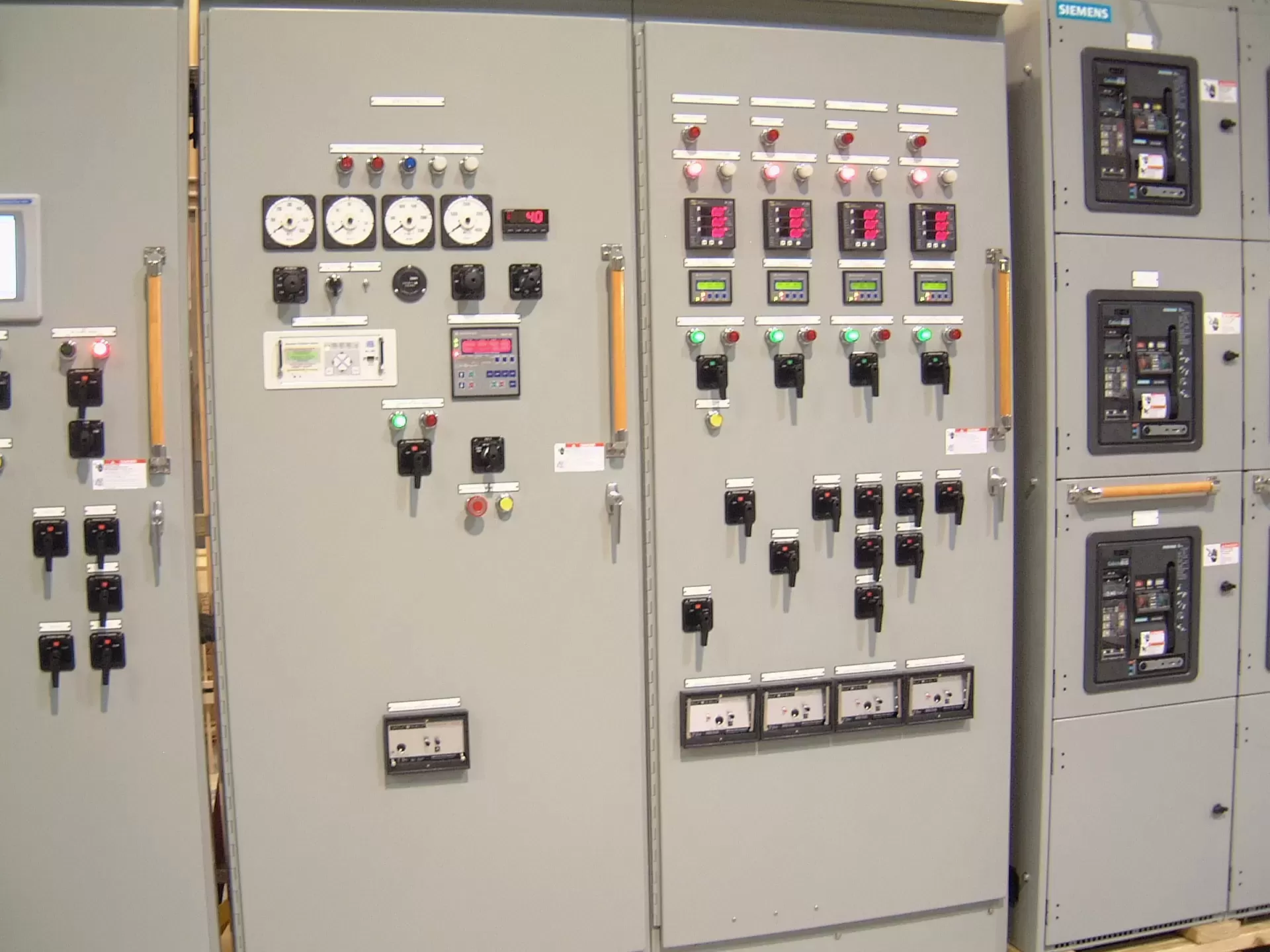
Switchgear Maintenance
Switchgear maintenance and inspection for low voltage lineups and switchboards, planned around shutdown windows and documented section by section.
View service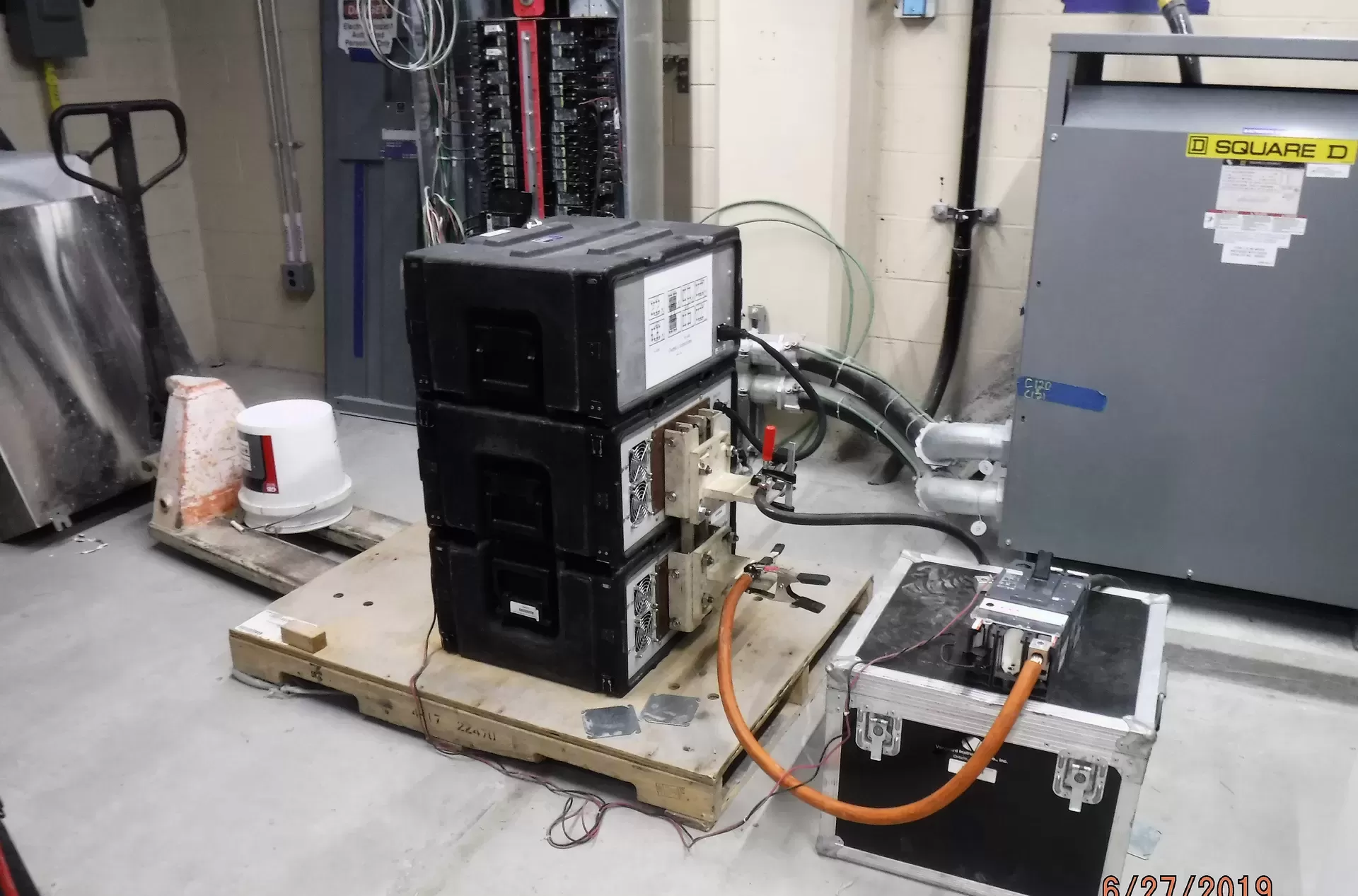
Electrical Testing Services
Measured tests on breakers, cables, transformers, relays and generators, recorded so results can be trended visit to visit.
View service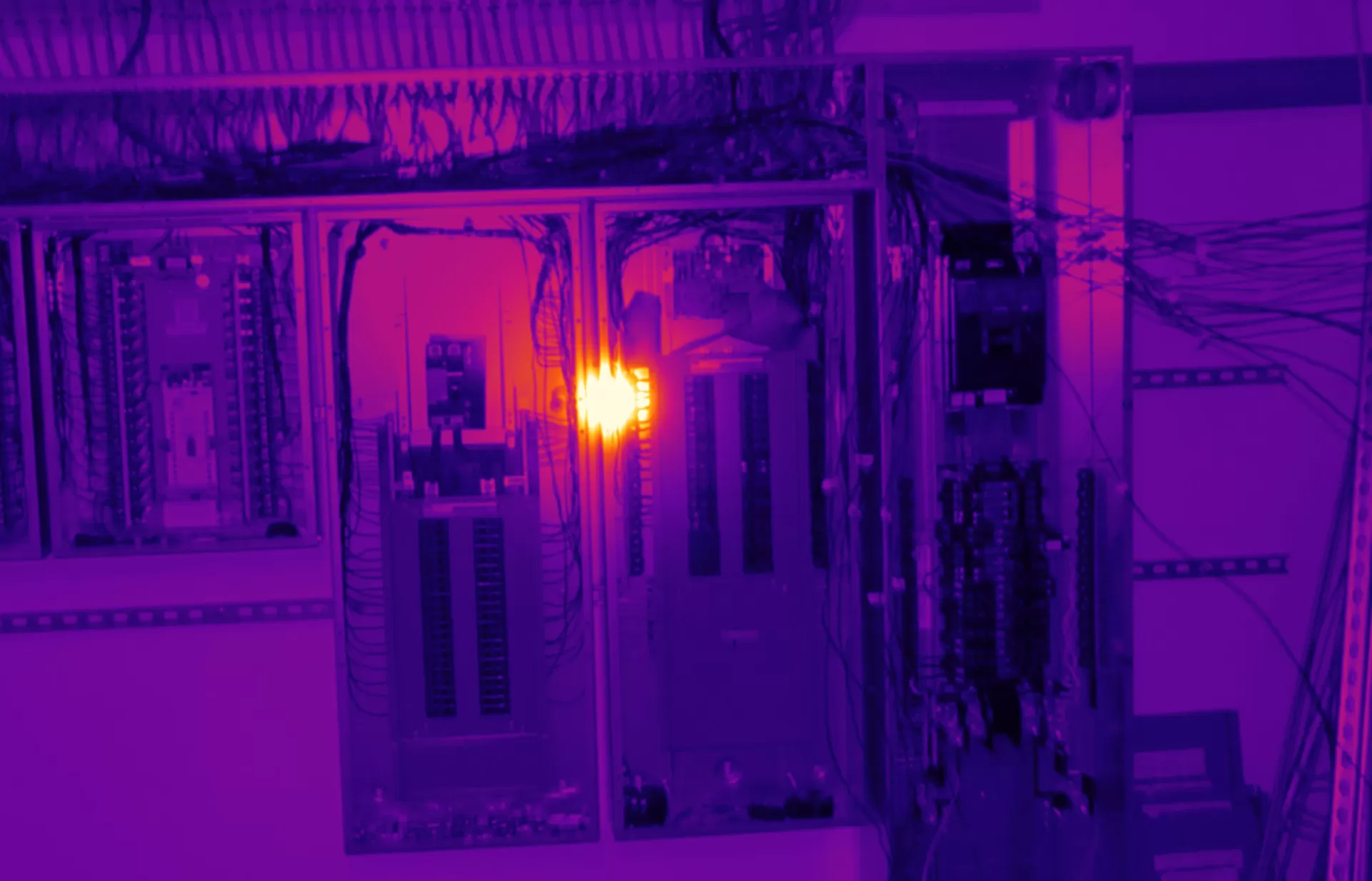
Infrared Electrical Thermography
Thermal scans of energized switchgear, panels and motor controls by Level II thermographers, with rated findings and repairs by licensed electricians.
View serviceCircuit Breaker Testing
Trip, timing, contact resistance and mechanism checks that prove each breaker will open when a fault demands it, from 15 A branch breakers to drawout power breakers.
View service
Distribution System Inspection
A walk of your whole power path, from the utility handover to the last panel, with feeders, transformers and grounding checked.
View servicePredictive Electrical Maintenance
Condition monitoring and trended test data that show which electrical equipment is degrading, so repairs happen before a failure.
View serviceRequest a callback
Plan your next electrical maintenance program with KCS
Tell us about the site and the equipment. A licensed electrician reviews it and calls you back.
- ESA/ECRA licence #7014042
- COR certified, ISNetworld, Avetta and ComplyWorks
- Work planned around shutdowns and tenant hours
- Emergency response for maintenance-contract clients
Send your request
We reply during business hours: Open daily, 9 a.m. to 9 p.m.