
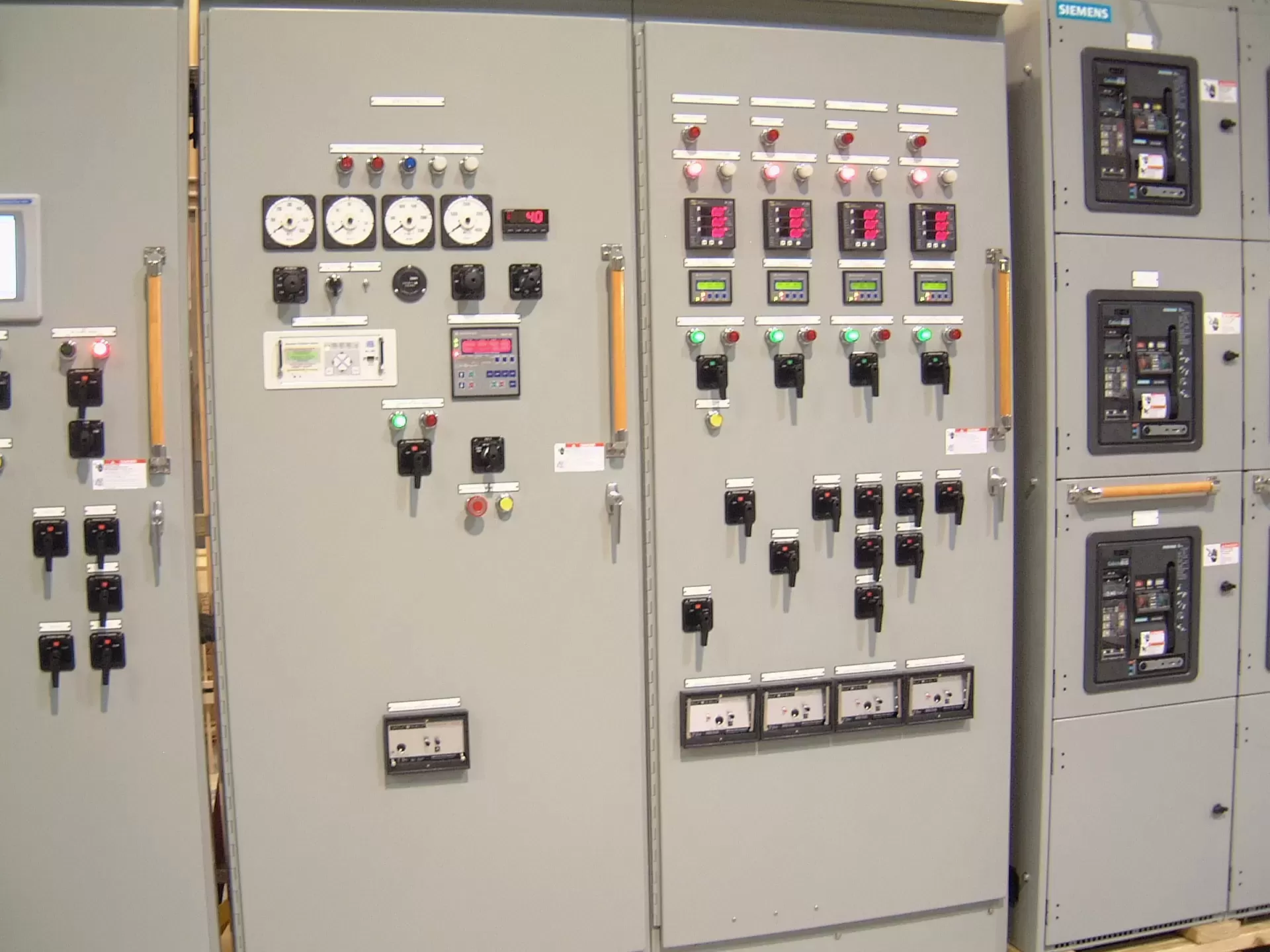
Low voltage switchgear and switchboards
Switchgear Maintenance and Inspection in Toronto and the GTA
KCS provides switchgear maintenance and switchgear inspection for low voltage lineups, switchboards and distribution sections up to 600 V across Toronto, the GTA and Ontario. Our licensed electricians clean, torque, test and document every section, then hand you a report that shows what changed since the last visit.
- ESA/ECRA #7014042
- ISNetworld, Avetta, ComplyWorks
- COR certified (IHSA)
- Level II thermographers
Request a callback
A licensed electrical contractor calls you back, usually the same business day.
Updated Reviewed by KCS Group licensed electricians
What Does Switchgear Maintenance Include?
Switchgear maintenance is the scheduled inspection, cleaning, tightening, lubrication and electrical testing of the breakers, bus, switches and protective devices that make up a switchgear lineup. Switchgear inspection is the visual and infrared part of that work, often done with the gear in service, while full maintenance needs a planned shutdown.
Switchgear is the heart of a building or plant distribution system. A typical lineup holds the incoming service section, main and feeder breakers, the horizontal and vertical bus that ties them together, current and potential transformers, protective relays, metering, and in many sites a DC battery or capacitor trip supply. When one part of that chain degrades, the result is rarely gradual: a bus joint that runs hot for months can fail in seconds, and a main breaker that will not trip turns a small fault into a site-wide outage.
On a maintenance visit our crew works through each section in a fixed order so nothing is skipped:
- Enclosure and room: doors, barriers, covers, ventilation, space heaters, signs of moisture or rodents, and housekeeping in front of the gear.
- Bus and connections: insulators, bus supports, joints and cable terminations checked for tracking, discolouration and torque.
- Breakers and switches: racking mechanisms, interlocks, contacts, arc chutes and operating mechanisms cleaned, lubricated where the manufacturer allows, and exercised.
- Protection and control: relays, trip units, ground fault systems, control wiring and the trip supply checked against the settings on file.
- Electrical tests: insulation resistance, contact and bus joint resistance, and the breaker tests described on our circuit breaker testing page.
Switchgear, Switchboards and Drawout Gear: What We Service
We service low voltage switchgear, switchboards, fused switch sections and the busway that ties them together, on systems up to 600 V. The difference matters because each type is built, rated and maintained differently, and the scope of a visit changes with it.
People search "switchgear vs switchboard" more than almost any other switchgear question, and the short answer is construction. A switchboard is usually front-accessible with fixed-mounted, bolted devices, common in commercial buildings and smaller plants. Low voltage switchgear typically uses drawout power circuit breakers in separate compartments with rear access to the bus, and it carries higher short-circuit and continuous ratings. Many lineups also include fused switch sections, a transfer section for standby power or a busway takeoff, and each of those adds its own checks to the visit.
| Equipment | Where we see it | Main maintenance focus |
|---|---|---|
| Switchboard (fixed devices) | Office towers, retail, light industrial | Connection torque, molded-case breaker checks, infrared scans |
| LV switchgear (drawout breakers) | Plants, hospitals, data rooms | Breaker racking and trip testing, bus inspection, relay checks |
| Fused switch sections | Campus buildings, older industrial sites | Switch blades and fuses, insulators, cable terminations |
| Busway and bus duct | Plant floors, risers in towers | Joint torque, housing condition, plug-in units, infrared scans |
Panelboards and distribution panels downstream of the switchgear are covered on our electrical panel inspection page, and motor control lineups on the MCC maintenance page.
How Often Should Switchgear Be Maintained?
Most switchgear needs a visual and infrared inspection at least once a year and full shutdown maintenance on a cycle of one to five years, with the exact gap set by the gear's physical state, its importance to the site and the room around it. NFPA 70B sets those intervals through an equipment condition assessment, and the worst of the three factors decides the schedule.
The 2023 edition of NFPA 70B turned the document from a recommended practice into a standard with mandatory language and introduced the equipment condition assessment. Condition 1 is gear in good physical shape, in a clean room, where an outage would be an inconvenience. Condition 3 is gear that is aged or damaged, in a harsh environment, or feeding a load you cannot lose. The figures below come from Table 9.2.2 of the 2023 edition (C1, C2 and C3 are the three condition levels), and a manufacturer's instructions still win wherever they are stricter.
| Switchgear task | C1 gear (months) | C2 gear (months) | C3 gear (months) |
|---|---|---|---|
| Look-over of the lineup, doors and room | 12 | 12 | 6 |
| Shutdown work: clean, lubricate, service mechanisms, run electrical tests | 60 | 36 | 12 |
| Thermal scan of the energized sections | 12 | 12 | 6 |
| Relay checks, older electromechanical type | 36 | 24 | 12 |
| Relay checks, solid-state or digital type | 60 | 36 | 12 |
| Ground fault system, visual check only | 12 | 12 | 6 |
Once intervals are set they should be held through at least two maintenance cycles before being stretched, so the trend data means something. NFPA 70B was written in the United States, so in Ontario it binds you only through an insurer, an owner's specification or a contract clause; on the Canadian side we work to CSA Z463. If you need help building the wider schedule, our electrical preventive maintenance programs set intervals for every asset class in one plan.
Energized Switchgear Inspection Versus Shutdown Maintenance
Some switchgear checks are done live and some can only be done with the gear de-energized, locked out and proven dead. A good program uses both: online inspection finds problems between outages, and offline maintenance fixes them and tests what cannot be seen.
NFPA 70B sorts switchgear tests into four groups, numbered 1, 1A, 2 and 2A: two tiers done with the gear live and two done with it dead. On a real site that splits like this:
- Online: exterior visual inspection, panel meter and relay readings, and infrared electrical inspection by our Level II certified thermographers. Where covers cannot be opened safely, IR viewing windows let us scan through the door, but the gear behind the window is no less hazardous for having one.
- Online enhanced: ultrasonic screening at door seams and vents, which can pick up the sound of arcing or tracking inside a closed enclosure, and load readings at the main meter where the scan needs context.
- Offline: cleaning, torque checks, insulation resistance, contact resistance, breaker trip testing, relay testing and mechanism servicing.
We run and grade the offline tests to ANSI/NETA MTS, the 2023 edition of NETA's maintenance testing specification, so each insulation, contact resistance and trip value is judged against a published acceptance figure. For offline tasks we apply Reg. 851, s.42: we isolate the supply, apply locks and tags, have each worker confirm the isolation personally, and work to the written procedure the regulation demands. Energized inspection is carried out under CSA Z462, using the incident energy and PPE information on your equipment labels. Where labels are absent, or the study behind them is older than five years, see our arc flash study service before we open live covers.
How We Plan a Switchgear Shutdown Around Your Operations
We plan switchgear shutdowns weeks ahead, with a written switching order, a time-boxed task list for each section and a restoration check before anyone leaves. The aim is to use every minute of the outage you can give us and to hand the building back on time.
- Scope walk: we review the single-line diagram, nameplates, the last report and any open deficiencies, then confirm which sections, breakers and relays are in scope.
- Window and sequence: plants usually choose a weekend or a scheduled production stop; office and residential towers often prefer an overnight window. We sequence the work so the sections that take longest go first.
- Utility and standby power: where the main service must be opened we coordinate with the local distribution company, such as Toronto Hydro or Alectra, and with your generator or rental power provider so critical loads stay fed.
- Lockout and verification: a single switching lead controls the lockout, tags each point, and confirms absence of voltage before work begins.
- Restoration: covers, barriers and interlocks are checked, breakers are racked in and closed in order, and we take readings under load before signing off.
IHSA has granted KCS its COR, and ISNetworld, Avetta and ComplyWorks already list us as prequalified, so your contractor management office can clear the crew before the outage rather than on the morning of it.
What the Switchgear Maintenance Report Contains
After each switchgear visit you receive a written record of what we found, what we fixed, the test values we recorded and what still needs attention, ranked by urgency.
- Equipment register with nameplate data, location, and the C1, C2 or C3 rating that drives the next due date.
- As-found and as-left condition for each section, with photographs of deficiencies.
- Test results in tables: insulation resistance, contact and joint resistance, breaker trip times and relay pickup values, compared with the previous visit where we have it.
- Infrared findings with the temperature rise and the recommended action.
- Deficiencies ranked as immediate, planned or monitor, with the repair scope for each.
- Condition labels applied to the equipment after maintenance, as NFPA 70B expects, so your staff can read the status at the door.
Because we are a licensed electrical contractor and not only a testing firm, most repairs found during the visit can be quoted and completed by the same crew. For multi-site owners the reports feed into electrical asset management, which turns years of results into a replacement plan.
Ontario Rules That Apply to Switchgear Work
Ontario switchgear work answers first to the Electrical Safety Code, the ESA notification system and the electrical clauses of Regulation 851 (Industrial Establishments). American documents such as NFPA 70B and ANSI/NETA MTS carry no legal force here, yet we follow them as standard practice, and many contracts and insurers write them in.
- Ontario Electrical Safety Code: switchgear replacements and alterations must satisfy the 2024 Code, the 29th edition, which Ontario brought into force on 1 May 2025.
- ESA notification: ESA's position is that every job touching an electrical installation gets a notification, while repairs inside certified equipment belong to its manufacturer or that maker's agents. Holding ESA/ECRA licence #7014042, we file the notifications our switchgear scope triggers.
- O. Reg. 851: section 41 requires a conspicuous warning sign at the entrance to any room with exposed live parts, and section 42 sets the lockout and tagging rules described above.
- CSA Z462 and CSA Z463: the Canadian standards for workplace electrical safety and for maintenance of electrical systems.
- ANSI/NETA MTS and ATS: MTS (2023 edition) sets the test methods for switchgear already in service; ATS (2025 edition) covers a new or replacement section before it is first energized.
Owners with several buildings can ask ESA about its Continuous Safety Services program, where a dedicated inspector, a facility review and an online logbook take the place of separate inspection requests for every job. Where your contract names a particular NETA edition, we scope the testing to it.
Who Needs Switchgear Maintenance, and When It Can Wait
Any facility whose switchgear feeds production, life safety or tenants needs a documented maintenance program. Gear that is new, lightly loaded and in a clean room can run on longer intervals, as long as yearly visual and infrared checks continue.
The owners who call us most often run manufacturing plants, food and beverage processing, distribution centres, commercial office towers and medical buildings. Across the GTA we service gear in the industrial parks of Mississauga, the older plants of Hamilton and the office and institutional towers of Toronto, with service throughout Ontario.
You may not need full shutdown maintenance this year if:
- the gear was acceptance tested at commissioning within the last interval and has no deficiencies on record;
- the last offline visit found Condition 1 equipment and nothing has changed in load, room or criticality;
- a recent infrared scan and visual inspection were clean.
In those cases we recommend keeping the yearly scan and visual check and holding the offline work for the next planned window. Switchgear has no fixed lifespan; age matters less than maintenance history, environment and spare parts support. When a section fails between scheduled visits, our emergency response is there for sites under a KCS maintenance agreement, and our electrical troubleshooting team handles the diagnosis.
How a switchgear visit runs
From scope walk to signed report
Review and scope
We read your single-line, nameplates and last report, then agree which sections and tests fit the outage.
Lock out and prove dead
One switching lead isolates, locks, tags and verifies before any cover comes off.
Service and test
Each section is cleaned, torqued, exercised and tested, with values recorded on site.
Restore and report
Gear is re-energized in order, checked under load, and the ranked report follows.
Related equipment services
Other gear we maintain in the same electrical room
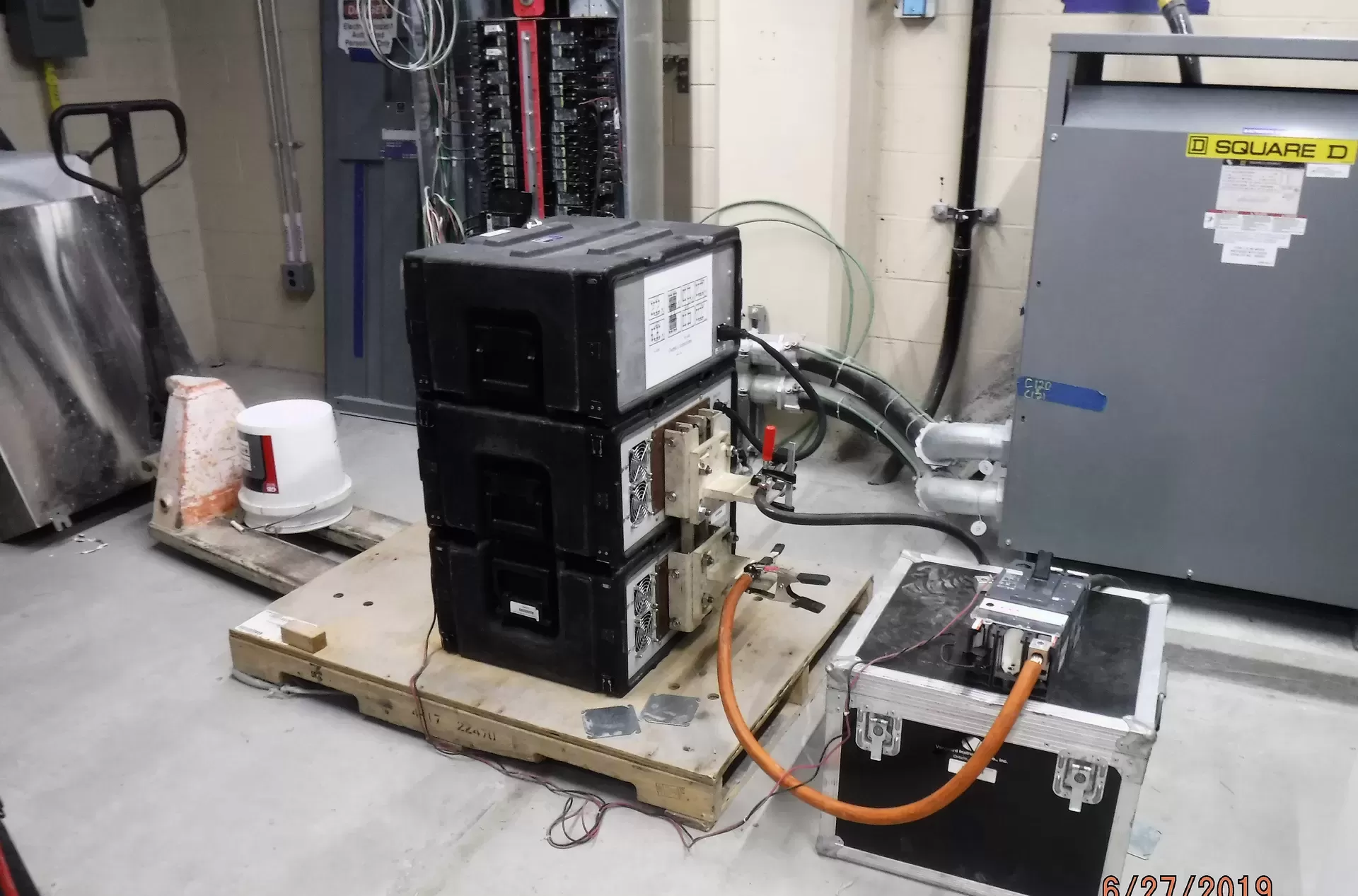
Circuit Breaker Testing
Trip, timing and contact checks on the drawout and molded-case breakers inside your lineup.
Learn more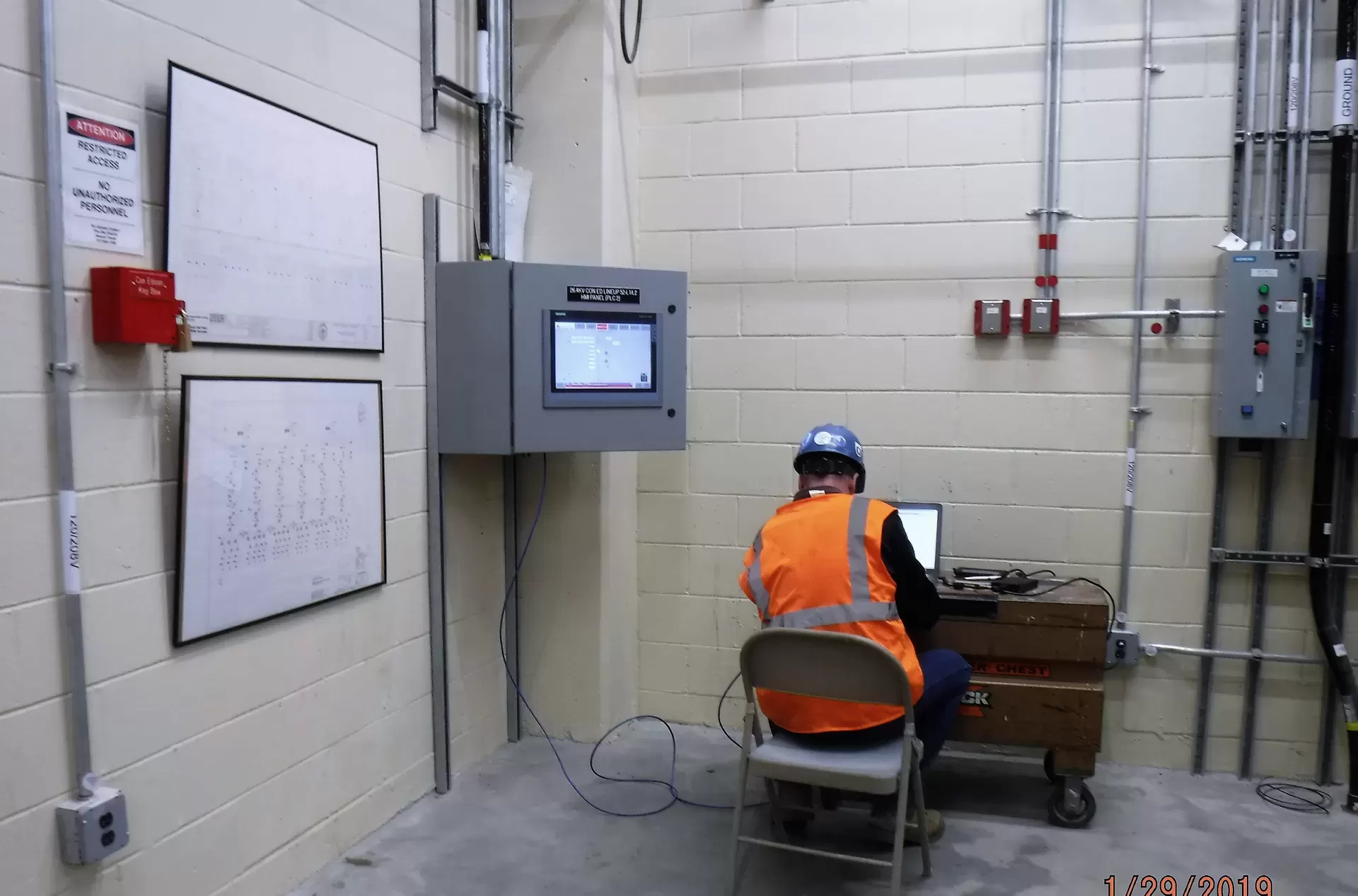
Transformer Testing
Ratio, winding and insulation checks on the dry-type units that step power down to your panels.
Learn more
MCC Maintenance
Bucket, starter and bus servicing for the motor control lineups downstream of your switchgear.
Learn moreQuestions
Switchgear maintenance questions
Switchgear basics
What is switchgear and what does it include?
Switchgear is a lineup of metal enclosures that holds the devices used to switch, protect and isolate a power system: main and feeder breakers or switches, fuses, bus, current and potential transformers, protective relays and metering. It sits between the utility service or transformer and the panels, MCCs and equipment it feeds, and it is where faults are cleared before they spread.
Is a switchboard the same thing as switchgear?
No. A switchboard usually has fixed, bolted devices and front access, and is common in commercial buildings. Switchgear normally uses drawout breakers in separate compartments with rear access to the bus, and it carries higher short-circuit and continuous ratings. The maintenance scope differs: switchboards focus on connections and molded-case breakers, switchgear adds racking, relay and power breaker testing.
What is the difference between drawout and fixed-mounted switchgear breakers?
A drawout breaker sits in a cradle and can be racked to a test or disconnected position without unbolting anything, so it can be serviced on a bench and swapped quickly. A fixed-mounted breaker is bolted to the bus and is tested in place with the section de-energized. Drawout gear needs extra attention to racking mechanisms, shutters and interlocks, because those parts decide whether the breaker can be removed safely.
How long does industrial switchgear usually last before replacement?
There is no single number. Well-maintained switchgear in a clean, dry room can stay in service for decades, while the same gear in a dusty or damp plant ages much faster. The practical limits are usually spare parts support, the condition of the breakers and insulation, and whether the ratings still match the system. Trended test results tell you when replacement makes sense.
Intervals and scope
How often should switchgear be inspected in an Ontario facility?
Plan on a visual and infrared inspection at least once a year, and every six months for gear that is in poor condition, in a harsh room or feeding critical loads. Full shutdown maintenance typically falls every one to five years under the NFPA 70B condition assessment, and the manufacturer's instructions always take precedence over the generic interval.
What should a switchgear maintenance checklist cover?
A complete checklist covers the room and enclosure, heaters and ventilation, insulators and bus supports, bus joints and cable terminations, breaker racking and interlocks, operating mechanisms, protective relays and trip units, the DC trip supply, grounding, and the electrical tests. It should also record nameplate data, as-found and as-left condition, and the next interval.
How do you clean electrical switchgear without damaging it?
Only with the gear de-energized, locked out and proven dead. We vacuum loose dust first, then wipe insulators and barriers with lint-free cloths and cleaners approved by the manufacturer, avoiding compressed air that drives debris into mechanisms. Tracking marks, moisture stains or heavy contamination are recorded, because they point to an environmental problem that cleaning alone will not solve.
Do you maintain the busway that runs out of the switchgear?
Yes. Busway carries large currents from the switchgear to plant floors and tower risers, and its bolted joints and plug-in units loosen and heat up like any other connection. We scan it under load, check housings and supports, and during an outage retorque joints to the manufacturer's values and test insulation. Plug-in units feeding production equipment are checked along with the run.
Shutdowns and safety
Can switchgear be inspected safely while it is still energized?
Parts of it can. Exterior visual checks, meter and relay readings, ultrasonic screening and infrared scanning are done with the gear in service, by qualified workers following CSA Z462 and the arc flash labels. Cleaning, tightening, insulation testing and breaker testing need a shutdown with lockout under section 42 of Ontario Regulation 851.
How long does a switchgear maintenance shutdown usually take?
It depends on the number of sections, how many breakers and relays are in scope, and whether the main breaker and service section are part of the outage. We give you a section-by-section time estimate during the scope walk, sequence the longest tasks first, and size the crew to fit the window you can offer, whether that is one overnight outage or a weekend.
What happens if you find a serious defect during switchgear inspection?
We tell your site contact right away, make the equipment safe, and record the finding with photographs and readings. Small fixes that fit inside the outage, such as retorquing a joint or swapping a cracked insulator, go ahead once you say yes. Anything bigger gets its own quote and an urgency rank in the report.
Do you provide emergency response when switchgear fails between visits?
Sites under a KCS maintenance agreement are covered by our emergency response. Our crews already know those rooms, drawings and test records, so they can isolate the failed section, restore what can safely be restored and plan the permanent repair. Other facilities can book a diagnostic visit with our office, which takes calls seven days a week.
Compliance and reports
Is NFPA 70B mandatory for switchgear maintenance in Ontario?
Not by statute. NFPA 70B is an American document; what binds an Ontario owner is the Electrical Safety Code, ESA's notification rules and Regulation 851 for industrial workplaces. ANSI/NETA MTS has the same status, though we follow its test procedures on every job. NFPA 70B becomes a requirement once your insurer, a building owner or a contract clause names it, and many do because its condition-based intervals are practical.
What role does CSA Z463 play in switchgear maintenance programs?
CSA Z463 is Canada's own document on keeping electrical systems maintained. It covers building a maintenance program, setting intervals, documenting results and keeping workers safe while doing the work. We use it as the Canadian reference for your switchgear program, alongside CSA Z462 for electrical safety, ANSI/NETA MTS for test methods, and NFPA 70B where your contract requires it.
Does switchgear maintenance need an ESA notification in Ontario?
Under ESA practice, replacing, modifying or repairing wiring in an installation normally means filing a notification, so replacements, modifications and repairs to wiring generally need one. Repairs to certified equipment are done by the manufacturer or its agents. As a licensed electrical contractor we confirm what applies to your scope and file the notifications for our own work.
What affects the cost of a switchgear maintenance visit?
The main factors are the number of sections and breakers, the breaker types, which tests are in scope, whether the work happens after hours, and how much preparation the outage needs, such as utility coordination or temporary power. We quote after a scope walk so the price reflects your actual lineup rather than a generic estimate.
Related services
Related services
Circuit Breaker Testing
Trip, timing, contact resistance and mechanism checks that prove each breaker will open when a fault demands it, from 15 A branch breakers to drawout power breakers.
View service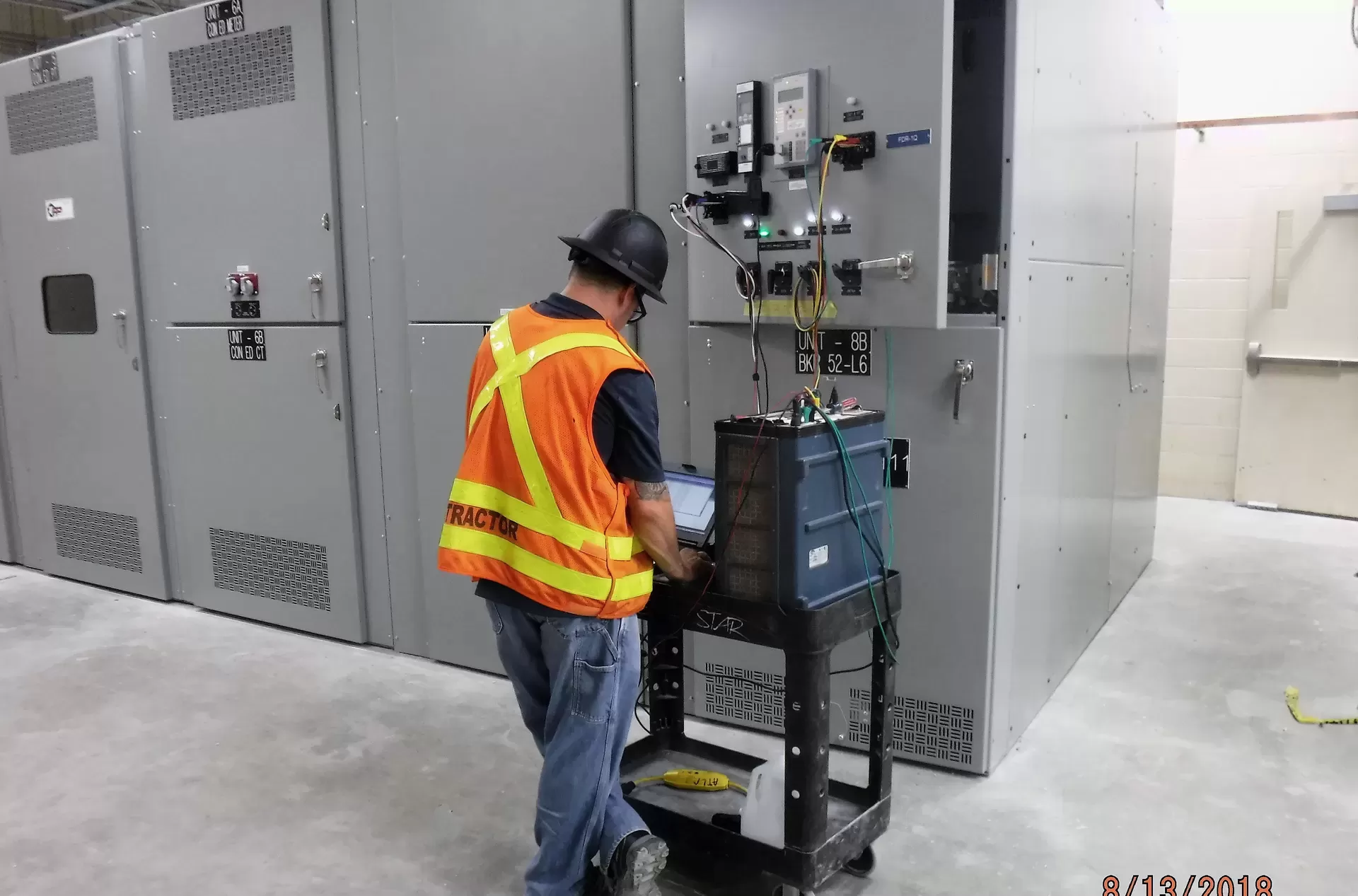
Transformer Testing
Ratio, winding, insulation and thermal checks on customer-owned dry-type transformers, with results trended visit to visit.
View serviceMCC Maintenance
Motor control centre maintenance covering buckets, stabs, bus, starters and overloads, scheduled section by section so production keeps running.
View service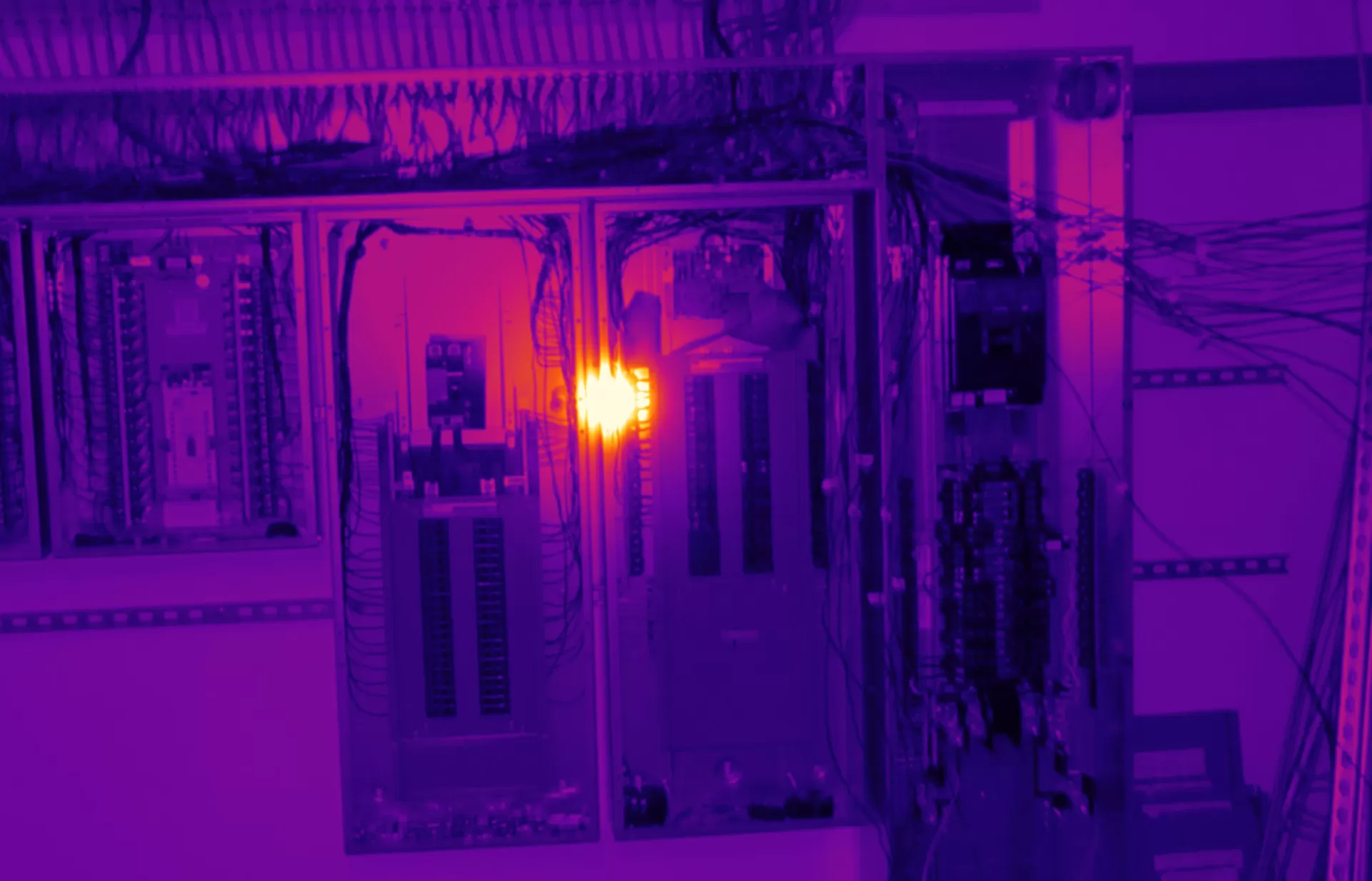
Infrared Electrical Thermography
Thermal scans of energized switchgear, panels and motor controls by Level II thermographers, with rated findings and repairs by licensed electricians.
View service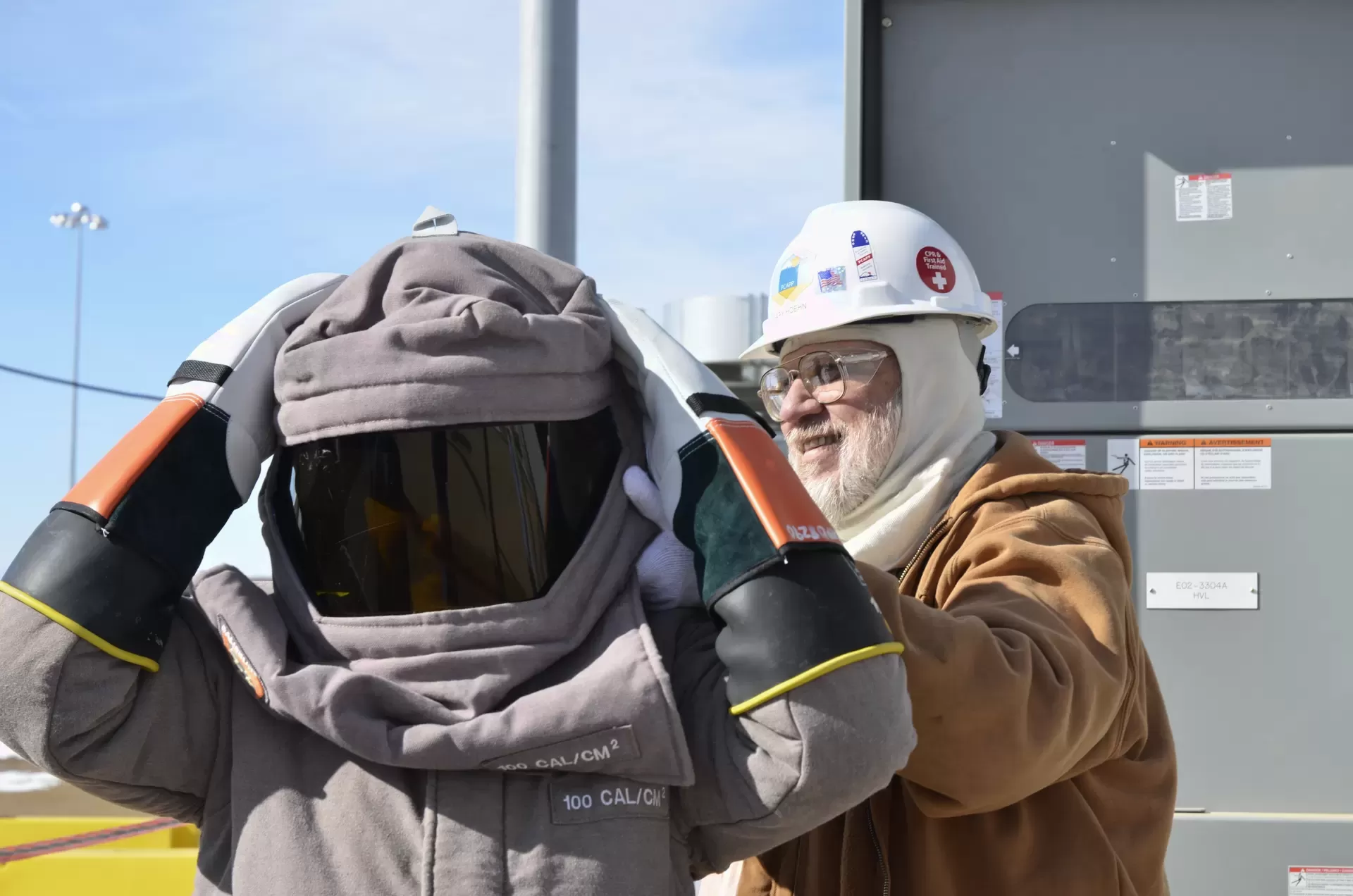
Arc Flash Study
Arc flash assessment, incident energy results and CSA Z462 arc flash labels so your electricians know the hazard at every piece of gear.
View serviceElectrical Preventive Maintenance
A written program of scans, cleaning, tightening and tests for switchgear, panels and transformers, aligned with CSA Z463 and NFPA 70B.
View service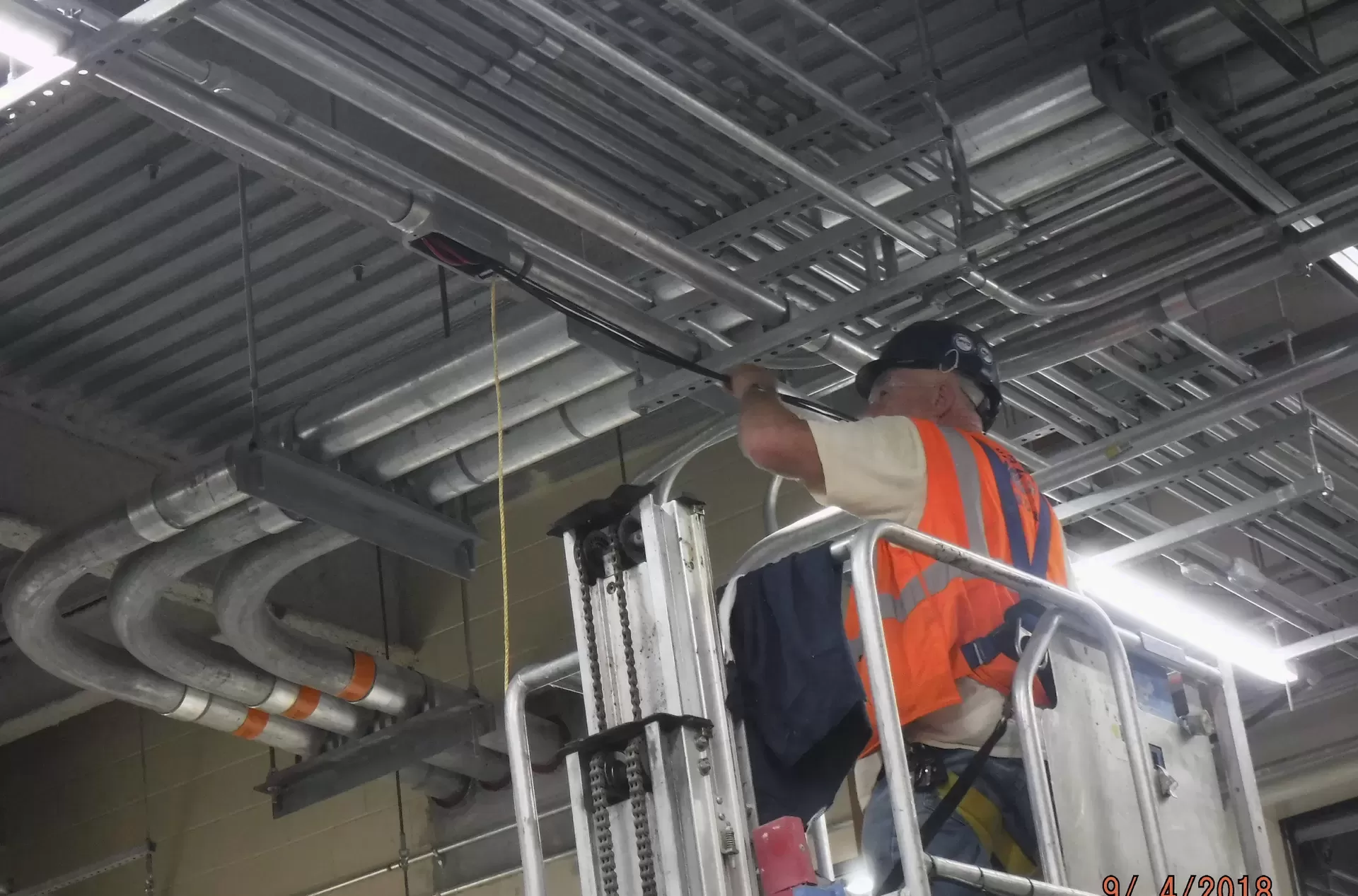
Request a callback
Plan your next electrical maintenance program with KCS
Tell us about the site and the equipment. A licensed electrician reviews it and calls you back.
- ESA/ECRA licence #7014042
- COR certified, ISNetworld, Avetta and ComplyWorks
- Work planned around shutdowns and tenant hours
- Emergency response for maintenance-contract clients
Send your request
We reply during business hours: Open daily, 9 a.m. to 9 p.m.